
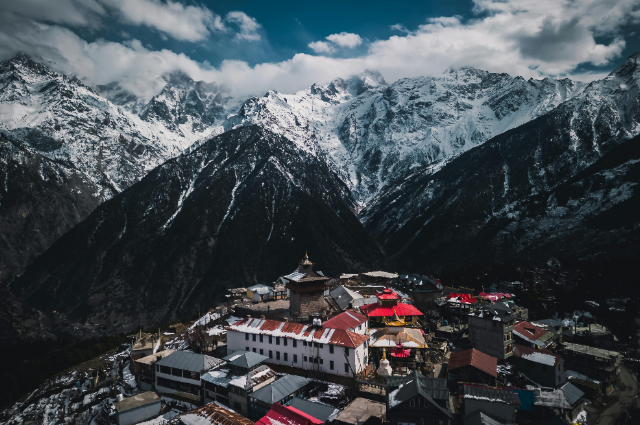
High in the craggy embrace of the Indo-Tibetan borderland, where the Satluj River carves its way through the gargantuan folds of the Himalayas, lies Kinnaur—a land often referred to in ancient texts as the abode of the "Gods and Fairies." Here, the air is thin, the winters are brutal, and the culture is a vibrant, complex tapestry woven from threads of Hinduism, Tibetan Buddhism, and deep-seated animism. Among the many festivals that punctuate the Kinnauri calendar, the Raulane Festival stands as a profound testament to the region’s resilience and its unwavering commitment to ancestral heritage.
While the modern world creeps steadily into the remote valleys of Himachal Pradesh through fiber-optic cables and asphalt roads, Raulane remains a stubborn, beautiful anchor to the past. It is more than a celebration; it is a ritualistic preservation of a culture that refuses to be diluted by the tide of globalization.
The Origins: A Dance with the Divine
To understand Raulane, one must first grasp the Kinnauri worldview. In this region, the line between the physical and the metaphysical is porous. Every village has its presiding deity (Devta), and these deities are not mere statues kept in distant shrines; they are living, breathing regents who govern the social, legal, and spiritual lives of the community.
The Raulane festival is historically rooted in the agrarian and pastoral cycles of the upper Himalayas. Historically celebrated in the late winter or the nascent stages of spring, it serves as a bridge between the season of hibernation and the season of rebirth. The name itself, depending on local dialectical variations in the Kinnauri (Homskad) language, often refers to the "awakening" or the ritualistic "procession" of the gods after their winter meditation.
Legend suggests that the festival originated as a way to appease the Ushas (spirits) and local protector deities to ensure that the melting snows would bring life-giving water to the apple orchards and buckwheat fields rather than destructive avalanches. It was, and remains, a collective prayer for the prosperity of the Kanda (high-altitude pastures) and the safety of the livestock that form the backbone of the rural economy.
The Ritual Fabric: Masks, Music, and Myth
The visual spectacle of Raulane is unlike anything found in the plains of India. It is characterized by its raw, primal energy and its distinct lack of commercialization. In Kinnaur, a festival is not a "show" put on for tourists; it is a duty performed for the cosmos.
The Sacred Masks (Chham)
A central element of the Raulane festivities is the appearance of masked dancers. These masks, carved from local birch or juniper wood and painted in fierce, evocative colors, represent various deities, demons, and protective spirits. This tradition shares roots with the Chham dances of Tibetan Buddhism but is infused with local Kinnauri folklore. When a villager dons the mask, they are no longer seen as a mere mortal; they are believed to be the vessel for the spirit they portray. Their movements—shifting from slow, meditative steps to frenetic, swirling leaps—represent the battle between order and chaos.
The Oracle and the Palanquin
The village deity is carried out of the temple in an ornate palanquin (Rath), draped in colorful silks and topped with silver and gold finials. The movement of the Rath is a sight to behold—swaying rhythmically as if the god is dancing of its own volition. The Garkha (oracle) or Groksch often enters a trance state during Raulane, delivering prophecies for the coming year, settling land disputes, and blessing the gathered crowd. For the Kinnauri people, this is a moment of direct communication with the divine.
The Orchestration of Sound
The festival is accompanied by the haunting, resonant sounds of traditional Kinnauri instruments that echo off the granite walls of the valley:
Karnal & Ransingha: These long, S-shaped trumpets announce the deity's arrival with a deep, vibrating roar that can be heard for miles.
Dhol & Nagara: The percussionists provide the heartbeat of the festival, using complex rhythms that have been passed down through generations of musicians (Bajantris).
Shehnai: Providing the melodic, often melancholic, undertones to the ritual dances.
The Social Glue: Community and Continuity
In Kinnaur, social hierarchy is often superseded by communal duty during Raulane. The festival acts as a grand reunion. Families who have migrated to cities like Shimla, Chandigarh, or Delhi for work or education make the arduous journey back to their ancestral villages, navigating the treacherous Hindustan-Tibet Road to be present.
The preparation for the festival involves every household. Women prepare traditional delicacies like Ogla and Phafra (buckwheat dishes) and the local brew, Chulli (wild apricot wine) or Fasanti. Men take charge of the temple logistics and the maintenance of the sacred instruments.
This collective participation is the secret to the festival's longevity. By involving the youth in the intricate steps of the folk dances and the complex protocols of the ritual, the elders ensure that the "cultural DNA" of Kinnaur is passed down not through books, but through muscle memory and shared emotion.
Challenges in the Modern Era
Despite its deep roots, the Raulane festival faces significant challenges in the 21st century. The forces of modernization and environmental change are reshaping the landscape.
Migration and Urbanization: As the younger generation moves away for better economic opportunities, the pool of participants for these long, demanding rituals is shrinking. The "brain drain" also results in a "cultural drain," where the nuances of the local dialect and ritual chants are at risk of being lost.
The Impact of Hydro-Projects: Large-scale dam construction in the Kinnaur region has not only affected the physical landscape but also the sacred geography. Some traditional sites used for processions have been altered, forcing the community to adapt their ancient routes.
Climate Change: The unpredictability of the Himalayan winters is affecting the timing of the festival. Earlier snowmelts or sudden, intense blizzards have, in recent years, disrupted the traditional schedule that aligns with the lunar calendar.
The Path to Preservation
Preserving Raulane is not just about keeping a party alive; it is about protecting a unique way of being. Several local initiatives are working to ensure the festival’s survival:
Digital Documentation: Local youth groups are now using smartphones and social media to record the songs, myths, and procedures of Raulane, creating a digital archive for future generations who may not be physically present in the village year-round.
Cultural Education: Some village councils (Gram Panchayats) are encouraging programs that teach Kinnauri folk music and the art of mask-making to the younger generation, ensuring the craft does not die with the master artisans.
Respectful Tourism: There is a growing movement toward "impact-free" tourism, where visitors are educated on the sanctity of the rituals and encouraged to observe without interfering in the sacred proceedings.
Why Raulane Matters
In a world that is becoming increasingly homogenized, the Raulane festival of Kinnaur offers a glimpse into a different way of relating to the earth and the divine. It reminds us that culture is not a museum piece it is a living, breathing entity that requires care, devotion, and a sense of community.
The rhythm of the Dhol, the flash of the silver masks, and the fervent prayers whispered in the crisp mountain air are more than just traditions; they are the heartbeats of Kinnaur. As long as the people of the valley continue to dance for their gods, the ancient culture of Kinnaur will remain vibrant, defiant, and profoundly beautiful.
References:
- Bajpai, S.C. (1991). Kinnaur: A Restricted Land. New Delhi: Indus Publishing Company. (A comprehensive study on the social and cultural history of the Kinnaur district).
- Handa, O.C. (2004). Buddhist Monasteries of Himachal Pradesh. New Delhi: Indus Publishing. (Provides context on the integration of Buddhist rituals into local Himalayan festivals).
- Gerard, A. (1841). Account of Koonawur, in the Himalaya. London: Madden. (A historical primary source documenting early observations of Kinnauri customs).
- Negi, T.S. (1976). Scheduled Tribes of Himachal Pradesh: A Profile. Meerut: Rajdhani Press. (An ethnographic look at the tribal identity and festival structures of the Kinnauri people).
- District Administration Kinnaur. Fairs and Festivals of Kinnaur. Official Government Portal (hpkinnaur.nic.in).
- Thakur, L.S. (1996). The Architectural Heritage of Himachal Pradesh: Origin and Development of Temple Styles. New Delhi: Munshiram Manoharlal Publishers.
- Census of India (1981). District Census Handbook: Kinnaur. Series 7. (Provides historical data on village-level cultural practices and the Devta system).