
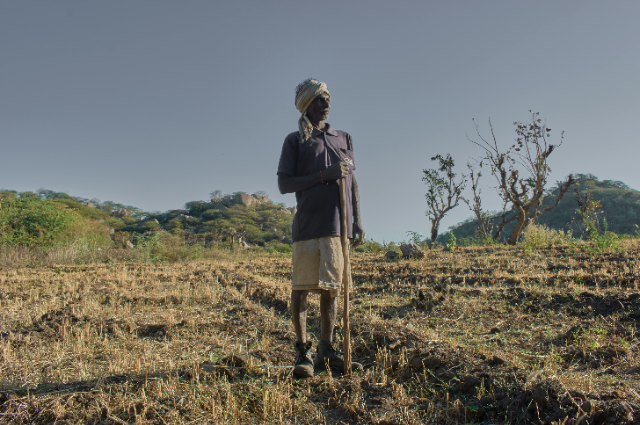
India's farmers are the backbone of its economy, but they receive the smaller end of the rope. The government and authorities announce aid to build political points in front of citizens, meanwhile, farmers are left to manage their losses and build their lives all alone.
Agriculture: A main income source in India
India is an agricultural country. It is a source of livelihood for more than 52% of the population. Many people engage in farming and related activities to gain money so that they can feed themselves and their families. Agriculture plays a key role in the economic and social welfare of the people. In earlier times, Indian farmers were famous for their innovations and producing yield that were enough to fulfill the need of the country and to be exported outside of India as well.
Now, the reason you're reading an article based on India farmers is because they're committing suicide—in shockingly large numbers. And one of the reason is the dark reality of crop insurance schemes.
Crop Insurance
Pradhan Mantri Fasal Bima Yojana(PMFBY)
PMFBY was introduced in 2016. It provided insurance for losses due to non-preventable natural risks before sowing the crop and after the harvest. It not only protects the farmers against natural disasters and sudden losses but also gives them the confidence to invest. However, not only is the government scheme as reliable as it looks on paper.
The PMFBY scheme has a requirement that the percentage of land that is damaged due to natural disasters should be above 33 per cent. In the same manner, a farmer will be eligible for insurance if the land has not been yielding a crop for the last seven years.
Not all farmers fit this criteria, and the loss of a farmer ineligible for the insurance remains a loss to be compensated by the farmer on his own. In cases where farmers are eligible, they do not receive the insurance. Then, the eligibility criteria change to how much a farmer can fight for their own right.
The case of Utar Rasulpur
In 2018 of February, in the village of Utar Rasulpur of West Bengal, a hail storm struck through potato fields. The insurance was guranteed but none of the farmers received it. The bank also set aside the amount for farmer loans, but did not give them away to farmers.
Sujoy Mandal, a large farmer of this area, described his struggles to gain the insurance. All his potatoes were damaged in the hailstorm. From his calculated loan of Rs. 3.5 lakhs, 17500 INR were deducted from the bank as insurance premium. After a prolonged struggle of more than a year, he received 31000 in December of 2019. Mandal is an innocent farmer who was unaware of the loan he was to receive, and also oblivious of the requirements of the loan.
The case of Bankura district
In November 2019, the cyclonic storm Bulbul brought ruin to the crops of Amman Paddy. Along with Bankura, 80% of Amman Paddy was destroyed in nearby villages as well. The government of West Bengal announced aid for the farmers in the villages affected by the storm, with the minimum amount of Rs. 1000 and the maximum amount of Rs. 27000. Unfortunately, Bankura district did not make it to the list; as a result, insurance companies said there was no damage to the crops.
When the farmers inquired about the insurance companies about their rightful loans, they replied that they had "informed the authorities." Whether the message was relayed to the authorities or not, the farmers were used to this treatment and managed to help themselves.
The case of Palasi block
The farmers of this area had already got themselves covered under the PM flagship crop insurance. In August 2017, Palasi was hit by a flood. The farmers were relieved that they would surely get compensation without any problem. When the water dried, the farmers got to the bank to get their insurance. They were told that the insurance would take time and that they should wait.
When their patience reached the limit in February of 2019, they pressed for a claim to the insurance. The bank told them to get in contact with the insurer. The reply from the customer service executive crushed the final hopes of the farmers when he said that they should've informed him 48 hours after the damage and that their crops didn't suffer "significant loss".
Effects of crop insurance failure:
Farmers are human beings. They have a family to feed, daughters to marry, sick family members to tend to and elderly parents. As time progresses and helplessness increases due to suffering, it eventually presses the farmers into the decision to end their lives.
The insurance, if actually provided, can be a big help to the farmers for their professional and personal needs. But the system has failed the farmers and has not fulfilled their needs.
The failure of the government to provide the necessary insurance occurs in harsh forms. The distress causes harm to the farmers, leading them to suicide.
Most of the farmer's suicide occured in 5 states, infamously called "Suicide Belt". The belt includes Maharashtra, Karnataka, Andhra Pradesh and Telangana. These areas recorded 2/3rd of farmers' suicide, higher than the suicide rate of non-farmers. The NCRB(National Crime Records Bureau) has reported 10,786 farmer suicides in 2023, making up 6.3% of total suicides in India.
The failure of schemes is not the only reason for farmer suicide, and many factors come into play, like indebtedness and market volatility. Still, Insurance companies, banks or governments don't get to decide whether a loss is "significant" or not. A loss is a loss and should be treated as such. The evidence shows that governmental promises exist only on paper and to gain political support. In reality, victims such as these farmers suffer in silence with no one to help them and just empty promises to look at.
The government will continue to introduce schemes and policies to aid farmers. But they are meaningless as long as they don't reach their rightful owner. Therefore, these schemes should not only exist on the surface but should be carefully monitored and given away.
. . .
References: