
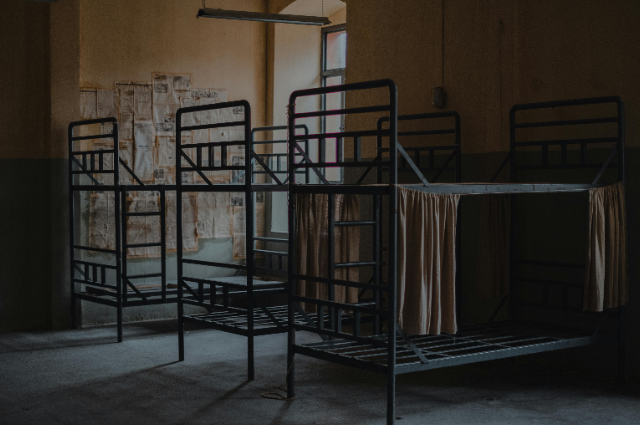
“When night fell, our real troubles would begin,” a cry for help from an innocent girl.
Shelter homes are considered a place of safety and comfort. Especially, government-funded shelter homes where one believes that nothing can go wrong. “Sewa Sankalp Evam Vikas Samiti" at Muzaffarpur, Bihar, is one such place built to protect children.
What seemed like a place of peace and rest from the outside soon began to get complaints of physical abuse.
The eye-opening report
TISS(Tata Institute of Social Sciences) is a multi-campus public institute in India. In addition to providing post-graduate and doctoral degrees, the purpose of the institute is to provide social services and conduct research on such cases. Several TISS initiatives have shaped public policy in India, such as India's labour welfare laws.
The reports of sexual abuse surfaced when Mumbai’s TISS(Tata Institute of Social Sciences) conducted an audit for shelter homes. The report was 100 pages long and was written carefully by researchers. Parts of the report revealed that conditions at the Muzaffarpur home were "deplorable" and that it was being run in a "highly questionable manner".
The report said the girls had "no access to any sort of open space and had been literally locked up in their wards except when they went to the dining hall to take their meals”.
TISS submitted their report in April of 2018, leading to the FIR registration in May of the same year. On 30th May, police took the staff away in vans, sending the residents of the shelter home to other safe places.
Brajesh Thakur was the CEO of this particular shelter home and also ran many other NGOs and a newspaper called Pratah Kamal. He also takes part in government as an independent candidate in the parliament. He was listed as the prime suspect in this case.
Inmate profile and insights
The shelter home consisted of mostly teenage girls, 44 in number. These included runaways, orphans, trafficked and destitute girls, all living under the same roof in a three-storey building. No matter their status or age, they didn’t deserve to be sexually abused by the caretaker.
After the tests were conducted, the medical board of Patna Medical College Hospital (PMCH) confirmed sexual assault on 34 girls. Considering the young age of the girls, they were forced to undergo an abortion. Multiple injuries were found on their bodies, both by the perpetrator and the girls themselves, cutting and slashing their own skin due to the ongoing torture and the pressure to stay silent.
The girls also looked malnourished despite the abundance of food available at the shelter. Many of them suffered from tuberculosis and skin diseases.
The girls who were alive were found miserable; however, one had allegedly been killed and buried on the shelter grounds. Soon after the FIR was registered, the authorities dug the area of the shelter home but found no trace of the girl.
Other than physical injuries, 14 of the residents of the shelter home were also found to be struggling mentally and suffering from depression. On top of that, many of them showed strange behaviour; laughing, bursting into tears and falling silent all at once.
The reality of the caregivers also came to light; they would tell the girls to go to Thakur's room when they complained that they were sick. They aided Thakur in his criminal act by drugging their food and passing comments like “They(Thakur and his companions) have finished with her” after the act was over.
An eyewitness turned ignorant.
The assistant director of the shelter, Divesh Sharma, had a valid justification for why he didn’t report the sexual abuse. “I have a family. I am not Superman. You know the might of this system.”
Reporting sexual abuse doesn’t require one to be a superhero; it just requires courage to stand up against the one “feeding you” to protect innocent lives. If a simple act, such as the filing of a report, gets to be seen as heroism, one can imagine the strength of the system.
The abuse was not sensed by Sharma, partly because he visited the shelter home once every 3 months and partly because he believed that one didn’t have a reason to enter a shelter home with a negative perception. Whether it was ignorance or the deep sense of trust in the governmental system and Brajesh Thakur, Sharma failed to protect the teenage girls.
Legal action
The police arrested 10 of the accused authorities of the shelter, including Thakur. The case was transferred to CBI upon their request. Further, the convicts were sent to the POCSO court from the local court. Thakur was convicted and sentenced to life imprisonment for offences under Indian Penal Code sections 120-B (criminal conspiracy), 324 (causing hurt by dangerous weapons or means), 323 (voluntarily causing hurt) and those relating to abetment, Section 21 (failure to report commission of an offence) of the POCSO Act and Section 75 (cruelty to child) of the Juvenile Justice Act.
Some activists criticised the investigation for not conducting a potency test on Thakur, though legal experts note this is not always required for conviction under the POCSO Act. Therefore, the prosecution has failed to prove the pre-requisite of a rape conviction that a person accused of rape has the potential to commit rape.
At the end, this case was named just a “political stunt” from the opposing parties to defame Thakur.
Lessons
The case clearly shows how a haven became hell. Whether a girl has a family or not, is a child or a grown-up, nothing can guarantee her protection in a state where criminals are allowed to run free due to their political influence.
If only the innocent voices of the girls were heard, if anyone from the authorities of the shelter home felt a little bit of pity for the girls, maybe their pain would’ve been reduced or at least, taken seriously.
This is your sign to never ignore anyone’s pain and never blame the victims because they are helpless in front of a system that does not guarantee both trust and protection.
References