
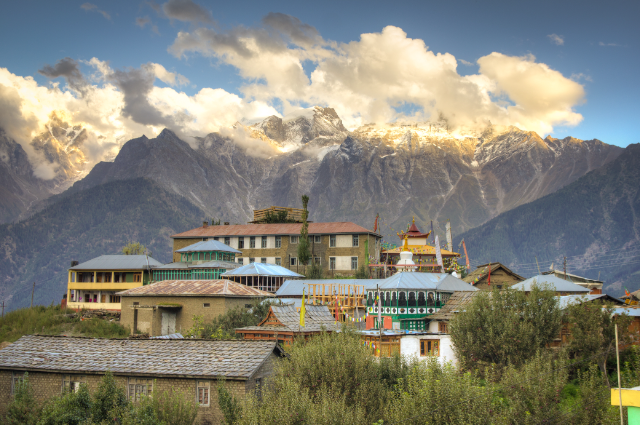
The Raulane Festival is a sacred tradition that includes special dance rituals to occur at the end of the shuskar festival in kothi and kalpa villages of Kinnaur district of the Himachal Pradesh. It is celebrated during the winter - spring season that typically occurs in late winter to early spring often following Holi when the atmosphere changes from the harsh cold to warm sunny weather. Though it is claimed by many local people to be a 5000 years old tradition . Recently it gained mass popularity when it became a viral sensation all over social media. It made many people curious due to its natural striking visuals that attracts more visitors and a whole mysterious environment that makes people more curious about it.
The legends and its core meaning:
The main purpose of raulane festival is to thank and give a grand farewell to saunis (guardian spirit or mountain fairies) who are believed to come down from the fields which are called kanda in kinnaur to gaurdian people of the village, protect their livestocks and their home during the harsh cold months. As the spring arrives the village people gathers to honor these gaurdian spirits before they return to the high altitude mountains. This is a period of spiritual cleansing and showing gratitude to the spirits.
The rituals and the celebrations
The most unique aspect of Raulane Festival is a symbolic marriage in which the two men dress as ceremonial pair called the raula (groom), the raulane (bride) and act as vessels for the divine. These roles are choosen carefully by saring(small divided regions of kalpa). From each saring elders chooses people who will perform and after whole village approvals. There are multiple pairs of raula and raulane and zannpundulu (people with masked figures). All the villagers take part in this ceremony in some ways.
- Raula (the groom): A man chosen to represent the masculine energy. He wores thick kinnauri woolen garment, a veil that covers his full face, and a dagger called rakas carried for protection against evil. His look is more reserved and his face and hand covering carry a symbolic weight and villagers believes that if the raula 's face uncovers it means he will die. Following this belief raula veils his face and wears gloves
- Raulane (the bride): Also a man chosen to represent the feminine energy. He wores a doru (kinnauri woolen shawl), a choli (a coat like top), a pattu (waist shawl), and a gacchi(waist belt). Her head is covered with local flowers like chamka(white), narkasang(yellow), and a colourful seeds called bakhri kan. The womens of saring dresses her and put on ancestral jewellery which are silver items named daglo, bitri, contai .
- Zannpundulu: People with masked faces who perform to gaurd from evil spirits. There masks are fierceful so they can frighten the evil away.
Though This marriage is not a literal wedding but it is a symbolical representation of a link between the villagers and the sauni.
The Celebrations of Raulane Festival
When the spring arrives just after the celebrations of Holi, the festival is expected to be organised by villagers. The festival takes place for 5 to 7 days. During the ritual the traditional music is played and a meaningful and respectful performance is done in the guidance of the elders of the village.
The Raula and Raulane comes from different Sarings and meet at the Nagin Narayan temple. As they walk through the village fills with the sound of traditional instruments like the Dhol and Damau. Villagers bring out their finest heirlooms, and the entire community participates in processions. People chants, laugh, sometimes playfully tease.
At the Nagin Narayan temple, the atmosphere changes the loudness of the crowd softens and the dance slows. The pairs offers prayers and performces a symbolic slow meditative dance. The performance that feels mystical and from the celestial world.
Unlike the energetic Nati folk dances, this movement is deliberate and trance-like.
And There is also a believe that the central characters who performs must keep their faces completely covered with the veil, mask or jewellery and remain silent through the ceremony. Local belief warns that the direct eye contact with these spirits could lead them to take a person away with them.
Modern Popularity and Respect
In 2025 and 2026, the festival saw a surge in the tourism. While the locals are friendly and welcoming, the villagers emphasizes that the Raulane is a sacred ritual of kinnaur, not a show.
It is considered highly disrespectful to intrude into homes where the characters are dressing or to try to photograph the faces beneath the masks. And many social media creators try to talk to the people behind the veil which is an act that disturbs their rituals and privacy.
Preservation
Though it is not documented in the history but it is a live example of living tradition that the people of kinnaur believe it to be 5000 years old and they keep it preserve.
The community's intense protection of its authenticity is not just about keeping a secret, but about preserving the very essence of their cultural identity and spiritual beliefs.
Reference: