
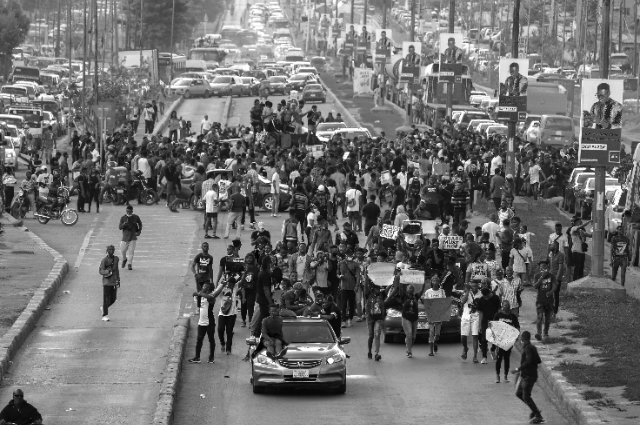
The intense heat of summer in Mumbai, where the noisy traffic of vehicles echoes, the crowd protested by blocking the roads. The Worli district recently became the stage for a political spectacle that left citizens scratching their heads in confusion. While the BJP is dominant in both the central and the state, they took to the streets of Worli to protest what they described as a failure to implement the Women’s Reservation Bill, a move many critics called "the government protesting against itself.”
The BJP protest in Worli
On Tuesday, April 22, 2026, the Bharatiya Janata Party (BJP) organised a massive "protest march” named "Jan Akrosh Mahila Padyatra” in Mumbai's Worli area against Congress. The goal of the march was to walk from Jambori Maidan and proceed toward the Worli Dome. The day began under a punishing April sun. Thousands of women mobilised from various districts across Maharashtra, they gathered together.
The aim was to push for the immediate and effective implementation of the Women's Reservation Bill. This legislation aims to reserve one-third of seats in the Lok Sabha and state assemblies for women, but rather than attempting to pass the bill again, they chose to chant slogans against the opposition for failing to provide the necessary votes.
The Traffic Chaos:
The march was held during peak evening hours, which led to severe traffic congestion in the area.
The situation was worsened by the presence of a high-profile leader, Maharashtra Minister Girish Mahajan.
He was at the forefront of the march.
In a bid to control the narrative, Mahajan frequently stopped to give a "sound bite" to the waiting media. Every time he stopped to speak to a camera, the entire procession behind him halted. This created a human dam, completely blocking the flow of vehicles.
Ambulances were seen with flickering lights, unable to move. Office-goers trying to reach home and parents trying to reach schools found themselves trapped in a metal graveyard of cars and buses.
The Confrontation That Broke the Internet
A local woman has become a symbol of civic bravery on social media. She was caught in the gridlock. She wasn’t a politician or an activist; she was a mother on her way to pick up her child from school. After sitting in her car for an hour while the minister gave interviews just a few yards away, her patience broke.
In a video that has now gained millions of views, the woman stepped out of her vehicle and walked straight into the centre of the rally. She bypassed the security detail and stood face-to-face with Minister Girish Mahajan and the police.
"The ground is for rallies; the road is for us," she reportedly told him. She wasn't doing this for the agenda; she did it because of the roadblockage.
She told the minister to "get out of here" and move the protest to a designated ground so that the citizens could simply live their lives.
The police personnel on site were visibly stunned by her bravery.
To see a lone citizen hold a powerful minister accountable in the middle of the street was a moment of pure, unscripted reality.
The Reactions:
Within the hours, the hashtag #WorliProtest was trending. The reaction was almost entirely in favour of the "Worli Mother." Users across platforms like X (formerly Twitter) and Instagram praised her for having the courage to speak what everyone else was thinking in the situation.
People called her “a real feminist” for raising her voice against VIP issues.
The incident provided a benefit for the Opposition.
Nana Patole, the former state Congress president, was quick to share the video.
He pointed out the irony of the situation, stating that the BJP’s "theatrics" were causing genuine hardship to the ordinary citizens they claimed to be fighting for.
Critics argued that if the BJP truly wanted to celebrate or push for the Women’s Reservation Bill, they could have done so through administrative channels or held a controlled event at a stadium.
By taking over a major road during rush hours, they turned a message of empowerment into an act of public inconvenience.
The Worli incident serves as a reminder that:
- Political accountability is changing: In the age of smartphones and cameras, every interaction is public. Leaders can no longer hide behind their security guards when a citizen is rightfully angry.
- Infrastructure is a priority: For the common Mumbaikar, the "right to the road" is just as important as any legislative bill.
- The Irony of Power: When a ruling party protests, it often feels like a performance rather than any execution.
The Worli protest in Mumbai ended with the police filing a case against the organisers for causing massive traffic jams and breaking permit rules. The situation became famous when a frustrated woman was stuck in traffic while on her way to pick up her child from school. She confronted a government minister and told him to move the rally to a park instead of blocking the road. While the BJP leaders defended their march for women's rights. The public backlash over the gridlock forced officials to express regret for the chaos. At the end of the event, a huge debate sparked about whether political protests should be allowed to block city streets and disrupt daily life.
References:
. . .