
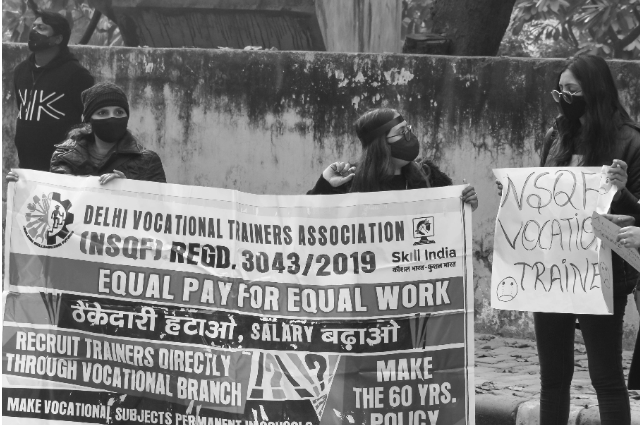
What started as a peaceful protest by the ten thousand factory workers asking for a minimum wage of ₹20000. By the time their peaceful protests suddenly became violent protests that turned into scenes of chaos across parts of Noida, where protesters threw stones at the police, with vehicles set on fire, properties vandalised, in the Phase 2 and Sector 60.
It led to widespread chaos across the area.
They demanded a minimum wage of ₹20,000 which shows that the cost of living in India is a serious problem.
What happened and why are workers protesting?
In April 2026, The factory workers protested to demand a monthly minimum wage hike to combat high costs of living because of the inflation caused by the US- Israel/Iran war and to fight against the wage gap that exists between Noida and Haryana. Where Noida workers earn roughly ₹13,690 per month for unskilled labor compared to over ₹15,220 in Haryana. The Workers are also demanding fixed duty hours, overtime pay, and better working conditions.
The Uttar Pradesh government announced a 21% interim wage hike for workers to restore order after violent protests and widespread disruption in Noida.
How it escalated:
The protests started on Saturday, April 11, 2026, and it escalated on their third day when thousands of workers from industrial hubs like Phase 2, Sector 60, and Sector 63 flooded the streets. About 50 protesters have been arrested in connection with the violence that broke out during these mass demonstrations where public properties and vehicles were damaged and burned. Several police personnel were also injured in the clashes as they attempted to manage the growing crowds and protect industrial property. The Police lobbed tear gas shells to quell the protest after it turned violent, with vehicles torched and stones pelted in parts of the satellite city.
Government response:
After the following two days of intense demonstrations, the Noida administration and the Yogi government introduced a series of sweeping labour reforms and safety measures to address the workers' core grievances and restore industrial peace. The authorities announced a significant relief package that mandates a compulsory weekly day off for all employees and guarantees double wages for any overtime work or shifts performed on weekly holidays and Sundays. To ensure financial stability and transparency, companies are now strictly required to credit full salaries into workers' bank accounts by the 10th of every month and provide mandatory salary slips to prevent any unauthorized deductions.
Furthermore, the government committed to distributing annual bonuses before November 30 and a formal complaints system including a committee led by a woman to handle harassment case by mandating that every industrial unit establish an Internal Complaints Committee (ICC) led strictly by a senior ranking woman to ensure gender sensitive issues handling. Authorities also introduced the S.H.O.R. (Sexual Harassment Online Redressal) mobile app and a 24/7 dedicated helpline, allowing workers to report harassment directly to district officials. Furthermore, the factories are now legally required to install physical complaint boxes on site and publicly display the names of committee members on notice boards, while the district administration will be conducting a regular audits to ensure these committees include external NGO members for unbiased oversight.
In this ways The Yogi government can see the root causes and recommend measures to prevent future incidents.
Traffic impact:
Protests caused ripple effects on routes like the DND Flyway and Chilla Border, triggering heavy traffic jams for Delhi and Greater Noida commuters,, resulting in massive bottlenecks that made morning commutes extremely slow and frustrating. Traffic towards the Chilla border was diverted via Char Kha Gol Chakkar and DND Toll, with diversions also in place near Sector 62 Fortis Hospital Road to manage the chaos. Where Vehicles remained stuck for long periods of time. The Police urging people to avoid these routes because of the traffic that cause to the severe disruption to daily travel. The Commuters faced severe delays at the key border points, and it was advised to plan travel ahead as authorities struggle to clear the roads. The blockade caused by the protesters has caused the massive traffic and tailbacks impacting traffic flow from Noida into the national capital.
Broader context:
Living costs across the world have risen as the US-Israel war on Iran that has curbed fuel supplies, causing oil prices to spike above $100 per barrel and triggering severe shortages in India. This energy crisis, stemming from disruptions in the Strait of Hormuz, has led to increased costs for food, transportation, and raw materials, hitting the poorest households and factory workers the hardest. Similar protests in neighbouring Haryana last week saw the government order a 35% increase in minimum wages, raising the monthly pay for unskilled workers to ₹15220 to help them cope with soaring prices, particularly in the auto manufacturing hubs of Manesar. This industrial action which escalated into violent protests in Noida, involved workers demanding higher wages and better working conditions due to rising LPG prices and high food costs. It has intensified pressure on the manufacturing sector, which is already struggling with supply chain disruptions and higher input costs linked to the ongoing West Asian conflict.
References:
- https://en.wikipedia.org
- https://www.thehindu.com
- https://www.bbc.com
- https://www.aljazeera.com
- https://timesofindia.indiatimes.com
- https://www.thehindu.com