
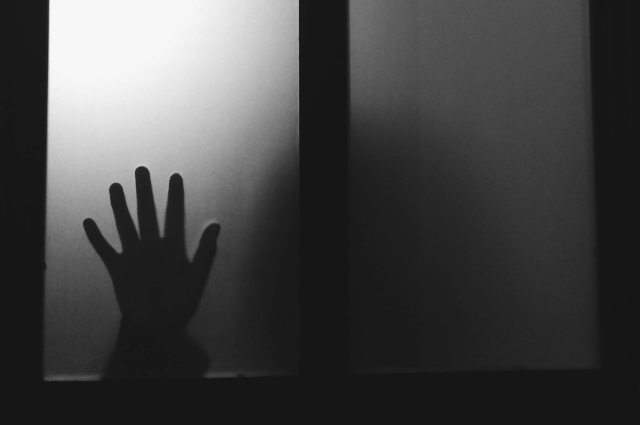
Imagine minor children being rescued from their abusive parents, or being abandoned on the streets, and brought to a shelter where they believed they would finally be safe. Then they realised they had been taken from one set of monsters to another one that was even worse.
The Muzaffarpur Shelter Home case took place in Bihar, where cases of sexual abuse, rape, and torture were reported. What I have just described is not a fictional story. It is a true incident that shocked the entire country.
A shelter was supposed to protect these children, but instead, it took their innocence away. Courts, society, and the country trusted shelter homes to keep children safe. But in this case, the people inside did far worse things to minor children. This is a case that will shake you to the core.
This article contains detailed descriptions of child abuse, sexual violence, and institutional failure. Please read at your own discretion.
What Actually Happened?
The Muzaffarpur Shelter Home case centres on a shelter home that was run by a non-governmental organisation called Sewa Sankalp Evam Vikas Samiti, based in Muzaffarpur, Bihar. In May 2018, reports of repeated sexual abuse of inmates at this short-stay home surfaced after Mumbai's Tata Institute of Social Sciences (TISS) carried out a social audit of shelter homes across Bihar for 2017. The report clearly pointed to sexual abuse of the minor girls housed at the Muzaffarpur shelter. TISS submitted its report in April 2018, and the government, after reviewing it, registered an FIR on 31 May 2018. The girls were subsequently rescued and shifted to facilities in Madhubani, Patna, and Mokama.
Later, the medical board of Patna Medical College Hospital (PMCH) confirmed in June 2018 that sexual abuse had occurred with the majority of the girls. Brajesh Thakur, the main accused in the rape case, was also booked in a separate matter after it was discovered that 11 women were missing from another shelter home run by his NGO.
On 2 August 2018, the Supreme Court of India took suo motu cognisance, meaning it stepped in without a prior request from any party in the Muzaffarpur Shelter Home case. Brajesh Thakur is the prime accused in a case where 34 girls, aged between 7 and 17, were raped repeatedly over a period of months. Ten of the 11 accused were arrested, including Thakur and the then District Child Protection Officer. All were to be tried under the POCSO Act. The case was later transferred to the Central Bureau of Investigation (CBI), which took over the investigation and obtained all relevant documents from the local police.
Compensation
Following the verdict, the Bihar government confirmed that 49 girls received financial compensation. Each girl received between ₹3 lakh and ₹9 lakh, depending on the specific circumstances of her case.
Since the girls were minors, the money was not handed over in cash. Instead, it was deposited into bank accounts or fixed deposits held in the girls' names. They could not access or control the funds directly, as they were under 18, and that is why courts continued to monitor the situation. There is no evidence that the money was misused or stolen; it remained fully under the supervision of the court.
The compensation acknowledged what happened to these girls, but it amounts to very little when placed beside the trauma they were forced to endure at such a fragile age. What happened will leave a scar on them for the rest of their lives.
Are the Girls Okay Now?
Money helped, but it cannot erase trauma. Some girls are doing well, while others are still struggling. Many of the girls needed long-term counselling, emotional support, educational assistance, and assurance of their physical safety. That is why the government has continued to keep a close watch on their welfare.
The Supreme Court of India has continued to take an active interest in the case even after the criminal trial concluded. The court has periodically called for status reports from the Bihar government on the condition of the survivor girls, asking specifically about the quality of their current accommodation, their access to education and counselling, and whether the monitoring of their welfare is actually happening in practice rather than just on paper.
The 2.43 Lakh Figure: Understanding the Bigger Picture
Sometimes we hear that there are still 2.43 lakh pending cases in connection with this matter. That figure requires careful explanation, because it is frequently misunderstood.
This number does not mean that the Muzaffarpur Shelter Home case has 2.43 lakh unresolved parts. The figure of 2.43 lakh refers instead to the total backlog of POCSO cases pending across India's court system as a whole.
This is a serious and widespread problem. The POCSO Act was introduced in 2012 with the specific intention that child sexual offence cases would be tried quickly in dedicated special courts. More than a decade later, the backlog of such cases runs into the hundreds of thousands. Accused individuals sit in prolonged pre-trial detention or on bail while cases drag on for years. The Muzaffarpur case was relatively unusual in that it proceeded to a verdict within approximately two years of the arrests, fast by Indian judicial standards, though still a long time for children to wait. Addressing this backlog remains one of the most urgent areas of reform needed in India's child protection and justice system.
The girls were never at fault. The system failed them, the institution that abused them, the inspection mechanisms that missed it, the officials who looked the other way, and the broader social culture that makes it easy to ignore the suffering of poor, powerless, and voiceless children.
The promise that children would be safe in shelter homes was broken. We still have no way of knowing how many other children, in other shelters across this country, are suffering right now and waiting for someone to find them while you read this article. That is not something to be overlooked or forgotten.
Children deserve to be protected, regardless of whether they have a home.
References
- Wikipedia — Muzaffarpur Shelter Case: https://en.wikipedia.org
- India Today — Chronology of Events in the Muzaffarpur Shelter Home Case: https://www.indiatoday.in
- CBI Press Release 1 — Chargesheet Filed: https://www.cbi.gov.in
- CBI Press Release 2 — Further Chargesheet: https://www.cbi.gov.in
- NHRC — Bihar Government Confirms ₹3–9 Lakh Compensation to 49 Victims: https://nhrc.nic.in
- Economic Times Legal — Supreme Court Seeks Status Report on Rescued Girls: https://legal.economictimes.indiatimes.com
- LiveLaw — Supreme Court Seeks Action Taken Report from Bihar Government: https://www.livelaw.in
- Delhi High Court — Criminal Appeal Order: https://delhihighcourt.nic.in
- Wikipedia — Pendency of Court Cases in India: https://en.wikipedia.org
If you are aware of a child in danger, please contact the national child helpline: Childline India — 1098 (free, 24-hour helpline).