
Imagine you are seven years old, and your family marries you off to a deity, making you the eternal wife of a goddess, but then you are offered as a sex slave in the name of God. This is the horrible reality of the Jogini system, also called Devadasi.
Let's find the truth about this system and where it is prevalent in current times.
What Is the Jogini System?
In parts of Telangana, Andhra Pradesh, Karnataka, and Maharashtra, young girls are "married" to a local deity, usually Goddess Yellamma or Renuka, at a young age. This system is called the Jogini system. It is also known as the Devadasi system in Karnataka and Maharashtra. In some areas, it is also called the Mathamma system. This practice is mostly performed in Dalit and lower-caste families.
Once married to the goddess, the girl is considered "Nitya Sumangali," which means eternally married. After marriage, she is considered auspicious and blessed. She cannot become a widow since she is married to a deity and is always considered blessed. But she also cannot marry a human man, since she is forever married to the deity.
No matter how it looks, this turns out to be huge exploitation for those young girls until their deaths.
How the Exploitation Works: The Three Stages
Stage 1: The Dedication (The Trap)
It begins with superstition and desperation. When a family experiences illness, repeated poverty, or death, the village priest or local elders convince them that the goddess is angry with them.
To make the goddess pleased with them, they are pressured to give an offering and not just an offering of money, but their daughter.
Once the family agrees, a daughter aged 5 to 10 years old is given as an offering to the goddess, where she is married to the deity. A "Thaali" (Mangalsutra) is tied around her neck in the name of the goddess. She is now the bride of the goddess and is told she is blessed. The family is told that their troubles will end.
Stage 2: The "First Night" (The Ritual Abuse)
This is where it gets horrifying. When the girl hits puberty, her first night is held as a ceremony. At this point, devotion is out of the story. What remains is the actual Jogini system, that is, the sexual exploitation of young girls by old men.
Since the young girl is married to the goddess, she is basically considered property of the temple and the village. In short, the property of the men holding power in the village.
Her "first night" (virginity) is often auctioned off or claimed by a powerful upper-caste landlord, the village headman, or a priest. They pay the family a small amount or cover the ritual costs in exchange for sexual rights over the girl.
As you understand, this is nothing but rape and sexual harassment of young children by grown old men.
Stage 3: The Lifetime of Slavery
Because she is eternally married to a deity, no man will marry her. She is forced to serve as a sexual partner for men in the village. "Public property", that's what we can call it, and that's how those men treat her.
She has no right to say no. If a patron calls, she has to go. She lives in her parents' home but is financially dependent on these men. Since she is not legally called a sex worker, she does not have any labour rights or protection. The community will not employ her, and worst of all, the state does not recognise her.
If she gets pregnant, which is common, the children are often stigmatised. They do not know who their father is, and the cycle often continues. The daughters of Joginis are sometimes forced to become Joginis.
The "Goddess vs. Slave" Paradox
The manipulation runs so deep and disgustingly well. The girl's status changes based on the day and the sexual needs of men in the village.
On festival days, she is respected. People touch her feet. She carries the "Bonam" (pot) on her head, and she is seen as the vessel of the goddess. They are dressed in fine clothes and treated as living embodiments of the goddess. For those few days, they are sacred and forget the nightmare they are in.
On other days, they are treated worse than sex workers. They are used by men at night and receive little money, with which they cannot even maintain their normal life. They are abused and discarded by the community and even by their own families. They have no legal rights, and they cannot report rape because their own bodies are not considered their own.
You can see the hypocrisy clearly. They are called the wives of the goddess, yet treated as disposable. They are not even considered women.
The Aftermath: Old Age and Abandonment
Once they grow old, of course, they are not pretty anymore, so they are discarded because old men like young girls. They do not like the old ones, the ones who have wrinkles on their faces. In old age, they are discarded by the temple itself, since they are useless. The family already gave them up, and the community only saw their body nothing more. Finally, the exploitation ends, but with them being homeless and having no place to live.
Most Joginis in old age end up begging outside the same temples where they were married off as children. This is called "Jogwa," which means living on alms. No pension, no savings, no family and their own children distance themselves since they do not like the title of being children of Joginis.
They have no access to the healthcare system. In fact, they have no health education. They have no right to demand that their sexual partners use protection. Due to this, there is a very high rate of STDs and HIV/AIDS among Joginis. They die miserably, alone, and in pain.
Where Does This Still Happen?
The Jogini system is part of today's society. Yes, there are still such people and blind faith. It happens where law enforcement is absent.
The practice is most prevalent in:
- Telangana: Particularly in the districts of Mahbubnagar, Nizamabad, Adilabad, and Warangal.
- Andhra Pradesh: Especially in the Rayalaseema region and areas near the Karnataka border.
- Karnataka: Concentrated in the northern districts such as Belagavi (Belgaum), Vijayapura (Bijapur), and Bagalkot.
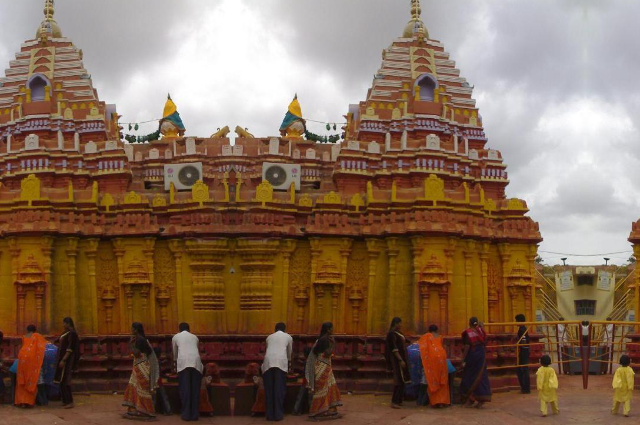
- Maharashtra: In parts of the Marathwada region, particularly near the Yellamma temple in Saundatti.
In Karnataka and Maharashtra, the women are often called Devadasis. In Telangana, they are known as Joginis or Mathammas. The terminology changes, but the exploitation is the same behind the scenes.
Is This Legal? What Does the Law Say?
It has been illegal for decades. But laws do not mean they are applied in reality.
The central legislation that banned the practice is the Karnataka Devadasis (Prohibition of Dedication) Act, 1982, which was later adopted with modifications by other states, including Andhra Pradesh. Under this law, dedicating a girl to a deity is a criminal offence. It is punishable by imprisonment and fines.
Enforcement is nonexistent because of the following reasons:
- The victims are almost always Dalit. They are less educated and do not know about such laws. The predators are from the upper class, which includes police and politically connected individuals, making the law useless.
- The practice is held privately in remote areas. Families think they are doing a religious practice instead of hurting their daughters.
- Since it is seen as local culture, they do not consider it a crime.
- Families who agree to this practice are poor, and even if they see it as wrong, they may see no other options.
The Voices of Survivors
A small but growing number of Jogini women are speaking up and finally shedding light on this disgusting practice. Below are some testimonies that were taken by journalists, researchers, and human rights organisations.
"The gods are not going to save us just because we are married to them. We were children. We did not choose this. And now we have nothing."
This statement is from a survivor interviewed by the investigative outlet Article 14 in 2022.
"They told my parents it was for the goddess. But it was not for the goddess. It was for him. He was old. I was 13. I did not understand what was happening until it was over."
A woman interviewed by The News Minute described the "first night" ritual in blunt terms.
It is not easy to read, but it is necessary. These are the voices of women who suffered through it. There are many more, and also ones that we will not be able to hear.
Married to a deity? No. This is complete nonsense, a practice used by predators to fulfil their bodily needs. We can also say it is a group of rapists who use the name of the divine as a cover to fulfil their disgusting fantasies.
For goddesses and gods, we are their children, not toys to get married off and used. We are children of the gods, and they themselves would not agree with such ridiculous beliefs.
A young child's body is used as an offering and then raped by men who could be called her grandfather or even father. She is too young to understand what is going on with her, but the adults? This is horrible. It is the life of a woman who is used physically and spiritually and gets nothing in return, not even a peaceful death. She gets discarded by everyone.
The Jogini system is not a culture, not a tradition, and certainly not a practice that will satisfy the divine. This is straight-up abuse and a criminal offence.
India has laws, but they are pointless when children are suffering from such practices while you read this. No girl is a living offering to anyone.
References
Investigative Reports and Journalism
- Article 14 (2022) — The Gods Are Not Going To Save Us Just Because We Are Married To Them: https://article-14.com
- The News Minute — Joginis: The Religious Sex Slaves of Telangana: https://www.thenewsminute.com
- V6 News (Telugu Coverage) — Special Story on Jogini Culture: https://www.v6velugu.com
Research and Medical Data
- National Institutes of Health (NIH) — HIV in India: The Jogini Culture: https://www.ncbi.nlm.nih.gov/pmc
- Centre for Economic and Social Studies (CESS) — Status of Jogini System in Telangana: https://cess.ac.in
- Centre for Law & Policy Research (CLPR) — Policy Brief on Devadasi Legislation: https://clpr.org.in
Human Rights and Advocacy Organisations
- International Dalit Solidarity Network (IDSN) — Forced Prostitution & The Devadasi System: https://idsn.org
- National Commission for Women (NCW) — India: https://ncw.nic.in
If you or someone you know has been affected by the Jogini system, organisations such as Shakti Samuha, Apne Aap Women Worldwide, and local Dalit rights groups offer support and legal assistance. Reporting can also be done through the National Commission for Women (NCW) or state women's commissions.