
In a world increasingly defined by strategic rivalry, supply chain disruptions, and fragile alliances, reliable partnerships have become rare strategic assets. The war in Ukraine continues to reshape Europe’s security architecture. The Indo-Pacific has emerged as the centre of geopolitical competition. Meanwhile, climate change and technological disruption are rewriting the rules of global power.
Against this turbulent backdrop, India and France are quietly building one of the most steady and forward-looking partnerships of the 21st century.
What began as a diplomatic alignment in 1998 has matured into what leaders now call a “Special Global Strategic Partnership.” But beyond the official terminology lies something deeper: a relationship built on trust, strategic autonomy, and a shared belief in a multipolar world order.
This is not merely a defence relationship. It is a broad-based collaboration that spans military modernisation, Indo-Pacific security, technological innovation, climate leadership, and global governance reform.
Defence Cooperation: From Buyer–Seller to Strategic Co-Development
Defence remains the backbone of India–France ties, but the nature of that cooperation is evolving rapidly.
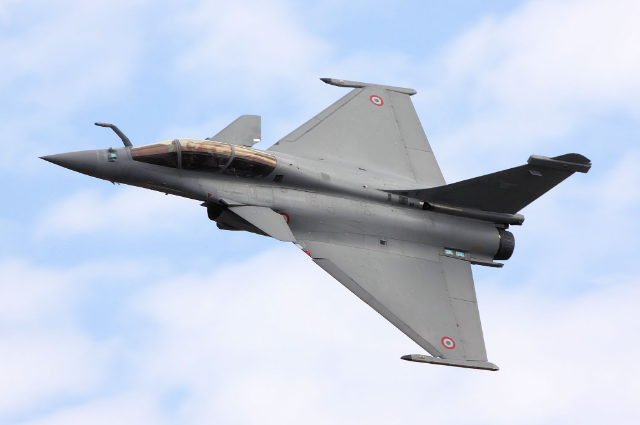
France has long been one of India’s most dependable defence partners. At moments when global politics complicated access to advanced military platforms, Paris maintained a consistent approach toward New Delhi. The Rafale fighter jet deal symbolised this trust. More than just an aircraft acquisition, it marked a shift in India’s air power capability and reinforced France’s credibility as a strategic supplier.
Recent developments suggest the relationship is moving beyond procurement toward joint production and technology sharing. Discussions around additional Rafale acquisitions, including naval variants, as well as cooperation in jet engine development, signal deeper industrial collaboration. Initiatives such as helicopter assembly lines in India and joint ventures in missile manufacturing reflect a broader transformation: India and France are building defence capacity together rather than simply conducting transactions.
This shift aligns with India’s emphasis on indigenous manufacturing under the “Make in India” initiative. For France, it represents an opportunity to embed itself within India’s long-term defence ecosystem.
Joint military exercises — Varuna (naval), Garuda (air), and Shakti (army) — reinforce operational compatibility. These are not ceremonial drills. They reflect growing strategic confidence and an understanding that interoperability matters in an unpredictable security environment.
In essence, defence ties have matured into a partnership of capability-building rather than dependency.
The Indo-Pacific: A Shared Strategic Geography
The Indo-Pacific is no longer just a diplomatic buzzword; it is the primary theatre of global power competition. France, often overlooked in Asian security discussions, is in fact an Indo-Pacific nation, with overseas territories and military assets spread across the region.
India and France share a strong commitment to a free, open, and rules-based Indo-Pacific order. Both emphasise freedom of navigation, maritime security, and respect for sovereignty. Their cooperation extends from coordinated naval patrols in the Indian Ocean to strategic consultations on regional developments.
Importantly, their engagement is not directed at confrontation but at balance. In an era of great-power rivalry, India and France appear to favour strategic equilibrium over bloc politics.
Their involvement in broader frameworks — including trilateral partnerships with Australia and the UAE, as well as discussions surrounding the India–Middle East–Europe Economic Corridor (IMEC) — reflects an ambition to shape connectivity and infrastructure development across regions.
In this sense, the India–France partnership is as much about architecture-building as it is about security.
Economic Engagement and Technological Ambition
While defence headlines dominate coverage, economic ties form an equally vital pillar of the relationship.
Bilateral trade has grown steadily, with cooperation spanning aerospace, renewable energy, urban transport, digital services, and luxury industries. French companies see India as a long-term growth market, while Indian firms view France as a gateway to Europe.
The launch of the India–France Year of Innovation signals a new phase centred on emerging technologies. Artificial intelligence, clean energy systems, healthcare technology, and advanced manufacturing are areas where both countries see strategic opportunity.
Supply chain resilience has become a shared priority. The pandemic and geopolitical disruptions exposed vulnerabilities in global production networks. By investing in joint ventures and critical mineral cooperation, India and France aim to reduce overdependence on single suppliers.
The economic dimension of this partnership is not purely commercial. It reflects a deeper ambition to build technological sovereignty in a world increasingly shaped by digital power.
Space Cooperation: A Quiet Success Story
Few bilateral relationships in the world can claim a space partnership as enduring as that between India and France.
For decades, the Indian Space Research Organisation (ISRO) and France’s CNES have collaborated on satellite missions and climate-monitoring systems. Their cooperation now extends into advanced domains such as thermal imaging satellites and support for India’s human spaceflight ambitions.
As space becomes an arena of strategic competition, sovereign access to space technology has become essential. Here too, India and France appear aligned — advocating peaceful use, multilateral governance, and technological collaboration rather than militarised rivalry.
Space cooperation demonstrates that their partnership is not limited to terrestrial geopolitics; it reaches into future-oriented domains where innovation and security intersect.
Climate and Clean Energy: Strategic Sustainability
India and France were co-founders of the International Solar Alliance, a move that positioned both countries as leaders in climate diplomacy. Since then, renewable energy cooperation has expanded significantly.
France has supported India’s renewable transition, while India’s ambitious solar targets reinforce global climate goals. Discussions on civil nuclear energy, green hydrogen, and resilient infrastructure reflect a recognition that energy security and climate policy are now inseparable.
In many ways, climate collaboration gives the India–France partnership a moral dimension. It shows that strategic alliances today must address not only power politics but planetary survival.
Diplomacy, Multilateralism, and Global Reform
The political chemistry between leadership in New Delhi and Paris has further strengthened the partnership. Regular high-level visits and structured dialogues indicate continuity rather than episodic engagement.
France has consistently supported India’s aspiration for a permanent seat on the United Nations Security Council. Both nations advocate reform of global governance institutions to reflect contemporary realities.
At a time when multilateralism faces strain, India and France position themselves as defenders of international law and diplomatic solutions. Their coordinated positions on major global crises suggest a shared preference for stability over polarization.
Beyond Bilateralism, Toward Global Relevance
The India–France strategic partnership is no longer confined to defence contracts or diplomatic ceremonies. It represents a deeper alignment of vision in an era when the global order is being redefined. Both nations seek strategic autonomy, technological sovereignty, and a rules-based international system that respects national interests without surrendering to bloc politics.
From co-developing advanced defence platforms to leading climate initiatives and shaping Indo-Pacific stability, India and France are building a partnership designed for long-term relevance. It is pragmatic, yet principled. It is cautious, yet ambitious.
In a century that will test alliances through economic shocks, technological disruption, and geopolitical rivalry, relationships built on trust rather than dependency will endure. The India–France bond appears to be one of them.
If the 20th century was shaped by rigid alliances, the 21st may well be defined by flexible, strategic partnerships. And in that emerging world, the India–France relationship stands as a compelling example of how middle powers can work together to shape, rather than simply react to, global change.