
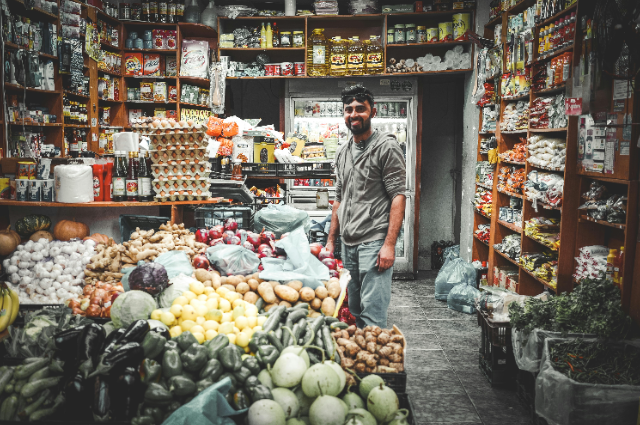
In many Indian neighborhoods, the biggest change of the last few years is not in the skyline but in the way people buy groceries. What once required a short walk to the kirana store now arrives at the doorstep in 10–30 minutes, summoned by a few taps on a screen. Delivery apps have not only altered shopping habits; they have quietly reshaped the rhythm and texture of everyday life in our localities.
For decades, the kirana store was more than a shop; it was a neighborhood institution. The shopkeeper knew each family by name, remembered preferred brands, and often quietly noted credit for the month on a small notebook. Children were sent to buy bread or eggs as a small test of independence. Festivals, illnesses, bad weather—through it all, the kirana remained a reassuring presence, a place where a purchase could include a few words of concern, a bit of gossip, or a small act of kindness. This relationship was built on familiarity, trust, and small, everyday interactions.
Delivery apps introduced a very different logic. Instead of walking to the shop, comparing brands on the shelf, and chatting briefly with the shopkeeper, consumers now scroll through a digital catalogue, filter by price or discount, and complete payment without any human conversation. Speed and convenience became the new ideal. A long workday, bad weather, or even simple habit can make it feel easier to press “order now” than to step out, even if the kirana is just around the corner. Over time, this convenience starts to feel like a necessity rather than a luxury.
Economically, this shift has put many kirana stores under pressure. When a large part of nearby households begin ordering online, walk‑in customers decline, especially for snack items, soft drinks, and other fast‑moving products. Some kiranas try to join the same platforms competing with them, listing themselves as partners so their inventory appears in the app. But commissions, packaging costs, and the pressure to manage online orders alongside in‑store customers can squeeze already thin profits. Unlike large app-backed platforms, small shopkeepers cannot afford to sell at a loss just to attract users; they need each sale to be sustainable.
Yet the story is not simply “apps killed kiranas.” In much of India, especially beyond the wealthiest urban pockets, kirana stores still dominate the grocery market. Many people continue to rely on them for monthly rations, because of better bulk prices, confidence in product quality, and the comfort of knowing that credit exists in difficult times. Even in metros, a common pattern has emerged: households use delivery apps mainly for quick top‑ups—ice cream, vegetables, forgotten ingredients—while still turning to their kirana for larger, planned purchases. Instead of a clean replacement, there is a patchy, uneven coexistence, where each option serves different needs and moods.
Kiranas are also adapting. Today it is common to see QR codes next to the cash counter, enabling quick UPI payments. Some shopkeepers take orders over phone calls or WhatsApp, sending a helper to deliver goods to nearby buildings and collecting payment
later. Others have tied up with local or regional delivery services that help small shops offer affordable logistics without charging the high commissions of big platforms. These changes show that kiranas can use technology on their own terms, rather than simply resisting it.
Yet even if the kirana survives economically, the neighborhood loses something when fewer people visit in person. The casual conversations that once happened at the shop—the “how is your mother’s health now?” or “did your child’s exam go well?”—become rarer when purchases happen through a screen. A shop that once acted as an informal noticeboard, a source of local news, and sometimes even a small support system during tough times, gradually fades from daily social life. During emergencies like lockdowns, many people rediscovered how crucial these local stores could be, but as normal life returned, the habit of convenience often returned as well.
There is also the question of where money flows. Every purchase from a kirana keeps a larger share of value within the local area. The shopkeeper spends earnings locally, supports nearby workers, and often buys from regional distributors. When the same transaction happens through a big platform, part of the value is pulled away in fees, commissions, and profits that go to distant corporate centers and investors. The rider who brings the bag to the door may live in the same neighborhood, but the relationship is tightly scheduled, transactional, and not as flexible or trust‑based as the old kirana bond.
Policymakers and regulators are beginning to debate how to balance quick commerce and small retailers. Questions about fair competition, deep discounting, data use, and protections for local shops are gaining attention. Some argue for rules that prevent platforms from using practices that unfairly disadvantage kiranas, while others push for support schemes—like easier credit, training in digital tools, and cooperatively run platforms—that help small shops join the digital age without losing their autonomy. Policy matters, but so do everyday choices.
Ultimately, the question “Goodbye, kirana stores?” is not just about business models; it is about the kind of neighborhoods people want to live in. A locality where every purchase arrives through a screen may be efficient, but it risks becoming more anonymous and isolated. A locality where the kirana continues to thrive may not offer the fastest delivery all the time, but it preserves small spaces of human connection and mutual support. Both worlds can exist, but their balance depends on the choices people make, one small order at a time.
So the next time you need a packet of biscuits or a loaf of bread, what will your choice say about the kind of neighborhood you want to live in?
REFERENCES
- Impact of quick-commerce on physical stores (kirana stores) https://ijsrem.com
- How local kirana stores are adapting to India’s quick-commerce boom (Primus Partners report) https://primuspartners.in
- Reinventing Retail: How local kirana stores are adapting to India’s quick-commerce boom – Economic Times https://economictimes.com
- How Rapid Delivery Could Change the Fate of India’s Kirana Stores? – Shiprocket blog https://www.shiprocket.in
- Quick Commerce vs. kirana stores and the debate in India – Finshots https://finshots.in
- Kirana stores resisted e‑commerce but can they survive instant‑delivery onslaught? – Scroll.in https://scroll.in
- Kirana vs Quick Commerce: Why 91% of the grocery market still belongs to kiranas – Dezerv https://www.dezerv.in
- Quick Commerce captures nearly half of kirana sales – Economic Times Retail https://retail.economictimes.indiatimes.com