
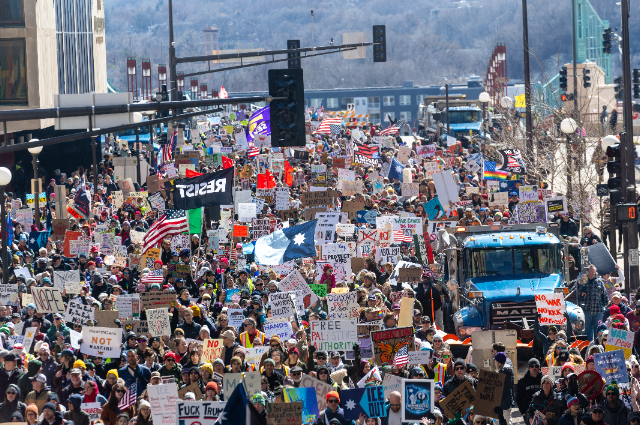
Picture this: on a single Saturday in late March 2026, more than 3,200 rallies popped up across every state in the country—and even spilt into a handful of cities overseas. Millions of people showed up with handmade signs, chants echoing the same two words: “No Kings.” It wasn’t some coordinated corporate PR stunt or a single organisation’s big event. It was raw, decentralised, and massive—the third and biggest wave yet in a series of protests that started back in 2025. Organisers from groups like Indivisible, MoveOn, and the 50501 Movement helped connect the dots, but the energy came from everyday folks deciding they’d had enough.
So what the heck does “No Kings” actually stand for? It’s not a brand-new hashtag cooked up for social media. The phrase goes straight back to the American Revolution. Colonists weren’t just mad at King George III across the ocean—they were done with the whole idea of one person wielding unchecked power. Thomas Paine hammered this home in *Common Sense*, basically saying one honest citizen beats “all the crowned ruffians that ever lived.” That gut-level rejection of monarchy became baked into how the country was built: checks and balances, separation of powers, no one above the law. Historians point out that “No Kings” has been a recurring American alarm bell whenever power starts feeling a little too absolute—whether it was critics calling Andrew Jackson “King Andrew the First” or later jabs at presidents who seemed to act like they wore a crown.
Fast-forward to today, and the slogan has found new life. People are using it to push back against what they see as an administration testing the limits of executive authority—immigration raids, military moves, and policies that feel like they sidestep Congress and the courts. The official No Kings website puts it plainly: America doesn’t do kings, and power belongs to the people, not “wannabe kings or their billionaire cronies.” It’s catchy, it fits on a poster, and it doesn’t require a 10-page policy paper to explain. That simplicity is exactly why it spread like wildfire.
Here’s what makes it stick across so many different crowds: nobody owns it. No single group can trademark the phrase or dictate exactly what it means. That looseness is both its superpower and its weakness. Some protesters read it as a straight-up defence of democratic norms. Others see it as frustration with rising costs, foreign policy decisions, or a general sense that the system is tilting too far toward one person’s agenda. It even pulls in a few folks who don’t usually march—people who might lean conservative but still draw the line at anyone acting like a monarch. The core idea—that power needs guardrails—is pretty hard to argue against, no matter where you sit politically.
But let’s be honest: this broad appeal also raises some tough questions. Are we all really on the same page about limiting power, or does “king” just become a label we slap on whoever we dislike at the moment? Would the same people chanting “No Kings” today feel the same if a leader they trusted started bending the rules? History shows that discomfort with concentrated authority tends to fade when it’s *your* side in charge. That’s the uncomfortable tension baked into the movement.
Critics have a point when they say the protests feel more like a giant vent session than a detailed roadmap for change. Outlets like *The Week* have wondered whether visibility alone turns into real policy wins or just burns out once the headlines fade. Large crowds are great for headlines, but without clear next steps, they can start to feel like collective emotion rather than sustained pressure.
Still, it’s hard to dismiss something this big. When millions of people in big cities and tiny towns all decide to show up on the same day and say the same thing, it’s a signal. It tells leaders—and the rest of us—that a lot of folks believe something fundamental is at risk: the idea that no one gets to rule like a king. These protests aren’t pretending to solve every problem overnight. They’re more like an old-fashioned wake-up call, the kind that has kicked off bigger conversations throughout American history.
At its heart, “No Kings” forces us to ask bigger questions than any one election or scandal: What does real accountability look like in a democracy? Are elections enough, or do we need ordinary citizens to keep watching the watchdogs? And maybe the hardest one—who steps up when the guardrails start wobbling?
The slogan doesn’t hand us the answers. It just refuses to let us ignore the question. And in a country that was literally founded on telling kings to take a hike, that refusal still carries serious weight. Whether it fades into another protest memory or sparks something longer-lasting depends on what people do after the signs come down. For now, though, the message is loud, simple, and impossible to unhear: In America, we have no kings. Period.
REFERENCES
- Reuters (March 30, 2026) – Reports over 3,200 “No Kings” events planned across all 50 states on March 28, 2026. https://www.reuters.com
- NBC News (March 28, 2026) – Coverage of more than 3,200 marches nationwide, including protests against executive actions, immigration enforcement, and foreign policy. https://www.nbcnews.com
- The Washington Post (March 28, 2026) – Details record turnout with over 3,300 rallies and public grievances about concerns over concentrated power. https://www.washingtonpost.com
- Wikipedia – March 2026 No Kings protests – Comprehensive overview citing organisers’ claims of 3,300+ events and 8–9 million participants, plus context on the movement. https://en.wikipedia.org
- No Kings Official Website (nokings.org) – Primary source from organisers explaining the slogan’s meaning: “In America, we have No Kings” and framing the protests as resistance to unchecked authority. https://www.nokings.org
- Britannica – No Kings protests – Explains the movement’s organisation by groups like MoveOn, Indivisible, and the 50501 Movement, and the historical resonance of the phrase. https://www.britannica.com
- Thomas Paine, Common Sense (1776) – Foundational historical text rejecting monarchy; key quote: “In America, the law is king.” Widely cited as the root of the “No Kings” idea. https://loveman.sdsu.edu (or standard editions)
- The Conversation / Kansas Reflector (2025 articles on Paine) – Modern analysis connecting Thomas Paine’s rejection of kings to contemporary “No Kings” protests. https://theconversation.com
- The Week (recent piece) – Discusses whether large “No Kings” rallies translate into real political change or risk remaining vague expressions of frustration. https://theweek.com
- The Nation (March 2026) – Opinion/analysis on the protests, noting both their scale and the challenge of the slogan being somewhat broad or personality-focused rather than strictly policy-driven. https://www.thenation.com
- PBS NewsHour (March 28, 2026) – Reports on crowds across the U.S. and Europe. https://www.pbs.org
- Time Magazine (March 28, 2026) – Organiser statements and expectations for record turnout. https://time.com
- Stateline / Pew Charitable Trusts (March 26, 2026) – Background on the role of Indivisible, MoveOn, and 50501 in driving the decentralised movement. https://stateline.org
. . .