
ABSTRACT
Women frequently encounter stress and emotional challenges, especially during transitional or demanding stages of life, making it essential to adopt effective coping strategies that support overall well-being. This study set out to explore the coping mechanisms most commonly practised by women and to assess their role in strengthening resilience and improving mental health.
Data were gathered through a survey designed to capture participants’ preferred coping approaches and their perceived outcomes. The focus was on strategies such as social support, spiritual or religious practices, and physical activity, while responses were analysed using descriptive statistics to identify patterns and effectiveness.
The results showed that social support (58.1%) and spiritual or religious engagement (55.8%) were the most widely used approaches, followed closely by exercise (51.2%). Social support was also identified as the most effective method, with 60.5% of respondents naming it their preferred strategy. Overall, most participants reported notable improvements in mental and physical well-being, with many also experiencing moderate to substantial personal growth. These outcomes indicate that coping strategies serve a dual role by reducing stress and fostering long-term self-development.
In summary, the findings highlight the importance of community connections, faith-based practices, and physical activity as key contributors to resilience. The study suggests that holistic approaches combining these dimensions can effectively promote women’s psychological health and overall quality of life.
Image by Natalia Lavrinenko from Pixabay
A midlife crisis is often described as a period of intense self-reflection and emotional upheaval that some middle-aged adults go through. It is typically seen as a transitional phase where individuals reassess their sense of identity and life choices. The common age range for “midlife” is usually considered to be between 40 and 60 years old, though it can vary slightly. A widespread belief is that this stage brings inner turmoil regarding one’s identity, decisions, and mortality, often labelled as a midlife crisis. (Sheldon Reid). However, not all psychologists agree with viewing midlife as a crisis. Before Jacques, renowned psychiatrist Carl Jung regarded midlife as a time for revaluation and realignment of priorities, calling it the “afternoon of life,” rather than a crisis.
Research indicates that life satisfaction and happiness tend to decrease somewhat as women approach midlife. Yet, these declines aren’t always significant, and some studies suggest that people may even experience increased life satisfaction during midlife, which then declines later on. For many individuals, the term “crisis” doesn’t accurately describe their midlife experience, as only around 10 to 20 per cent of adults report actually going through a midlife crisis. During midlife, you might start experiencing feelings of regret about your career choices and feel trapped by financial decisions. Concerns about declining physical abilities or missed goals may also arise. Additionally, many notice a shift or increase in responsibilities, such as caring for ageing parents or watching your children become more independent.
Midlife is a transition period for many adults, marked by self-reflection, searching for meaning in life, personal growth, career advancement, and the ageing process. Some may experience signs of crisis. Many individuals struggle to cope with this midlife crisis, not knowing how to start or where to start the coping strategies to navigate this period. Leading to negative outcomes in life. The knowledge gap leads to a lack of effective guidance, resulting in poor coping choices, which will escalate their struggles. To bring positive changes with coping strategies, one needs to identify which strategy will be effective to improve mental health, personal growth, and well-being in this midlife crisis. This research aims to address the gap by evaluating the effectiveness of different coping mechanisms in relation to midlife challenges, mitigating negative effects & promoting personal growth and well-being during the midlife crisis, providing evidence-based guidance for individuals.
General Objectives
To evaluate the effectiveness of coping mechanisms used by women experiencing a midlife crisis.
Specific Objectives
- To identify the various coping mechanisms adopted by women to manage midlife crisis-related stressors.
- To assess the effectiveness of different coping strategies in emotional and psychological well-being.
- Identify the common psychological, emotional, physical, and social challenges faced by women during midlife crisis.
- To identify the demographic factors that will affect the choice or the effectiveness of coping mechanisms.
- Bring awareness to the general audience regarding this topic, how to support them & Intervention strategies
LITERATURE REVIEW
The concept of a midlife crisis may largely be influenced by cultural perceptions. It’s important to remember that not all cultures recognise or emphasise midlife as a distinct or difficult period. In Western society, ageing is often viewed negatively, while youth is highly glorified. An obsessive focus on ageing signs like wrinkles and grey hair implies that losing physical attractiveness is undesirable, which can lead to feelings of despair or decreased self-esteem as one reaches midlife. This negative outlook on ageing might prompt individuals to reassess their achievements or see this phase simply as a transition into old age.
Besides cultural influences, concrete stressors and significant life events can also trigger or worsen feelings associated with a midlife crisis. These might include health problems, changes in social relationships, career challenges, or financial difficulties. For example, physical health often declines with age, making some feel discouraged or fearful about the future. Women might experience menopause, which can bring symptoms like hot flashes, mood swings, sleep disturbances, anxiety, and add to overall stress.
Family dynamics often shift during midlife as well. Many parents encounter empty nest syndrome, feeling grief, loneliness, or emptiness as their children leave home, prompting a reevaluation of their parental role and personal identity. Changes in relationships with ageing parents can also be taxing—whether through caregiving responsibilities or the loss of a parent, which can be profoundly upsetting. Divorce is another event that can create emotional turmoil, bringing about feelings of sadness, anger, and confusion, and complicating family relationships if children are involved.
Midlife has widely been linked with stress and regarded as a stage marked by crisis (Lachman, 2004). For example, instances of stress occasioned by role conflicts or financial pressures have been found to surface in midlife or take or occur in greater dimension in middle age (Almeida & Horn, 2004). Even though it can be said that losing one’s job or going through a divorce may occur during other age periods in life, there are possibilities that those in midlife may experience greater stress as a result of age.
But, in spite of the fact that midlife is attributed to a negative and undesirable period in life, little attention is paid to the huge consequences of poor functioning in midlife (Lachman et al., 2015). According to Lang et al. (2010), depression and stress are at their peak in the middle years, especially for those with financial strain, while suicide rates are higher in the middle years when compared to other age periods (Brown, 2017). In Nigeria, studies into midlife crisis are scarce and under-researched. Whether it exists or not, it is evident that the effects of midlife crisis are felt among many. For example, Nigeria is one of the epicentres of suicide in the world, with a suicide estimate of 17.3 per 100,000, which is higher than the global (10.5 per 100,000) and Africa (12.0 per 100,000) estimates according to the World Health Organisation (WHO, 2019). According to global statistics, since 2012, there has been an increase in suicide in Nigeria (WHO, 2018), many of which are impulsive responses to psychological stressors (WHO, 2014). Some of these psychological stressors might, however, have resulted from personal risk factors such as financial constraints, loss of loved ones, mental illness, physical illness, substance abuse, and so on Uwakwe & Gureje, 2011), which are symptoms of midlife crisis as argued by (Staudinger & Bluck, 2001). It is against this background that this study is being conducted. Vol. 4 (Is. 1) 2023, pp. 250-255
Expected Outcome of the Study: Firstly, to determine the effectiveness of the coping mechanisms used by women experiencing a midlife crisis. Secondly, the identification of the most common coping strategies among midlife women, such as seeking social support, spiritual and religious practices, engaging in physical activities, and practising mindfulness.
Assessment of effectiveness: Research will evaluate which coping mechanisms are most effective in managing stress, psychological well-being, and building resilience during midlife challenges. The study will contribute to the academic understanding of women's mental health in midlife, addressing gaps in the literature related to coping effectiveness during this stage.
The survey questionnaire includes items on participants' demographic information, such as age, marital status, and occupation. It also assesses whether participants have experienced a midlife crisis and explores the coping mechanisms they used to manage stress. Additional questions evaluate the frequency of using these coping strategies, participants' overall emotional well-being, and the frequency of stress experienced over the past six months. The survey further examines participants' physical health during the same period and any reported improvements in mental, cognitive, and physical health following the adoption of specific coping strategies. Finally, the questionnaire seeks to identify which coping strategies are most preferred among participants.
A survey was conducted to identify the coping strategies currently employed by participants to manage stress and emotional challenges. The findings indicate that the most commonly used mechanisms among the respondents are social support, spiritual and religious practices, and exercise.
- Social support was utilized by 58.1% of participants, making it one of the predominant strategies for healthy lifestyle practices in stress management during periods of emotional upheaval.
These findings underscore the crucial role that both spiritual beliefs and community connections play in fostering resilience and well-being during challenging times. Additionally, incorporating physical activities into daily routines further enhances participants' overall mental health and coping strategies. The survey results indicate that the majority of participants experienced improvements in both their mental and physical well-being after using their coping mechanisms. Specifically, 59% reported significant improvement, while 52.4% noted some improvement. Overall, these findings suggest that coping strategies are generally effective in enhancing participants’ overall well-being, highlighting the positive impact of such mechanisms on managing stress and promoting mental and physical health.
METHODOLOGY
This study will employ a descriptive research design using a quantitative approach. It enables the researcher to systematically describe the coping mechanisms used by women experiencing a midlife crisis and analyse the effectiveness without manipulating any element.
Population of the study: The targeted population of the study is women aged 40 and above. These may include menopause related changes, family role transition, emotional distress, and career-related challenges. Sampling technique: Participants who are females and above 40 years of age. Sampling size: 40-50 participants will be selected, depending on accessibility and willingness to participate. This sample size is considered for descriptive analysis.
Inclusion Criteria:
- Women aged 40 and above
- Able and willing to give informed consents
- Residing within Qatar, and they are expats
Exclusion criteria:
- Women outside the age of 40and below
- Those who diagnose severe mental health conditions
- Those who are unwilling to participate or complete the questionnaire
Data collection instrument: data will be collected through a questionnaire consisting of closed-ended and scale-based questions.
The questions will be divided into three sections:
- Demographic information (age, education, marital status, employment)
- Midlife crisis indicators:(emotional, psychological, physical)
- Coping mechanisms (effectiveness on a 1-5 scale)
Data analysis:
Descriptive Statistics, such as percentages, will be used. Charts and tables will be used to visually present the data.
Ethical consideration:
- Ethical approval: will be obtained from the relevant institution
- Informed consent from all participants
- Confidentiality and anonymity will be strictly maintained.
- Participants will have the right to withdraw at any stage of the research.
Expected Outcome of the study: Firstly, to find out how effective the coping mechanisms which was used by women experiencing midlife crisis. Secondly, the identification of the most common coping strategies among midlife women, such as seeking social support, spiritual and religious practices, engaging in physical activities, and practising mindfulness.
Assessment of effectiveness: Research will evaluate which coping mechanisms are most effective in managing stress, psychological well-being, and building resilience during midlife challenges. The study will contribute to the academic understanding of women's mental health in midlife, addressing gaps in the literature related to coping effectiveness during this stage.
RESULTS
Firstly, to find out how effective the coping mechanisms which was used by women experiencing midlife crisis. Secondly, the identification of the most common coping strategies among midlife women, such as seeking social support, spiritual and religious practices, engaging in physical activities, and practising mindfulness.
Assessment of effectiveness: Research will evaluate which coping mechanisms are most effective in managing stress, psychological well-being, and building resilience during midlife challenges. The study will contribute to the academic understanding of women's mental health in midlife, addressing gaps in the literature related to coping effectiveness during this stage. According to the questionnaire, the results are as follows: Most of the participants were aged 40-45 years old, 60.5%. All the participants were married and partnered. Of the total participants, 46.5% are unemployed,7% employed part-time, 23.3% self-employed, and 20.9% full-time employees.
Results 1:
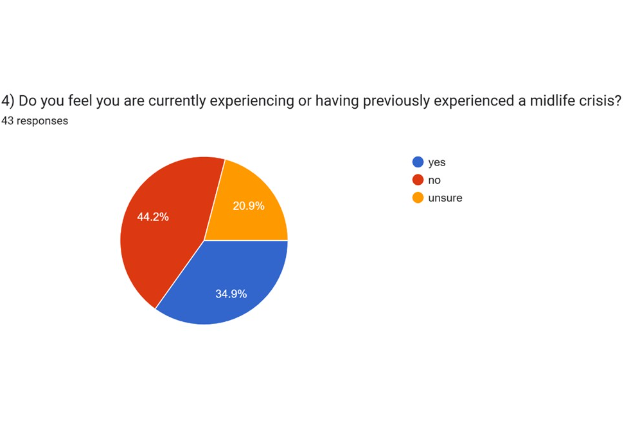
The following pie chart results show that 36% of respondents reported either having experienced or currently experiencing a midlife crisis. A slightly larger proportion of participants indicates that they have not experienced a midlife crisis. Additionally, 20% participants responded as being unsure, suggesting a level of uncertainty in recognising or labelling their life experiences as part of a midlife crisis.
Figure 1
Result 2:
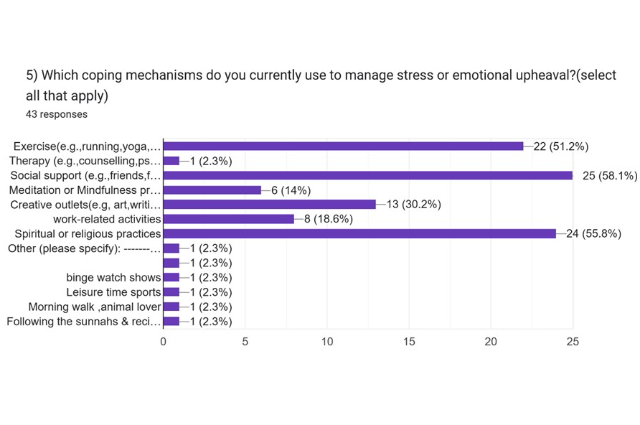
A survey was conducted to identify the coping strategies currently employed by participants to manage stress and emotional challenges. The findings indicate that the most used mechanisms among the respondents are social support, spiritual and religious practices, and exercise.
- Social support was utilized by 57.1% of participants, making it one of the predominant strategies.
- Spiritual and religious practices were also reported by 57.1% of participants, highlighting the significance of faith-based coping in managing stress.
- Exercise was employed by 52.4% of respondents, indicating that physical activity is another widely used method for emotional regulation.
Overall, the results suggest that women participants in this study primarily rely on social networks and spiritual or religious engagement to cope with stress, followed closely by physical activity. These findings underscore the importance of Social support, which was utilised by 57.1% of participants, making it one of the most common strategies. Spiritual and religious practices were also reported by 57.1% of participants, highlighting the importance of faith-based coping in managing stress. • Exercise was used by 52.4% of respondents, showing that physical activity is another popular method for emotional regulation. Overall, the results suggest that women in this study mainly depend on social networks and spiritual or religious activities to cope with stress, with physical activity close behind. These findings emphasise the importance of personal beliefs and healthy lifestyle practices in stress management during periods of emotional upheaval.
These findings underscore the crucial role that both spiritual beliefs and community connections play in fostering resilience and well-being during challenging times. Additionally, incorporating physical activities into daily routines further enhances participants' overall mental health and coping strategies. A survey was conducted to identify the coping strategies currently employed by participants to manage stress and emotional challenges. The findings indicate that the most commonly used mechanisms among the respondents are social support, spiritual and religious practices, and exercise.
- Social support was utilised by 58.1% of participants, making it one of the predominant strategies.
- Spiritual and religious practices were also reported by 55.8% of participants, highlighting the significance of faith-based coping in managing stress.
- Exercise was employed by 51.2% of respondents, indicating that physical activity is another widely used method for emotional regulation.
Figure 2
Results 3:
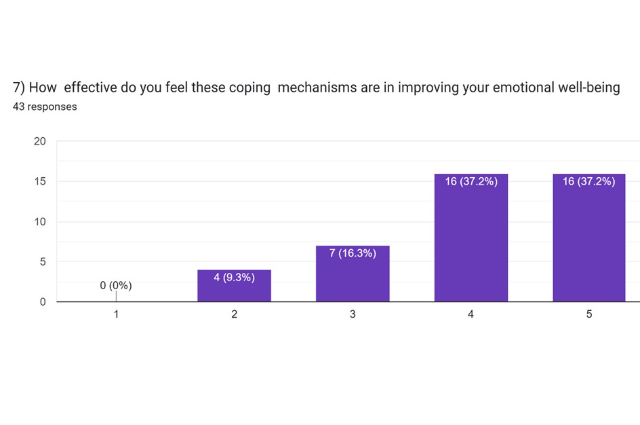
The coping mechanisms are greatly assisting the participants in managing their emotional well-being. It's excellent that the participants are content with the coping strategies. The data suggest that the implementation of these coping mechanisms not only enhances emotional resilience but also fosters a supportive environment among participants.
Figure 3
Results 4:
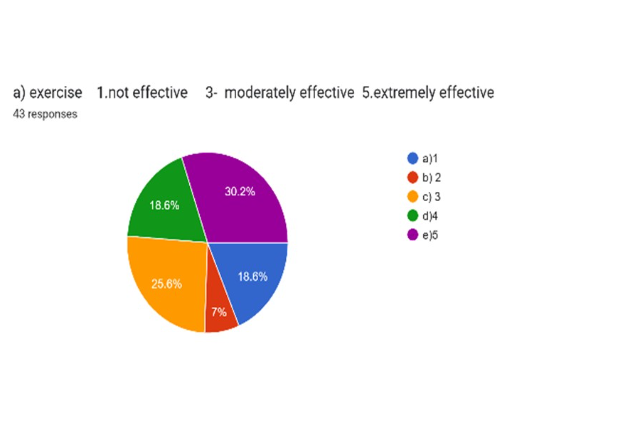
Analysis of the coping mechanism based on pie chart results: The data from the pie chart reveals varied effectiveness in how participants engage with different coping mechanisms:
- 30.2% of participants reported extremely good results, indicating that the coping strategies were highly effective for them.
- 25.6% experienced moderate results, suggesting partial effectiveness of the coping mechanisms.
- 18.6% found the coping mechanisms not effective, implying these strategies did not work well for them.
This variation highlights that while coping mechanisms can be beneficial, their effectiveness differs from person to person. This is because each individual has unique preferences, thought patterns, and emotional responses, which influence how well a particular coping strategy works for them.
Results 5:
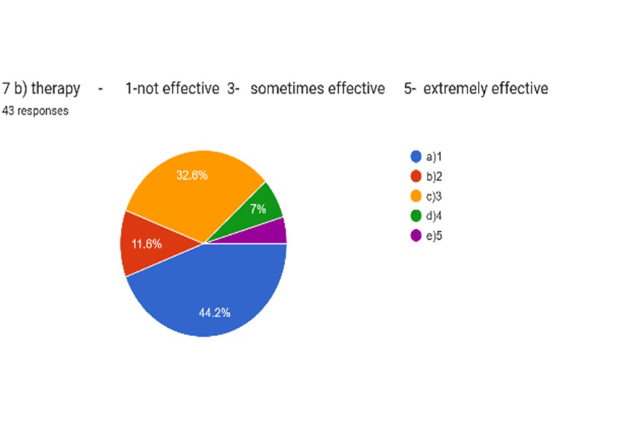
According to participants' feedback, 44.2% reported that the therapy was not effective, while only 7% found it to be effective; additionally, 32.6% indicated that the therapy was sometimes effective. This suggests a mixed to negative perception of the therapy's overall impact, with a significant portion of participants not experiencing satisfactory results. There can be many reasons for this stigma related to therapy. According to participants, therapy is way too expensive in Qatar, and most health insurance plans don't cover mental health-related treatments, so participants won't approach therapy. As it's not limited to one session, to get a positive outcome, they need to go for follow-up sessions. Lack of awareness related to therapy can be a reason, too.
Figure 5:
Result 6:
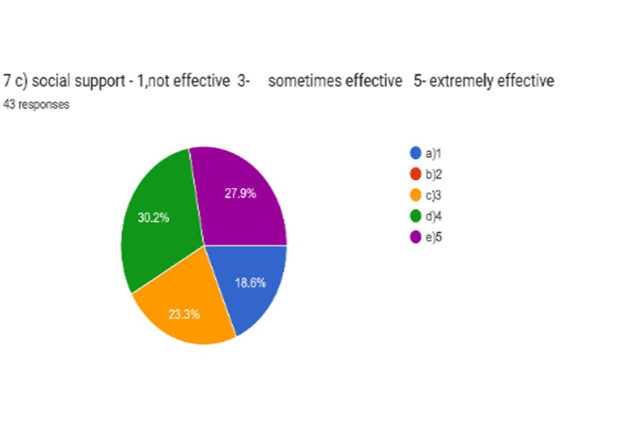
Overall, the majority of participants viewed social support positively, with half, 58.1% finding it either effective or extremely effective, while a small portion of 18.6% did not find it beneficial.
Results 7:
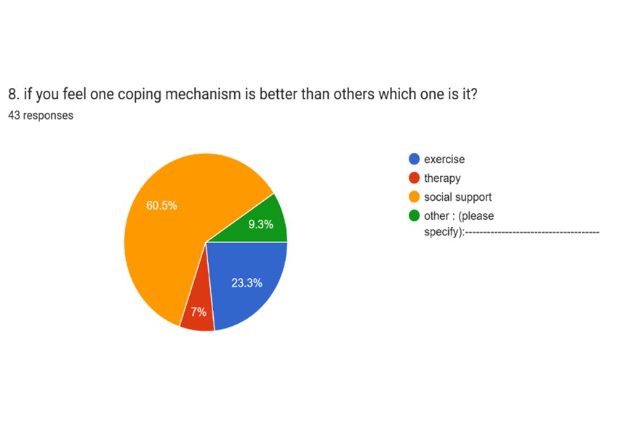
The survey results indicate that the majority of participants experienced positive effects on their well-being after using coping mechanisms. Specifically, 59% reported significant improvement, while 52.4% noted some improvement in their mental or physical health. When asked which coping mechanism they found most effective, 60.5% of participants identified social support as their preferred strategy, followed by exercise at 23.3%, and only 9.3%% choosing other methods, 7% therapy. Overall, these findings suggest that coping mechanisms, particularly social support, play a significant role in enhancing participants’ overall well-being, highlighting the importance of interpersonal connections and supportive networks in managing and promoting personal growth.
Figure 7:
Results 8:
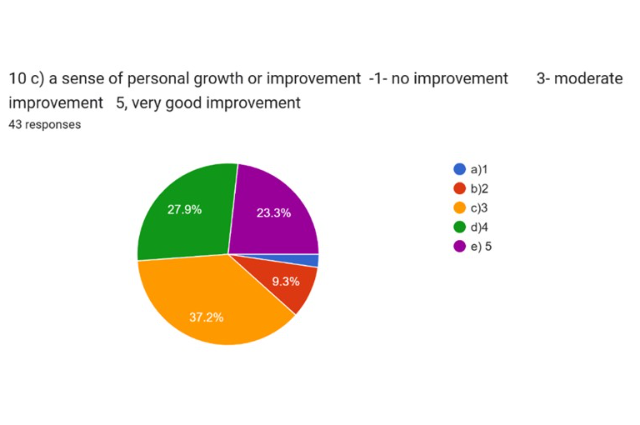
According to the survey results, participants reported varying levels of personal growth and self-improvement. Specifically, 23.3% of respondents indicated excellent improvement, while According to the survey results, participants reported varying levels of personal growth and self-improvement. Specifically, 23.3% of respondents indicated excellent improvement, while 27.9% reported very good improvement in their personal growth. A further 37.2% experienced moderate improvement. Overall, these findings suggest that the majority of participants are demonstrating a positive trajectory in their personal development, with most experiencing at least moderate growth. This indicates that interventions or experiences contributing to self-improvement are generally effective for the surveyed group.
Figure 8:
Results 9:
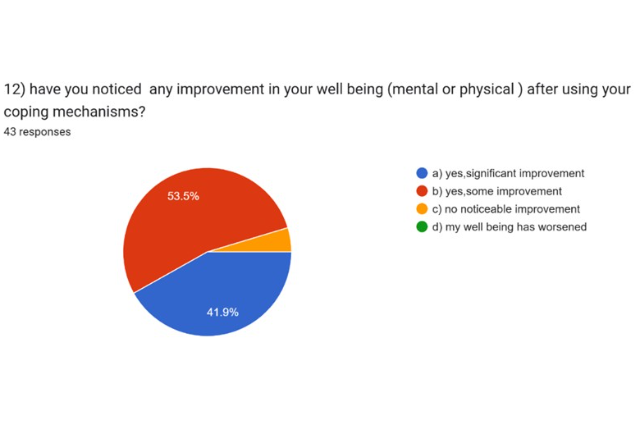
The survey results indicate that the majority of participants experienced improvements in their well-being, both mental and physical, after using their coping mechanisms. Specifically, 41.9%% reported significant improvement, while 53.5% noted some improvement. Overall, these findings suggest that coping strategies are generally effective in enhancing participants’ overall well-being, highlighting the positive impact of such mechanisms on managing stress and promoting mental and physical health.
Figure 9:
DISCUSSION
Expected Outcome of the study: Firstly, to find out how effective the coping mechanisms which was used by women experiencing midlife crisis. Secondly, the identification of the most common coping strategies among midlife women, such as seeking social support, spiritual and religious practices, engaging in physical activities, and practising mindfulness.
Assessment of effectiveness: Research will evaluate which coping mechanisms are most effective in managing stress, psychological well-being, and building resilience during midlife challenges. The study will contribute to the academic understanding of women's mental health in midlife, addressing gaps in the literature related to coping effectiveness during this stage.
According to the survey results, A survey was conducted to identify the coping strategies currently employed by participants to manage stress and emotional challenges. The findings indicate that the most commonly used mechanisms among the respondents are social support, spiritual and religious practices, and exercise.
- Social support was utilised by 57.1% of participants, making it one of the predominant strategies.
- Spiritual and religious practices were also reported by 57.1% of participants, highlighting the significance of faith-based coping in managing stress.
- Exercise was employed by 52.4% of respondents, indicating that physical activity is another widely used method for emotional regulation.
Overall, the results suggest that women participants in this study primarily rely on social networks and spiritual or religious engagement to cope with stress, followed closely by physical activity. These findings underscore the importance of interpersonal connections, personal beliefs, and healthy lifestyle practices in stress management during periods of emotional upheaval and the critical role that both spiritual beliefs and community connections play in promoting resilience and well-being during challenging times. Additionally, incorporating physical activities into daily routines further enhances participants' overall mental health and coping strategies. The coping mechanisms are greatly assisting the participants in managing their emotional well-being. It's excellent that the participants are content with the coping strategies. The data suggest that the implementation of these coping mechanisms not only enhances emotional resilience but also fosters a supportive environment among participants.
The survey results indicate that the majority of participants experienced positive effects on their well-being after using coping mechanisms. Specifically, 59% reported significant improvement, while 52.4% noted some improvement in their mental or physical health. When asked which coping mechanism they found most effective, 60.5% of participants identified social support as their preferred strategy, followed by exercise at 23.3%, and only 9.3%% choosing other methods, 7% therapy. Overall, these findings suggest that coping mechanisms, particularly social support, play a significant role in enhancing participants’ overall well-being, highlighting the importance of interpersonal connections and supportive networks in managing and promoting personal growth. According to the survey results, participants reported varying levels of personal growth and self-improvement. Specifically, 23.3% of respondents indicated excellent improvement, while 27.9% reported very good improvement in their personal growth. A further 37.2% experienced moderate improvement. Overall, these findings suggest that the majority of participants are demonstrating a positive trajectory in their personal development, with most experiencing at least moderate growth. This indicates that interventions or experiences contributing to self-improvement are generally effective for the surveyed group.
The survey results indicate that the majority of participants experienced improvements in both their mental and physical well-being after using their coping mechanisms. Specifically, 41.9%% reported significant improvement, while 53.5% noted some improvement. Overall, these findings suggest that coping strategies are generally effective in enhancing participants’ overall well-being, highlighting the positive impact of such mechanisms on managing stress and promoting mental and physical health.
Future research should address these limitations by employing longitudinal designs to track coping strategies and well-being outcomes over time. Comparative studies across different demographic groups could also provide deeper insights into how cultural, social, and economic factors shape coping preferences and effectiveness. Furthermore, qualitative research exploring personal narratives could enrich understanding by uncovering the subjective meanings and lived experiences associated with specific coping mechanisms. Finally, intervention-based studies could evaluate the practical effectiveness of programs that integrate social support, spiritual practices, and exercise to enhance women’s resilience and overall well-being.
CONCLUSION
Women frequently encounter stress and emotional challenges, especially during transitional or demanding stages of life, making it essential to adopt effective coping strategies that support overall well-being. This study set out to explore the coping mechanisms most commonly practised by women and to assess their role in strengthening resilience and improving mental health.
Data were gathered through a survey designed to capture participants' preferred coping approaches and their perceived outcomes. The focus was on strategies such as social support, spiritual or religious practices, and physical activity, while responses were analysed using descriptive statistics to identify patterns and effectiveness. The results showed that social support (58.1%) and spiritual or religious engagement (55.8%) were the most widely used approaches, followed closely by exercise (51.2%). Social support was also identified as the most effective method, with 60.5% of respondents naming it their preferred strategy. Overall, most participants reported notable improvements in mental and physical well-being, with many also experiencing moderate to substantial personal growth. These outcomes indicate that coping strategies serve a dual role by reducing stress and fostering long-term self-development.
In summary, the findings highlight the importance of community connections, faith-based practices, and physical activity as key contributors to resilience. The study suggests that holistic approaches combining these dimensions can effectively promote women’s psychological health and overall quality of life.
REFERENCES
- Carstensen, L. L., & Hershfield, H. E. (2021). Ageing, affect, and health: The positive side of growing older. Annual Review of Psychology, 72, 383–407.
- Lachman, M. E. (2015). Mind the gap in the middle: A call to study midlife. Research in Human Development, 12(3–4), 327–334.
- Ryff, C. D., & Singer, B. (1998). The contours of positive human health. Psychological Inquiry, 9(1), 1–28.
- Willis, S. L., & Schaie, K. W. (2009). Cognitive trajectories in midlife and aging. In S. L. Willis & M. Martin (Eds.), Handbook of the psychology of aging (7th ed., pp. 91–104). Academic Press.
- World Health Organization. (2020). Healthy ageing and functional ability.
- Carstensen, L. L., & Hershfield, H. E. (2021). Aging, affect, and health: The positive side of growing older. Annual Review of Psychology, 72, 383–407.
- Lachman, M. E. (2015). Mind the gap in the middle: A call to study midlife. Research in Human Development, 12(3–4), 327–334.
- Ryff, C. D., & Singer, B. (1998). The contours of positive human health. Psychological Inquiry, 9(1), 1–28.
- Willis, S. L., & Scheie, K. W. (2009). Cognitive trajectories in midlife and aging. In S. L. Willis & M. Martin (Eds.), Handbook of the psychology of aging (7th ed., pp. 91–104). Academic Press.
- World Health Organization. (2020). Healthy ageing and functional ability.
- Adamo, D. T (2018). Religion and Elections in Nigeria: A Historical Perspective. Studia Historiae Ecclesiastical, 44(3), 1-19. Aldwin, C. M., & Levenson, M. R. (2001). Stress, coping, and health at midlife: A developmental perspective. In M. E. Lachman (Ed.), Handbook of midlife development. John Wiley & Sons, Inc., pp.188-214. Almeida, D.M., & Horn, M.C. (2004). Is daily life more stressful during middle adulthood? In: Brim OG, Ryff CR, Kessler RC, editors. s. How healthy are we? A national study of well-being at midlife. Chicago: University of Chicago Press; 2004. pp. 425-451.
- Brown, M. (2017, September 13). Suicides peak in middle age. So why do we call it a young person’s tragedy? The Guardian. Retrieved from: https://www.theguardian.com
- https://www.helpguide.org
APPENDICES
additional meterial
Navigating a Midlife Crisis
Midlife often comes with big shifts—in your body, lifestyle, and even sense of identity. To move through this stage with balance, it helps to stay flexible, nurture a sense of purpose, and make self-care a priority. Adjusting your perspective on ageing can also open doors for growth and fulfilment in this chapter of life.
Embrace Change
Change is a natural part of ageing, and learning to accept it is key to maintaining peace of mind. A flexible mindset makes it easier to adapt and build resilience.
- Face your emotions. Bottling up feelings can increase stress and push you toward unhealthy coping habits. Instead, process your emotions through journaling, mindfulness tools, or by talking with someone you trust—whether a close friend or a professional counsellor.
- Focus on what you can control. When stressed, ask yourself: Can I change this situation? If the answer is no, practice acceptance and channel your energy into things within your reach. For instance, if your children are becoming more independent, focus on expanding your own social or community ties.
- Take transitions step by step. Big life shifts can feel overwhelming. Break them into smaller actions. If you’ve taken on caregiving for a parent, start with immediate needs and add responsibilities gradually as you adjust.
Cultivate Purpose
Events like divorce, job loss, or an empty nest can leave you questioning your role in life. But midlife doesn’t have to mean decline—it can be a chance to redefine your goals and values.
- Experiment with new activities. Try a hobby you’ve never explored—such as writing, cooking, or learning a language. This stimulates your mind, creates fresh experiences, and connects you with new people.
- Reconnect with old passions. Revisit hobbies or interests you once loved, whether painting, acting, or a sport. Rediscovering them can lift your mood, restore confidence, and help you find community.
- Get involved with others. Volunteering offers purpose, joy, and connection. Whether mentoring youth, helping in the arts, or organising local events, giving back enriches both you and those around you.
Invest in Self-Care
Midlife brings changes to your body, sleep, and energy levels. Instead of seeing these as setbacks, treat them as signals to strengthen your health habits.
- Exercise wisely. Start small if you’re new to physical activity and build up gradually. If you were athletic in the past, avoid comparing old performance to current ability—focus instead on benefits like sharper thinking, reduced anxiety, better sleep, weight control, and lower risks of disease.
- Rethink your diet. Replace processed carbs with whole grains, fruits, and vegetables. Ensure you’re getting enough protein and calcium to support muscles and bones. Pay attention to emotional or stress-driven eating, which can appear even in midlife.
- Prioritise sleep. Aim for 7–9 hours nightly. Create a restful environment with a quiet, dark, cool bedroom and supportive bedding. Try winding down with calming rituals—such as reading or a warm bath—to discover what helps you rest best.(melindsmith) (robins) (segal)