
When exam season turns classrooms into pressure cookers, the students who seem “fine” are often the ones drowning the fastest — and the rest of us are too busy drowning ourselves to notice.
By Rishika Telkar
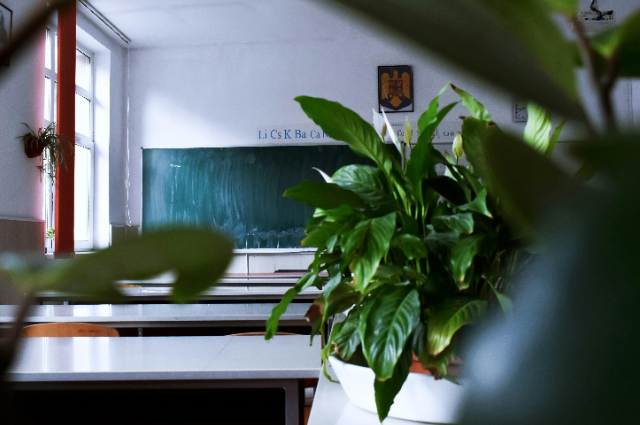
An empty classroom. The chairs that go unnoticed are sometimes the loudest.
I remember the exact moment I found out.
It was a Tuesday in February, two weeks before our Class 12 boards. I was sitting in the second row of our chemistry classroom, copying down equilibrium reactions I didn’t understand, when my classmate Divya leaned over and whispered four words that didn’t make sense at first.
“Rohan didn’t come home.”
I thought she meant he’d bunked school. Rohan bunked sometimes — he’d disappear to the chai stall near the back gate and return smelling like cigarettes, completely unbothered. I almost smiled.
Then I saw her face.
Rohan had been found on the terrace of his building at 5 AM by the building watchman. He had left his phone inside, unlocked, with seventeen unread messages from his father asking about his Physics mock score.
He was sixteen years old. His school bag was still under his desk in our classroom — inside it, a half-finished Science notebook with equations he’d colour-coded in three different pens, the kind of careful, hopeful work that belongs to someone who was still trying.
I want to be careful here, because Rohan was a real person and his family is real, and grief is not a writing exercise. I’m writing this because I think about him every February, and I think about him every time someone says, “students these days are too sensitive” or “we all had pressure, we turned out fine.” I write this because staying silent feels like the worst option.
Rohan was not the quietest boy in our class. That’s the thing nobody expects. He was actually funny — the kind of funny that’s quick and dry, the kind where you’re laughing before you realise you’ve been got. He played football badly and enthusiastically. He once spent an entire lunch break explaining to a group of us why a particular Bollywood soundtrack was secretly genius, and he was so convincing that three people downloaded the album that afternoon.
But from November onward — from the moment our teachers started writing the board exam date on the top corner of every blackboard, like a countdown — something in Rohan changed frequency. He got quieter. He started sitting closer to the wall. When teachers asked questions, he looked at his notebook.
We noticed. I want to be honest: we noticed. We just translated it into something manageable. Exam stress. Same as all of us. He’ll be fine after boards.
That translation was the mistake.
What the Data Looks Like, From the Outside
According to the National Crime Records Bureau, in 2022 alone, 13,044 students in India died by suicide. That is not a typo. Thirteen thousand. Roughly 35 students every single day. Academic pressure — exam failure, fear of results, inability to meet expectations — was among the leading documented causes.
Maharashtra, where I grew up, consistently appears in the higher-incidence states. The months of February, March, and April — board exam season — show a measurable spike in these numbers year after year.
A 2023 NIMHANS study found that nearly 42% of Class 11 and 12 students reported symptoms consistent with moderate to severe anxiety. Another survey conducted across schools in Pune and Mumbai found that 1 in 3 students reported feeling that their parents’ love or approval was conditional on their academic performance.
Read that last one again. One in three students — children — felt that love was something they had to earn with marks.
How the Pressure Actually Builds
The pressure doesn’t announce itself. That’s what makes it so hard to see from the outside, and so suffocating from the inside.
It builds in increments. It starts with a reasonable thing — study hard, your future matters. Then it becomes something else. Your rank gets compared to the neighbour’s son. Your cousins’ percentages are mentioned at family dinners. Your parents pull you out of football practice because “there’s no time now.” Your teacher tells the class, in front of everyone, that anyone below 85% should be “reconsidering their choices.” And then there is the group chat — the one where classmates share their mock scores at midnight, and you lie awake reading them in the dark, doing the maths of how far behind you are.
You internalise all of it. You begin to believe that the exam is not testing your knowledge — it is testing your worth. Whether you deserve the good version of your future. Whether you are enough.
Rohan told his mother two days before that he was tired. She thought he meant physically — that he’d been studying too hard, not sleeping enough. She told him to drink warm milk and sleep early.
She has replayed that conversation every day since.
A Cruelty We Don’t Name
There is a particular cruelty in how we treat student mental health in India. We have built an education system that is openly, structurally competitive — JEE, NEET, board cutoffs, college rankings — and then we act surprised when students crack under it. We tell them the stakes are enormous, and then we tell them not to stress. We remove every safety valve — sports, free time, friendships, the permission to fail — and then we wonder why the pressure has nowhere to go.
The schools are not entirely to blame. Neither are parents, entirely. The system is a pressure cooker that everyone helped build, and everyone is now inside.
But there are specific, actionable things that make a difference — and the research supports this, not just the sentiment.
Schools that have dedicated, accessible counsellors — not the kind who appear once a year for an “orientation” — show measurably better student mental health outcomes. Finland’s education model, widely studied, builds failure-tolerance into the curriculum from the primary level: students are explicitly taught that struggle is part of learning, not evidence of inadequacy. Closer to home, a pilot programme run by iCall (a TISS initiative) in Mumbai schools found that structured peer-support training reduced students’ reluctance to seek help by over 60%.
We know what helps. We just haven’t decided that students are worth the effort yet.
After
After Rohan, our school did what schools do after. Counsellors came. An assembly was held. A teacher cried in front of the class and then apologised for crying, as if grief required an apology.
Some things genuinely changed. One teacher — our Hindi sir, a quiet man who had never seemed to notice anything outside the textbook — started ending every class by asking if anyone needed to talk. Not dramatically. Just a simple, standing offer. Several students took him up on it over the following months.
But most things went back to normal within a few weeks. Normal meaning: marks on the board, cutouts on the notice board, and a new set of mock papers every Friday.
I cleared my boards. I got into a decent college. I did the things the system wanted me to do.
And I still think about Rohan in February.
I think about the seventeen unread messages. I think about how I saw him sitting alone at lunch three days before and told myself I’d check on him tomorrow. I think about what it means to be surrounded by people who care about you, and still feel entirely alone, because the caring is always somehow attached to a condition — do well, be okay, don’t fall apart right now, we’re all busy.
I don’t have a clean conclusion. Real stories don’t have them.
What I have is this: if you are reading this and you are in the middle of exam season and you feel like you are drowning, you are not weak. The water is actually that deep. Tell someone. Tell a parent, a friend, a teacher, a stranger on iCall’s helpline (9152987821). Tell anyone. The exam is real, but it is not the whole story of your life, even when it feels like it is.
And if you are reading this and you have a Rohan in your class — the one who got quieter, who stopped joining in, who seems fine but a different kind of fine than before — don’t wait for tomorrow.
Ask today.
Sometimes that is the whole difference.
Sources:
- NCRB Accidental Deaths and Suicides in India Report, 2022
- NIMHANS Mental Health Survey, 2023
- iCall TISS Programme Reports, Mumbai Schools Pilot
- Pune-Mumbai School Anxiety Survey, 2023