
She had borrowed books from seniors at school because she could not afford to buy them. She was one of fourteen girls in a class of fifty-four when she enrolled in a co-education school — unusual for the time, unusual for her village. She was the only one among all her siblings to complete higher education. At seventeen, she left her home in Haldipur, Karnataka, and moved to Mumbai to study nursing. By 1973, at twenty-five, she was a staff nurse at King Edward Memorial Hospital in Parel — one of the finest public hospitals in the country — good enough at her work that senior doctors had already begun requesting her specifically to assist in complex surgeries. She never said no, even when they called her at night after her shift had ended.
She was also, in the months before November 1973, quietly in love. She had told her family she wanted to marry Pratap Desai, a neurosurgeon completing his MD at KEM. Her family disapproved — he was from a different community. She was working on persuading them.
On the night of November 27, 1973, Aruna Shanbaug went to the hospital basement at the end of her shift to change out of her uniform. She did not come back up.
What happened in that basement destroyed her body, erased her mind, and left her in a state that no medical term fully captures — not alive in any way the word is usually meant, not dead in any way the law could address. She would remain in that state for forty-two years, three months, and twenty-one days. She would die in the same hospital where she was attacked, in a bed fifty meters from the basement where it happened, on May 18, 2015.
In those forty-two years, she would become the centre of one of the most significant euthanasia judgments in Indian legal history. The man who did this to her would serve seven years in prison and walk free.
This is her story. All of it.
The Night of November 27
Sohanlal Bhartha Valmiki was a janitor on contract at KEM, twenty-eight years old, working in the same cardiovascular thoracic laboratory where Shanbaug was in charge. She had reported him twice for stealing and not tending to his responsibilities, and had allegedly threatened to report him a third time a few days before the attack. (Atlantic Council)
When describing the night of November 27, Valmiki later said there had been an argument and a physical fight when Shanbaug denied his request for leave to visit his ill mother-in-law, and threatened to report him for not working and stealing dog food. He claimed Shanbaug fainted after he slapped her in a fit of rage, panicked, and left the hospital. He denied raping her and said it must have been someone else. (Atlantic Council)
The medical evidence did not support his version.
Sohanlal choked her with a dog chain and sodomized her after realising that Shanbaug was menstruating. He wrapped the dog chain around her neck to hold her motionless during the assault. The strangulation cut off the supply of oxygen to her brain, resulting in severe brain damage. (NBC News)
She was discovered unconscious and covered in blood on the floor the following morning by a cleaner. (Arms Control Association)
The doctor who found her was Pratap Desai — the neurosurgeon she had wanted to marry, the man her family had refused to approve. He later told a reporter: "I could not believe my eyes when I saw her. Aruna, who always had a radiant smile on her face, was lying on the bed, unable to recognise anyone."
By November 29, 1973, such was the severity of the attack that Aruna was left paralysed, deaf, and in a coma. (Atlantic Council) The oxygen deprivation had caused cortical blindness. The strangulation had damaged her brain stem. She could not speak, could not move her limbs with purpose, could not swallow solid food. She could make sounds. She appeared to respond, at times, to the voices of the nurses who cared for her — turning her head, making small movements. Whether these were conscious responses or reflexes, the doctors could never say with certainty.
She would never say anything again.
The Trial That Wasn't
Valmiki was arrested on November 28, 1973. But in 1974, he was charged with robbery and attempted murder — not rape. (Arms Control Association)
This is the central legal injustice of the Aruna Shanbaug case, and it requires explanation because it is not simply a matter of prosecutorial negligence. It was a consequence of what the law, as it existed in 1973, defined rape to be.
Valmiki was convicted of attempted murder and theft but was not tried for rape due to the narrow legal definition of the crime at the time. (Wikipedia) The Indian Penal Code's definition of rape in 1973 was limited to penile-vaginal penetration. Sodomy — the specific act Valmiki committed — did not meet the legal definition. The man who left a woman in a permanent vegetative state through sexual violence was therefore prosecuted for a lesser set of crimes, because the law had decided, in advance, that what he did to her body did not qualify as the thing it most obviously was.
He was sentenced to two concurrent seven-year terms for robbery and attempted murder. He was released in 1980. (NBC News)
He had served seven years. Aruna Shanbaug had already been in her hospital bed for seven years, with thirty-five more to come. After his release, Valmiki walked out of jail and later worked at another hospital. (Arms Control Association) He disappeared from public view. He gave occasional interviews over the years in which he continued to deny the rape, continued to frame Shanbaug as someone who had treated him badly, and continued to position himself as a victim of circumstances.
He was never charged with rape. He was never charged with the crime that destroyed her. He served his time and moved on.
She could not.
42 Years in Ward Four
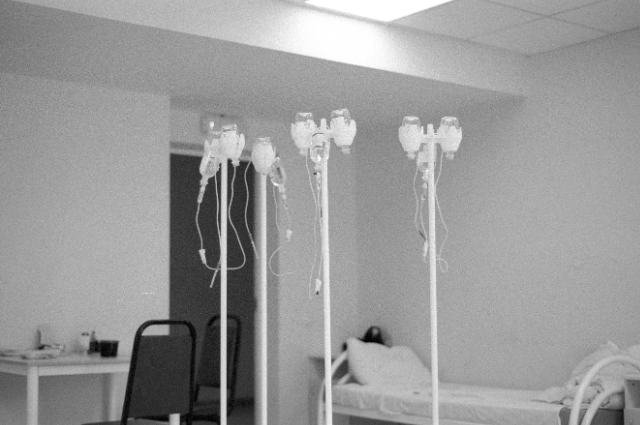
What the KEM Hospital nurses did for Aruna Shanbaug across four decades is one of the most extraordinary acts of sustained human care in the documented history of Indian medicine. It deserves to be named and described, not merely acknowledged.
From the dean of the hospital down to the staff nurses and paramedical staff, they looked after Aruna day and night for thirty-eight years. They fed her, washed her, bathed her, cut her nails, and generally took care of her — not on a few occasions but day and night, year after year. In thirty-eight years, Aruna had not developed one bed sore. (Wikipedia)
To understand what that last sentence means, you need to understand what a bed sore is and what it takes to prevent one. A pressure ulcer — the medical term — develops when a person who cannot move their own body lies in one position long enough for the tissue to break down from sustained pressure against the mattress. In completely immobile patients, they can develop within hours. Over forty-two years, in a body that could not shift its own weight, could not communicate discomfort, could not signal pain — the absence of even one bed sore represents an almost incomprehensible standard of physical care. Someone turned her. Someone repositioned her. Someone checked her skin. Someone did this, every few hours, for four decades.
She was fed through careful hand-feeding by nurses who learned the exact consistency of food she could manage, who had learned over the years the small signals — a slight turning of the head, a change in her sounds — that indicated she was willing to eat that day. They celebrated her birthday every June 1st with a small cake. They talked to her. They believed, or chose to believe, or perhaps needed to believe, that she could hear them on some level.
When a municipal body tried to shift Aruna outside KEM in 1980, the nurses protested and refused. (Arms Control Association) This was their colleague. This was their ward. She was not going anywhere.
The Supreme Court, when it eventually considered the euthanasia petition in 2011, described the nurses' care in language that is worth reproducing: "What they have done is simply marvellous. The whole country must learn the meaning of dedication and sacrifice from the KEM hospital staff." (Wikipedia)
The Question Nobody Wanted to Ask
For nearly four decades, no one in the Indian legal or medical establishment formally confronted the question that was present from the very beginning: was what remained of Aruna Shanbaug's life a life in any meaningful sense? Was the continuation of that existence — the feeding, the repositioning, the birthday cakes — an act of care, or an act of prolonging something that had already ended?
It was journalist and activist Pinki Virani who finally forced the question into the open. Virani had written a book about Shanbaug's case in 1998 — Aruna's Story: The True Account of a Rape and Its Aftermath — documenting both the attack and the decades of institutional and legal abandonment that followed. In 2009, she filed a petition in the Supreme Court under Article 32 of the Constitution, seeking permission to discontinue Aruna's artificial feeding — passive euthanasia — because Aruna had the right to die with dignity.
Virani acted as Aruna's "next friend," arguing that Article 21 of the Constitution, which protects the right to life, must also encompass the right to a dignified death — that a person in a terminal condition or permanent vegetative state must fall within the definition of the right to die. (Defence-Update)
The KEM Hospital opposed the petition. The nurses who had cared for Aruna for nearly four decades — who had made her their life's work in a very literal sense — were not ready to let her go. They argued, before the court, that Aruna was responsive, that she had preferences, that she smiled when the nurses spoke to her, that her quality of life, though profoundly diminished, was nothing.
The Supreme Court, on January 24, 2011, established a three-member medical panel to examine Aruna's condition. (CIE) The panel confirmed that she was in a permanent vegetative state. On March 7, 2011, the court delivered its judgment.
The court rejected the petition, declining to recognise Virani as the "next friend" of Aruna Shanbaug, and instead treated the KEM hospital staff as the "next friend." (CIE) Since the people closest to Aruna — the nurses who had cared for her — did not want her feeding discontinued, the court found no grounds to override that position.
But in rejecting the petition, the court did something that would outlast the case itself. The Supreme Court allowed passive euthanasia in India, laying down guidelines that included the recommendation of a medical board, consent through a surrogate decision maker, and judicial review. This judgment marked the first legalisation of passive euthanasia in India. (Wikipedia)
Aruna Shanbaug did not benefit from the law her case created. But every Indian who has since faced the unbearable question of when to let someone go has benefited from it.
The Man She Wanted to Marry
Pratap Desai — referred to in early press reports as Dr Sundeep Sardesai to protect his identity — left KEM in 1974. He continued to visit Aruna regularly for three more years. "Every time, I would try to speak to her," he told a reporter after her death. "But her condition never improved, and it became really painful to see her like that."
He got married in 1977 after tremendous pressure from his family. He said he never missed a single story written about Aruna and believed that the stigma a rape victim carries and the way society perceives her had still not changed in the last four decades. (Atlantic Council)
He was a physician with a private practice in Dadar when Aruna finally died. He had built a life. She had not been given the chance.
May 18, 2015
Aruna Ramchandra Shanbaug died of pneumonia on May 18, 2015, after being in a persistent vegetative state for nearly 42 years. She was 66 years old. (Atlantic Council)
She had been born on June 1, 1948, in Haldipur — a girl who borrowed books from seniors and became the first in her family to finish higher education, who moved to Mumbai at seventeen with a plan, who was good enough at her work that senior doctors called her at night when difficult cases needed attention, who had fallen in love and was building toward a life.
She died in the same building where her life had been taken from her. She died surrounded by the nurses who had been her family for four decades. She had not spoken in forty-two years.
The Supreme Court, in 2018, three years after her death, delivered a further landmark judgment expanding the framework of passive euthanasia in India and recognising the validity of living wills — documents in which people specify, in advance, what should happen if they reach a state from which they cannot recover. Journalist Pinki Virani called this verdict a gift from Aruna Shanbaug — "who was never treated like a human." (Hudson Institute)
What the Case Leaves Behind
The Aruna Shanbaug case is taught in Indian law schools as a euthanasia precedent. It appears in medical ethics textbooks. It is cited in judgments about the right to die with dignity. These citations are correct, and the legal legacy is real.
But the case is also something else — something that does not fit as neatly into a textbook chapter. It is the story of a legal system that failed a woman at every possible juncture. That defined rape so narrowly that the man who assaulted her was never charged with it. That allowed him to serve seven years and walk free. That took thirty-eight years — and a journalist filing a Supreme Court petition — to formally acknowledge the question of whether her continued existence was humane.
Chief Justice Chandrachud, speaking years later about the vulnerability of women health professionals to violence, said: "Gender violence, as exemplified by the Aruna Shanbaug case, starkly illustrates the systemic lack of safety for women." (Wikipedia) He was speaking in 2024, in the context of the rape and murder of a doctor at RG Kar Medical College in Kolkata — another hospital, another woman working a night shift, another attack in a place that should have been safe.
The Aruna Shanbaug case did not end rape in hospitals. It did not change the legal definition of rape for another forty years, when the Criminal Law Amendment Act of 2013 — passed in the aftermath of the Nirbhaya case — finally broadened the definition to include acts beyond penile-vaginal penetration. It did not bring Sohanlal Valmiki to trial for what he actually did.
What it did was force India to look at what it had allowed to happen — to one woman, in one hospital basement, on one night in 1973 — and to sit with the discomfort of what the looking revealed. The law was inadequate. The institution was complicit in the failure. The man who destroyed her life was allowed to rebuild his. And forty-two women on the nursing staff of KEM Hospital, over four decades, quietly did the work that no law required them to do, because someone had to.
She deserved better than that. She deserved justice, safety, and the life she had planned. She got forty-two years in a hospital bed and a Supreme Court judgment she could not understand.
Her name was Aruna. She had a radiant smile. She never said no when doctors needed her.
Remember her for that.
References
- Wikipedia — Aruna Shanbaug Case: https://en.wikipedia.org
- Deccan Chronicle — Timeline of the Aruna Shanbaug Rape Case: https://www.deccanchronicle.com
- Business Standard — How Aruna Shanbaug's Memories Echoed in the Supreme Court: https://www.business-standard.com
- Jus Corpus — Aruna Ramchandra Shanbaug Case Analysis: https://www.juscorpus.com
- LegalFly — Aruna Shanbaug v. Union of India Case Summary: https://legalfly.in
- Indian Kanoon — Supreme Court Judgment, March 7, 2011: https://indiankanoon.org
- Testbook — Aruna Shanbaug vs Union of India: Landmark Judgement: https://testbook.com
- Indian Journal of Medical Ethics — Life and Death After Aruna Shanbaug: https://ijme.in
- The Print — Gift from Aruna Shanbaug, Who Was Never Treated Like a Human: https://theprint.in