
There is a particular kind of political moment when a leader stops talking about growth and starts talking about sacrifice. When the language shifts from ambition to restraint, from how fast we are rising to how carefully we must hold what we have. Prime Minister Narendra Modi reached that moment on Sunday evening, May 10, 2026, at a public gathering in Hyderabad. He stood before a large crowd and asked his fellow citizens to do something that no Indian leader has asked in quite this way in a very long time: to voluntarily change how they live, what they buy, where they travel, and how they work — for the sake of the nation's balance sheet.
Seven specific appeals. Not one of them is legally binding. Not one of them comes with a penalty for non-compliance. They are requests — from a prime minister to a population — and their power, if they have any, comes entirely from whether enough people hear them, believe them, and decide to act.
The context for those seven appeals is a war that India did not fight, does not endorse, and cannot control — but whose economic shockwaves are arriving at India's shore with the indiscriminate force of a tide.
The War and the Tide
On February 28, 2026, the United States and Israel launched nearly 900 strikes on Iran in twelve hours, killing Supreme Leader Khamenei and systematically dismantling the country's nuclear and military infrastructure. One of Iran's retaliatory moves was to close the Strait of Hormuz — the narrow waterway through which approximately one-fifth of the world's oil supply flows every day. Iranian naval mines, fast-boat operations, and anti-ship missiles made the passage dangerous. Global oil markets did not wait for a diplomatic resolution.
Crude oil prices are trading above $100 per barrel due to the West Asia crisis, while the deadlock in the Strait of Hormuz persists. Crude oil prices had touched a 52-week high of $126 per barrel at the end of last month. (NBC News)
For most countries, a $100 barrel of oil is an inconvenience. For India, it is a structural threat. India is the world's third-largest oil importer after China and the United States. From April 2025 to March 2026, the country imported crude oil worth $123 billion — the single largest contributor to India's import budget. (Arms Control Association) Every dollar added to the price of a barrel of crude is a dollar India must find from somewhere — from its foreign exchange reserves, from its export earnings, from its borrowings, or from the pockets of consumers through higher fuel prices.
India's foreign exchange reserves as of May 1 stood at $690.69 billion — down from $728.5 billion as of February 27, before the war began. That is a fall of nearly $38 billion in roughly two months. (Arms Control Association) The IMF has projected that India's current account deficit will reach $84 billion in 2026, meaning India is spending significantly more on imports than it is earning from exports. The gap must be financed somehow. The reserves are the buffer. And the buffer is shrinking.
This is the economic reality that Modi was speaking from when he took the microphone in Hyderabad.
The Seven Appeals
Framing the moment as a "time of crisis," Modi urged citizens to adopt lifestyle changes that could strengthen India's economy and conserve foreign exchange reserves. (Wikipedia) His seven appeals, taken together, form a map of exactly where India's foreign exchange leaks — and an implicit acknowledgement that the government, on its own, cannot plug all of those leaks.
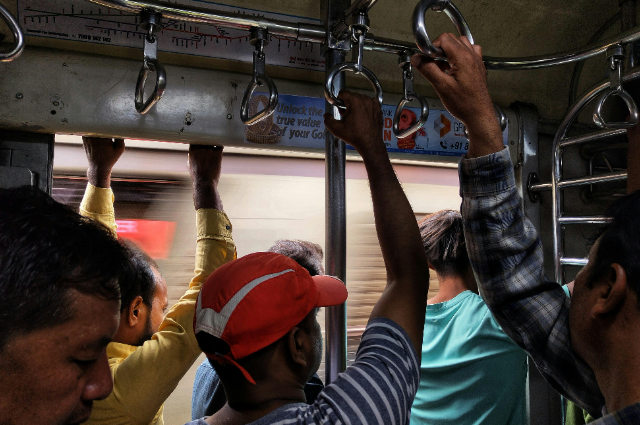
On fuel: Modi urged people to use metro rail systems and public transport to reduce petrol and diesel consumption. "Reduce petrol and diesel consumption by using metros. It will save foreign exchange," he said. He also appealed for greater use of electric vehicles and shared transport. "If we must use a car, then we should try to carpool. Use Electric Vehicles," he added. (Wikipedia)
On work: Modi said people should move to online meetings instead of physical gatherings and use the work-from-home model that was adopted globally during the COVID-19 pandemic. He explained that such practices would cut down the use of fuel. (Arms Control Association)
On gold: In one of his strongest appeals, Modi urged people to avoid purchasing gold for weddings and ceremonies for at least one year, saying India spends huge amounts of foreign exchange on gold imports annually. (Wikipedia) The scale of that spending is significant: Indians imported gold worth $72 billion in the 2025–2026 fiscal year, making India the second largest gold importer in the world after China. (Arms Control Association)
On foreign travel: Modi urged citizens to rethink discretionary spending, including avoiding foreign travel for one year. He also appealed to people to explore ways to reduce foreign expenditure, such as reconsidering destination weddings abroad. (NBC News)
On farmers: The Prime Minister asked farmers to cut their fertiliser use by as much as half. India is the world's largest importer of urea, importing approximately ten million tonnes last year. Every tonne of urea bought from abroad is another draw on the reserves.
On cooking oil: Modi called on families to reduce their cooking oil consumption, framing the appeal in language that combined health and patriotism — the kind of framing that has been the signature of his public communication style for over a decade.
On products: Reiterating the Centre's self-reliance push, Modi urged citizens to support indigenous manufacturing and local businesses, saying that every purchase made by citizens could contribute to employment generation and economic growth. (Wikipedia)
The Markets Heard Him
Whatever Indians ultimately decide to do with Modi's appeals, the financial markets did not wait for public deliberation. They reacted within hours.
Shares of Indian jewellery companies fell by as much as 10 per cent after the speech. Titan, the Tata group-owned jeweller that is India's largest listed company in the sector, fell nearly 6 per cent in early trade. IndiGo, India's largest airline, fell 2.8 per cent — a direct pricing of the expectation that foreign travel would decline if even a fraction of Indians heeded the Prime Minister.
The market reaction is itself a form of economic analysis. Investors, processing Modi's words in real time, concluded that the appeals were serious enough to affect behaviour — that some portion of India's $72 billion annual gold import and $31.7 billion in annual overseas travel spending would contract. They may be right, or they may be pricing in a sentiment that dissipates within weeks. Markets are not always correct. But they are fast.
More consequential was the analytical note from global brokerage Jefferies. Jefferies said the Prime Minister's remarks resemble the messaging seen during FY12-13, when the government and the Reserve Bank of India introduced a series of restrictions to curb gold imports and protect India's external balances. FY12-13 saw severe current account deficit stress as gold imports crossed $50 billion, while 2026 is again seeing rising imports and rupee pressure. Jefferies warned that jewellery stocks could remain volatile as investors assess potential policy changes, currency trends, and the impact of softer gold demand sentiment. (AJC)
The 2012-13 comparison is uncomfortable. That crisis, which saw the rupee fall sharply against the dollar and India's current account deficit swell to unsustainable levels, eventually required the RBI to impose import restrictions on gold — a hard regulatory intervention that followed a period of voluntary appeals that did not produce sufficient change. Jefferies is not predicting a repeat. It is noted that the conditions rhyme.
Economists believe a reduction in gold purchases could significantly improve India's external balances. According to a Moneycontrol analysis, even a 10 per cent reduction in gold consumption could save India around $7.2 billion in foreign exchange. (AJC) That is meaningful — not transformative, but meaningful. Seven billion dollars is roughly ten per cent of the reserve decline India has absorbed since the Iran war began.
The Political Response
Not everyone received Modi's appeals as an act of statesmanship. Congress leader Rahul Gandhi and Samajwadi Party chief Akhilesh Yadav launched a political offensive, characterising the appeal as a sign of the government's failure. (Defence-Update)
The opposition argument is not without logic. If India's economy is performing strongly — if Atmanirbhar Bharat is working, if Make in India has delivered, if the government's economic stewardship has been sound — then why are citizens being asked to personally absorb the cost of a global shock through reduced consumption and changed behaviour? Why is the burden being placed on the household rather than on policy?
Opposition leaders questioned why citizens were being asked to cut spending if the economy was performing strongly. Some critics argued that such appeals could create fear in the market and hurt consumer confidence. Meanwhile, sections of the jewellery industry expressed concern that discouraging gold purchases could impact small traders, jewellers, and artisans whose livelihoods depend heavily on gold demand. (CIE)
That last concern is worth sitting with. Gold in India is not simply a luxury item for the wealthy. It is a savings instrument for families without bank accounts, a hedge against inflation for rural households, a form of portable wealth that women in particular have historically used as their own financial security. The artisans and small jewellers who manufacture gold ornaments across thousands of workshops in Rajasthan, Gujarat, and Tamil Nadu are not importers — they are workers, and a sustained decline in gold demand will reach their livelihoods before it reaches the current account figures.
The government's defenders argue the comparison to other nations is apt. During energy crises in countries like Japan, Germany, and various other European nations, citizens voluntarily conserved electricity and fuel. In those contexts, such actions were viewed as serving the national interest. (Defence-Update) When Germany asked its citizens to turn down heating in 2022 during the gas supply crisis following Russia's invasion of Ukraine, it was described as responsible leadership. The argument is that India deserves the same framing.
What the Appeals Can and Cannot Do
Let us be precise about the limits of voluntary appeals, because precision here matters.
Modi's seven requests, if they work exactly as hoped, address the discretionary margin of India's import bill. Gold and foreign travel are genuinely discretionary — no one needs to buy gold this season, and no one needs to holiday in Europe. If Indians meaningfully reduce these spending categories for a year, the savings are real. Seven billion from a 10 per cent gold reduction. Several billion more from reduced overseas travel. These numbers move the needle on the current account deficit — they do not resolve it, but they help.
What the appeals cannot do is address the structural core of the problem. Oil and fertilisers are hard for India to cut back on. Energy imports are essential to drive India's economy, and fertilisers are critical both for the country's agrarian economy — more than half of the country's families depend on agriculture — and for food supplies. (Arms Control Association) You cannot ask people to work from home in a country where the majority work in agriculture, in construction, in manufacturing, or in the informal economy. You cannot carpool to a sugarcane field. The households that will absorb the fuel cost of a $100-barrel oil world are not the households attending Hyderabad rallies or processing the Prime Minister's social media posts.
The appeal to farmers to cut fertiliser use by half is the one that deserves the most scrutiny. Fertiliser use in India is already suboptimal in some regions and critically insufficient in others. A blanket appeal to halve fertiliser use, without support systems, without alternatives, without compensation for the productivity loss, risks showing up not in forex savings but in agricultural output — in the food supply of a country where inflation in food prices is already a political and humanitarian pressure point.
The Larger Picture
What Modi's Hyderabad speech revealed, more than any specific appeal, is the position India finds itself in as a consequence of a war it played no part in starting.
India has worked hard, across multiple governments, to build its foreign exchange reserves to the levels they reached in late 2024. Those reserves — at their peak, nearly $730 billion — represented years of export growth, remittances from the Indian diaspora, foreign investment inflows, and careful management by the Reserve Bank. They are real wealth. The idea that they can be drawn down by $38 billion in two months — not because of any Indian policy failure, not because of any domestic mismanagement, but because two countries on the other side of the world went to war over nuclear enrichment — is a stark reminder of how exposed an import-dependent nation is to the geopolitical choices of others.
The Prime Minister's appeal came at a time when crude oil prices are trading above $100 per barrel, and the deadlock in the Strait of Hormuz persists. (NBC News) The Strait of Hormuz, when it was closed, became not just Iran's strategic weapon against the coalition that struck it — it became a tax on every economy in the world that depends on the oil that passes through it. India pays that tax. It does not get a vote on it.
In that context, Modi's seven appeals are not merely economic advice. They are an acknowledgement — stated from a public stage, before a large crowd, in plain language — that India's economy is under pressure from forces it did not choose and cannot fully control. That the reserves are moving in the wrong direction. The gap between what India earns from the world and what it pays the world is widening at a rate that cannot be sustained indefinitely without adjustment.
The government has not officially declared any economic emergency. Several analysts believe the government is trying to prepare public sentiment early rather than reacting after a crisis deepens. (Wikipedia)
Whether that preparation succeeds depends on whether 1.4 billion people, each making individual decisions about whether to buy a gold necklace or book a flight to Bangkok or drive to work alone, hear the same message at the same time and decide, collectively, that the moment asks something of them.
That is a lot to ask. It is the right thing to ask. And the distance between those two sentences is where the story of this moment will eventually be resolved.
References
- Al Jazeera — Iran war effect: Why is Modi asking Indians to avoid foreign trips, gold?: https://www.aljazeera.com
- DD News on Air — PM Modi urges citizens not to buy gold for a year, reduce fuel consumption: https://www.newsonair.gov.in
- The Researchers — No Gold Purchases, Less Fuel Use, More Work From Home: https://www.theresearchers.us
- The Researchers — Why PM Modi asked Indians to avoid gold purchases and foreign products: https://www.theresearchers.us
- Business Today — Why Jefferies sees FY13 gold crisis echoes in PM Modi's latest appeal: https://www.businesstoday.in
- Organiser — Global energy uncertainty: PM Modi's appeal and opposition's anti-India narrative: https://organiser.org/
- Asian Mirror — Why PM Modi asked Indians to avoid gold purchases and foreign products, explained: https://www.asianmirror.us