
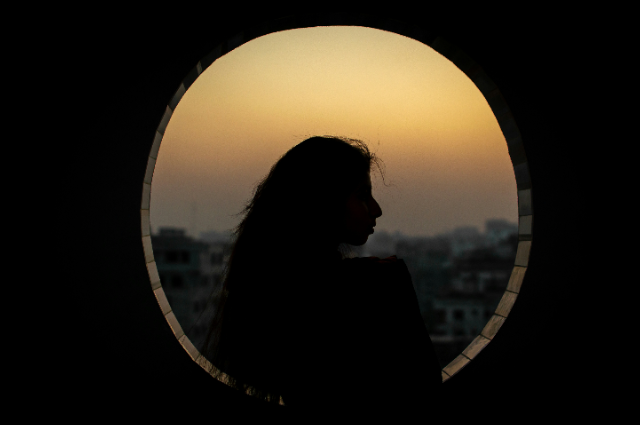
A Kashmiri Pandit woman was murdered in the summer of 1990, whose story took three decades to be told aloud. Her family called her Babli. To the school where she worked, she was a laboratory assistant — a quiet, dependable woman who believed that education was the most stable thing a person could build a life around. In the Kashmir Valley of the late 1980s, that belief still felt reasonable. By the summer of 1990, it would cost her everything.
Girija Tickoo was a Kashmiri Pandit, part of the small Hindu minority community that had lived in the Muslim-majority Kashmir Valley for centuries. She worked in a government school in Bandipora, a town in northern Kashmir, and was married into a local Pandit family. By all accounts, she was an ordinary woman — not a political figure, not someone whose name would have appeared in any newspaper under ordinary circumstances. She was a person who went to work, came home, and believed the world she lived in was the world she knew.
That world ended in January 1990. And what happened to Girija Tickoo on 25 June of that year became one of the most harrowing individual stories of a collective catastrophe — the forced exodus of Kashmiri Pandits from the valley they had called home for generations.
A Community on the Edge
To understand what happened to Girija, you have to understand what was happening to Kashmir. Through the late 1980s, an insurgency had been building in the valley, fuelled by a complex mix of political grievance, Pakistani support, and a growing Islamist current that sat alongside more secular demands for independence. For the Kashmiri Pandit community — never more than 5 to 6 per cent of the valley's population — the atmosphere was shifting in ways that were difficult to name but impossible to ignore.
Targeted killings of prominent Pandits had begun. On 14 September 1989, Pandit Tika Lal Taploo, a noted lawyer and BJP leader, was shot dead outside his home in Srinagar — the first of a series of high-profile assassinations. In the nights that followed, mosques broadcast announcements. Threatening letters arrived at the Pandit homes. The message, sometimes spoken and sometimes unspoken, was clear: leave, or face the consequences.
On the night of 19 January 1990, the exodus effectively began. Hundreds of thousands of Kashmiri Pandits packed what they could carry and fled towards Jammu. Estimates suggest that between 90,000 and 100,000 Pandits left the valley within months. They became, in the starkest possible sense, refugees in their own country.
Girija Tickoo's family was among them.
The Life She Left Behind
When the family left for Jammu in January 1990, they left quickly and with little. The job, the school, the familiar patterns of daily life — all of it was abandoned in the panic of departure. In Jammu, like tens of thousands of other displaced Pandits, they tried to rebuild some version of normalcy in makeshift camps and rented rooms, in a city that was familiar in language and religion but not in the particular texture of home.
Girija, however, had left something behind that mattered practically: her unpaid salary. In the chaos of the exodus, many government employees had fled without collecting their dues. The money was sitting there, in the school's records, waiting. For a family that had arrived in Jammu with almost nothing, it was not a trivial sum.
Months passed. Then, sometime in the early summer of 1990, Girija received a phone call. The caller — later reported to be a colleague she had trusted — told her that the situation in the valley had calmed. It was safe to return, the voice said. She could come back, collect her salary, and return to Jammu without incident. The person assured her of her safety.
Girija believed the call. There is nothing strange about that. She had no reason to suspect that the person on the other end of the line was leading her into a trap. She knew her colleague. She trusted the relationship. And she needed the money.
On 25 June 1990, she returned to Bandipora.
What Happened on 25 June
The details of what followed were pieced together afterwards, through witness accounts, police reports, and the testimonies of her family. According to multiple accounts, Girija was followed from the moment she arrived in the valley. She went first to the home of her colleague, the same person who had called her back. It was there, from that home, that she was abducted.
She was taken by five men. At least one of them was her colleague. The people in the area who saw her being taken — neighbours, bystanders — did not intervene. Some looked away. The silence of witnesses is its own chapter of this story.
What happened next is almost impossible to write, and yet must be written, because the erasure of these facts has been part of how the community's suffering was minimised for decades. Girija was gang-raped over several days, tortured, and then killed in a manner of deliberate, sadistic brutality — she was cut apart with a mechanical saw while still alive. Her remains were discarded near the Jhelum River.
Her brother had to identify what was left of her body.
This was not a crime of passion or opportunity. It was planned. The phone call, the assurance of safety, the colleague's complicity, the five men waiting — all of it was constructed. The murder carried a message addressed to every Kashmiri Pandit family that was weighing whether to return: do not come back. There is nothing for you here but death.
"My father's sister was a librarian who had gone to collect her paycheck. On her way back, her bus was stopped. What happened next still leaves me in shivers, tears, and nausea." — Sidhi Raina, niece of Girija Tickoo, Instagram, 2022
The Weight of a Brother's Grief
For the Tickoo family, the horror did not end with Girija's death. It continued in the silence that followed — the kind of silence that settles over a family when a wound is too deep to touch. For decades, her story was not spoken about publicly. Her niece, Sidhi Raina, wrote in 2022 that she had never, growing up, heard anyone in the family speak directly about what had happened to her bua.
"My father told me," Sidhi wrote, "that every brother lived in shame and anger as nothing had been done to receive justice for his sister." That sentence carries extraordinary weight. The shame was not the family's to bear — it belonged entirely to the men who killed her and the system that never brought them to account. And yet grief, when it goes unacknowledged for long enough, can turn inward in ways that damage the living.
The family is still awaiting justice — a phrase that has become a kind of permanent condition for many Kashmiri Pandit families. No one has been convicted of Girija Tickoo's murder. The men responsible, according to available reports, have never faced legal consequences.
Part of a Pattern, Not an Anomaly
It would be a mistake — and a distortion — to treat Girija Tickoo's case as an isolated horror. It was part of a pattern of targeted sexual violence against Kashmiri Pandit women that took place during the exodus period, and which has received far less attention than it deserves.
Sarla Bhat was a nurse working at the Sher-i-Kashmir Institute of Medical Sciences in Srinagar. She was abducted by militants of the Jammu Kashmir Liberation Front, tortured, gang-raped, and murdered. Her dedication to caring for patients — regardless of religion — was repaid with violence. Prana Ganjoo, the wife of Professor K.L. Ganjoo, was abducted alongside her husband in broad daylight. The Professor was shot dead and thrown into the Jhelum River. Prana's fate, according to available reports, was similarly brutal before her death.
These were not random crimes. They formed part of a campaign of sexual violence and terror directed at a minority community — violence that sent a message, that served a strategic purpose within the larger project of ethnic cleansing. The slogan that circulated in parts of the valley in those months — "We want our Pakistan, without Pandit men but with their women" — made the logic of that violence explicit in the most disturbing way possible.
The Kashmiri Pandit Sangharsh Samiti, after conducting surveys in 2008 and 2009, estimated that 399 Kashmiri Hindus were killed by insurgents between 1990 and 2011. Indian Home Ministry data records over 1,400 Hindu civilian fatalities from 1991 to 2005. The numbers are contested, depending on the source. What is not contested is that an entire community was driven from its homeland, and that women were among those who suffered the most targeted, most intimate forms of violence in that process.
Three Decades of Silence
For most of the 1990s and 2000s, these stories existed at the margins of Indian public life. The Kashmiri Pandit exodus was politically inconvenient for multiple parties — the Indian government, which had failed to protect a minority community; the Kashmiri Muslim political class, which struggled with how to address the violence done in the name of a cause many of them supported; and a section of the Indian media and intelligentsia, which was often more comfortable with the framing of Kashmir as a story of Muslim grievance against the Indian state than with the more complicated reality that included the ethnic cleansing of Hindus.
This is not to flatten the complexity of the Kashmir conflict, which is genuinely layered and contested. Kashmiri Muslims have their own deep catalogue of suffering, including mass detentions, enforced disappearances, and documented human rights abuses by Indian security forces. Those realities are real and must be acknowledged. But the coexistence of these truths does not mean that any of them can be used to erase the others. What happened to Girija Tickoo happened. What happened to Sarla Bhat happened. The silence around these stories was a choice, made repeatedly, by people with the power to make different ones.
Families like the Tickoos carried that silence in their bodies for thirty years.
The Film, the Reckoning
In March 2022, the Hindi film The Kashmir Files, directed by Vivek Agnihotri, was released. Whatever one thinks of the film's politics — and it generated substantial controversy, with critics arguing it was designed to inflame communal tensions, while supporters insisted it was simply documenting a suppressed history — its effect on Kashmiri Pandit families was immediate and visceral.
A character named Sharda Pandit in the film was understood to be based on Girija Tickoo's story. Watching her story enacted on screen — for many families, the first time they had seen any version of their experience reflected in mainstream culture — broke something open. People who had never spoken publicly about what had happened to their relatives began to speak.
Sidhi Raina was one of them. Her Instagram post, written in the days after the film's release, described for the first time in a public forum what had happened to her aunt. The post was shared widely. It reached people who had never heard Girija's name. It reminded those who had that this was not a story that had been told, not really — that it had been carried in private, inside families, for over three decades, while the world went on as if it hadn't happened.
Justice Delayed Indefinitely
No one has been held legally accountable for Girija Tickoo's murder. This is not unusual. The impunity that surrounded violence against Kashmiri Pandits during the exodus period has been nearly total. The men who committed these acts moved through the following decades largely unpunished, in some cases continuing to live in the same valley from which they helped drive an entire community.
Yasin Malik, one of the leaders of the Jammu Kashmir Liberation Front during this period, was eventually convicted in 2022 by a Delhi court on terror-funding charges and sentenced to life imprisonment. But that conviction addressed financing, not the killings. The specific cases — Girija Tickoo, Sarla Bhat, and the many others whose names appear in surveys and human rights reports — remain uninvestigated or unprosecuted.
For the families, this is not a bureaucratic matter. It is a continuing wound. Justice would not undo what was done. It never can. But it would represent an acknowledgement by the state and the law that what was done was a crime — that Girija's life mattered, that her murder was not a footnote, that the people responsible should be named and held to account.
That acknowledgement has not come.
Remembering Babli
Girija Tickoo was not a symbol when she boarded that bus to Bandipora on 25 June 1990. She was a person — a daughter, a wife, a woman with a nickname given to her by people who loved her. She went to collect her salary because her family needed the money. She trusted a colleague because trust, in the world she had grown up in, was not an unreasonable thing to extend.
The horror of what was done to her is inseparable from this ordinariness. She was not targeted because of anything she had done. She was targeted because of what she was — a Kashmiri Pandit woman, in a place and time where that identity had been marked for erasure. The brutality of her murder was calculated to send a message. It worked.
What could not be calculated was that thirty years later, a niece would sit down and write about her bua on a social media platform, and that the words would reach people who had never heard the name Girija Tickoo. That the silence, finally, would break.
Memory is not justice. But it is something. It insists that a person existed, that what happened to her mattered, that the world, which looked away and stayed silent, does not get the final word.
Girija Tickoo existed. She was called Babli by the people who loved her. She deserved to come home.
References:
- https://rohittikoo.com
Exodus of Kashmiri Hindus — Wikipedia: https://en.wikipedia.org
- Girija Tickoo, Sarla Bhat, and Prana Ganjoo — Rohit Tikoo: https://rohittikoo.com
- The Unforgiving Truth of Girija Tickoo — Rohit Tikoo: https://rohittikoo.com
- Girija Tickoo's Family Still Awaiting Justice — OpIndia: https://www.opindia.com
- Niece and Sister Share Their Pain — HinduPost: https://hindupost.in
- Kashmir's Unsung Martyrs — Newslaundry: https://www.newslaundry.com
- Who Was Girija Tickoo? — SheThePeople: https://www.shethepeople.tv
- The Brutal Killing of Girija Tickoo — Jammu Kashmir Now: https://www.jammukashmirnow.com