
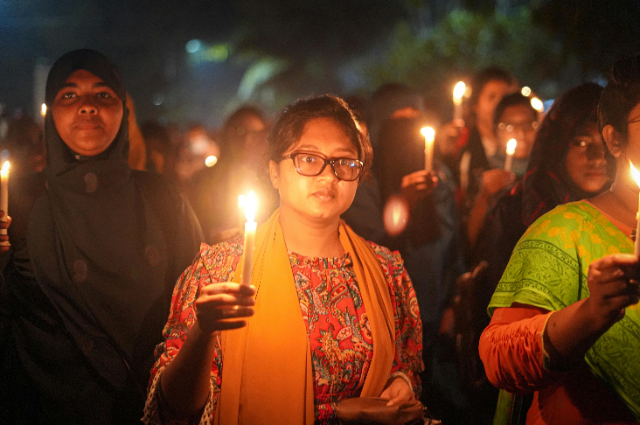
On the night of December 16, 2012, a 23-year-old physiotherapy student named Jyoti Singh boarded a bus in South Delhi with a male friend after watching a film. What happened next shocked an entire nation into the streets. Six men, including a 17-year-old, gang-raped her with extreme brutality inside the moving bus. She was assaulted with an iron rod. Her intestines were pulled out of her body. She and her friend were thrown off the bus onto the road. Jyoti Singh fought for her life for thirteen days in a hospital in Delhi and then in Singapore. She died on December 29, 2012, from injuries so severe that the doctors treating her said they had never seen anything like them.
Five of the six accused were adults under Indian law. One was 17 years old at the time of the crime, just a few months short of his eighteenth birthday. That single fact, his age, determined that he would be treated entirely differently from the others, tried under a separate law, given a sentence that bore no relationship to the scale of what he had done, and released back into society three years later, while the world watched in disbelief.
What the Law Said and What It Produced
Under the Juvenile Justice Act of 2000, which was the operative law at the time of the crime, any person below the age of 18 was classified as a juvenile regardless of the nature of the offence committed. The maximum sentence a juvenile could receive under this law was three years in a reform or correctional facility. There was no exception for rape. There was no exception for murder. There was no exception even for crimes of the kind that were committed on December 16, 2012. The law treated a 17-year-old who participated in a gang rape and murder with the same maximum punishment it would apply to a 17-year-old who committed theft.
The Juvenile Justice Board found the juvenile guilty of rape and murder in August 2013. It sentenced him to three years in a juvenile correction home, the maximum the law allowed, inclusive of the eight months he had already spent in remand. The four adult convicts, Mukesh Singh, Pawan Gupta, Vinay Sharma, and Akshay Kumar Singh, were sentenced to death by the trial court in September 2013. A fifth accused, Ram Singh, died in custody in March 2013 in circumstances that were ruled a suicide. The juvenile received three years. The adults received the death penalty. They were hanged at Tihar Jail on March 20, 2020. He walked out of the correctional home on December 20, 2015.
Why His Release Was Wrong
Jyoti Singh's parents, Badri Nath Singh and Asha Devi, fought the juvenile's release with every legal tool available to them. They petitioned the Supreme Court to have him tried as an adult. They demanded that his identity be made public before his release, on the grounds that the public had a right to know where he was. They argued, clearly and on record, that a person who had participated in one of the most brutal crimes in India's documented history should not be free to walk among the same public whose daughter he had helped murder.
The Delhi High Court declined to extend his detention. The government lawyer representing the state told CNN that the court was helpless because it had to stay within the confines of the existing law. That sentence is the most honest description of what went wrong. The court was not wrong in a strictly legal sense. The Juvenile Justice Act of 2000 set a maximum of three years. The court could not exceed it. But a law that produces an outcome where the person described by witnesses and investigators as one of the most brutal participants in a gang rape and murder serves three years and is then released freely into society is not a law that is doing what law is supposed to do. It is not delivering justice. It is delivering a technical legal outcome that has nothing to do with justice.
Intelligence agencies and police sources flagged serious concerns before his release that went beyond the nature of his original crime. In 2015, intelligence officials reported that he had been radicalised during his time in the correctional home, having shared a cell with a juvenile convicted in connection with the 2011 Delhi High Court blast case. Dr Subramanian Swamy wrote formally to Prime Minister Narendra Modi, citing police sources who described the juvenile as having become an extremist during his detention. A petition was filed in court arguing that he had shown no signs of genuine reform and had, if anything, become more dangerous during his time in custody, not less. The court noted these concerns in its order but found no legal basis to extend his detention beyond the statutory maximum.
Nirbhaya's father told the media directly, in the days before the release, that he had shown no signs of improvement. He has become street smart and learned to abuse the system. He has been getting indoctrinated inside the juvenile home. The family's demands that his identity be disclosed publicly were rejected. He was released on December 20, 2015, and moved to a secret location the night before his release for security reasons. His name, face, and current location remain legally protected under the Juvenile Justice Act.
Where He Is Now and Why That Matters
The juvenile is currently free. His identity has been legally sealed. According to reports citing NGO officials familiar with his post-release placement, he was moved to a location in South India, given a new identity, and placed in employment. He is believed to be working and living under a name that is not his own, in a place where the people around him do not know who he is or what he did.
This arrangement raises questions that have never been satisfactorily answered. A man who participated in one of the most brutal crimes in India's recorded history is living among ordinary people, in a community, interacting with women and families, with no mechanism by which those people can know who he is. No sex offender registry in India, as exists in countries like the United States and the United Kingdom, requires that his neighbours be informed of his presence. No monitoring system publicly tracks his movements or behaviour. No probation or parole equivalent exists for juvenile offenders under the 2000 Act, because the law did not provide for one.
The public safety question this raises is not rhetorical. It is a documented concern raised by law enforcement, by the victim's family, by members of parliament, and by the courts themselves. His correctional home period did not, by any independent assessment, produce evidence of genuine rehabilitation. The intelligence input that he had been radicalised during his detention was serious enough to be raised at the level of a formal petition to the Supreme Court. Yet the legal system had no mechanism to hold him longer, no mechanism to monitor him after release, and no mechanism to inform the public of his presence in their midst.
The Law That Changed Because of Jyoti Singh
One of the few concrete outcomes of the juvenile controversy was a change in the law that applied to him. The Juvenile Justice Act of 2015, passed by the Rajya Sabha in December 2015, the very month of the juvenile's release, introduced a provision that juveniles between the ages of 16 and 18 who are accused of heinous offences can be assessed by a Juvenile Justice Board to determine whether they should be tried as adults. If the Board, after assessment, finds that the juvenile has the mental and physical capacity to understand the consequences of the offence and has committed it as a child in conflict with the law, it can direct that they be tried before a regular court as an adult. This amendment was a direct legislative response to the Nirbhaya case and to the public outrage that the juvenile's three-year sentence had produced.
The amendment was meaningful, but arrived too late for Jyoti Singh. The juvenile who participated in her rape and murder was governed by the 2000 Act, not the 2015 one. The law changed because of what happened to her, but the change did not reach back to affect him.
The Broader Failure This Case Exposed
The juvenile's release exposed two failures that sit at the foundation of India's criminal justice response to sexual violence. The first is a sentencing framework that, at the time of the crime, made age the decisive variable in punishment regardless of the nature of the offence. A 17-year-old who participates in a gang rape and murder is not, in any meaningful sense, a different kind of criminal from an 18-year-old who does the same. The distinction between the two, in terms of culpability, moral responsibility, and danger to society, is not captured by a single year of age. The Verma Committee, established in the aftermath of the Nirbhaya case to recommend legal reforms, took a reformatory position against reducing the juvenile age, arguing that India's reform facilities were not equipped to actually rehabilitate. That observation was honest, but it did not resolve the fundamental injustice of treating a participant in a gang rape and murder as a subject of rehabilitation rather than serious criminal punishment.
The second failure is the absence of any post-release monitoring or community notification framework for serious juvenile offenders. India does not have a sex offender registry. There is no legal mechanism by which communities can be informed that a person convicted of rape and murder, however long ago and however young they were at the time, is living among them. The juvenile's current neighbours, whoever and wherever they are, have no way of knowing who he is. That is not a legal technicality. It is a gap in public safety infrastructure that remains unfilled more than a decade after Jyoti Singh's death made it impossible to ignore.
Jyoti Singh's mother, Asha Devi, has continued to speak publicly about her daughter's case in the years since the executions of the four adult convicts in 2020. She has said, repeatedly and on record, that justice was only partially delivered. Three of the six people who participated in what was done to her daughter are free or have died without full accountability. Ram Singh died in custody. The sixth accused, the juvenile, is free and anonymous. For Asha Devi, who named her daughter publicly on the third anniversary of her death because she refused to let the shame fall on the victim rather than the perpetrators, that incomplete accounting is a wound that has not closed.
The case of the Nirbhaya juvenile is ultimately a case about what a society decides is an acceptable response to extreme violence. India's legal system, constrained by the law as it existed in 2012, produced an outcome that most of the country, including the courts themselves, found deeply unsatisfactory. The law was changed. The juvenile was still released. He is still free. And the question of whether the system has done enough to ensure he will never do what he did again remains, in the absence of any monitoring framework or public accountability mechanism, unanswerable.
References:
- Wikipedia, 2012 Delhi Gang Rape and Murder — https://en.wikipedia.org
- CNN, New Delhi Gang-Rape Convict to Be Released, December 2015 — https://www.cnn.com
- OpIndia, What Happened to the Juvenile of Nirbhaya Case, March 2020 — https://www.opindia.com
- IJRAR, Juvenile Injustice: Nirbhaya's Continuing Tragedy — https://ijrar.org
- IL EDU Blog, Juvenile Justice in India After Nirbhaya Rape Case — https://blog.iledu.in
- Scribd, Delhi High Court Judgment in Case of Juvenile Rapist in Nirbhaya Case — https://www.scribd.com
- Business Standard, Nirbhaya Case Convicts Archive — https://www.business-standard.com