
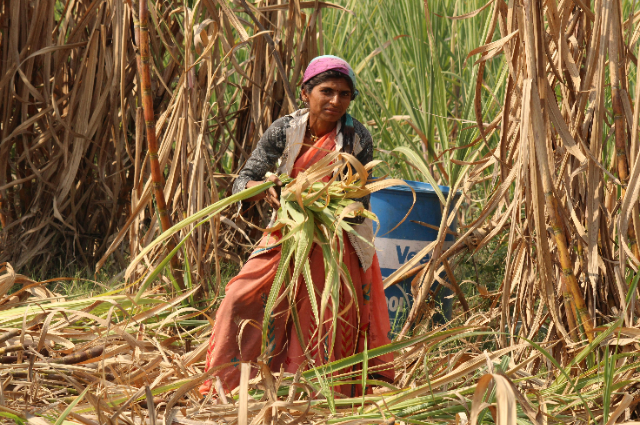
She was 22 years old. She had gone to a private hospital because the bleeding would not stop, days of it, heavy and painful, interrupting work, making the long hours in the fields impossible to manage. The doctor told her her uterus had to be removed. She agreed. She did not fully understand what she was agreeing to.
"I didn't know what a uterus was," she said later. "Only that it had to be taken out."
After the surgery, the pain did not stop. The backaches continued. The weakness settled in for good. But she went back to work within days, because the surgery had been paid for with a loan taken from the contractor who arranged her fieldwork, and the debt was already accumulating interest against her next season's wages. She could not afford to rest. No one rested in the fields.
"I think," she said, "I lost my body long before the womb was taken."
She is one of thousands. Surveys commissioned by local NGOs in 2018 and confirmed by a government committee investigation in 2019 found that the rate of hysterectomies among women from Beed was 36 percent — 14 times higher than the national average of 3 percent. (Newslaundry) In one village in Beed district, every family interviewed had at least two women who had undergone the surgery in the previous five years. In most towns and villages, it was one woman per household.
This is not a medical anomaly. It is a system. And like all systems, it has architects.
The Architecture of the Fields
To understand why women in Beed are losing their uteruses at rates that have no parallel anywhere in India, you have to understand how Maharashtra's sugarcane economy works — because the hysterectomy crisis is not a side effect of the industry. It is a product of it.
India is the world's second-largest sugar producer, and Maharashtra accounts for about a third of that production. About a million workers, typically from Beed, migrate for days to fields in the south and west. Throughout the harvest, from about October to March, they move from field to field, carting their belongings with them. (The Daily Jagran)
About 1.5 million labourers, including many women from drought-prone regions within India, migrate seasonally for cane work, often between September and March. Most often, contractors pay the workers in advance, creating a cycle of debt. (Wikipedia)
The basic unit of sugarcane labour in Maharashtra is the jodi — the pair. Sugarcane cutters are generally hired in pairs, comprising a husband and a wife, and jodis are expected to cut two to three tonnes of cane in a day. They are typically hired and paid by middlemen known as mukadams, who receive a commission from the sugar factories ranging from 15 to 25 percent. (HinduPost)
The jodi system immediately creates a structural problem for women. A woman who menstruates cannot work at full capacity during her period. A woman who is pregnant cannot work at all. And because weak enforcement of labour laws means contractors can refuse to pay sick leave and demand fines from workers for sickness absence, this drives women with menstrual and gynaecological problems to needlessly seek hysterectomies. (HinduPost)
The fields offer no relief. Gangabai Prakash Shingare, a sugar industry worker, described the conditions: "I have worked in Maharashtra and Karnataka, but I have not once seen a toilet or bathroom for women. Men can walk to the nearest pond and bathe, but what do we do? Early in the morning, when it is still dark, we walk into dense sugarcane fields. That is the only time and place we have to manage our businesses." (OpIndia)
In the sugarcane fields, the labourers live in makeshift shelters with no sanitation facilities. According to a report by Oxfam India, the tents are small and inadequate to give complete shelter and do not have water, electricity supply or toilets. (HinduPost)
Menstruation and reproductive health are rarely discussed in communities like Maharashtra. Periods are treated as shameful and inconvenient rather than a natural process, and most women lack access to clean sanitary products. (Council on Foreign Relations) Women in the fields typically use reused cloth that they wash by hand during their periods. (OpIndia)
In this context — no toilets, no sanitation, no sick leave, fines for absence, debt already owed to the contractor before the season begins — a hysterectomy begins to look, to a woman in the fields, like a solution. Remove the organ that causes the problem. Work without interruption. Pay back the debt. Come back next season.
This is the logic the system has created. It is not the women's logic. It is the logic that the system has imposed on them.
The Doctors Who Profited
The other architect of this crisis is the private medical establishment of Beed and its surrounding districts — a network of small clinics that discovered, at some point in the decade between 2010 and 2020, that poor sugarcane-cutting women represented a reliable source of income.
Women interviewed had approached doctors for various gynaecological ailments ranging from uterine cysts and irregular periods to urinary tract infections, among other issues. All were advised that the surgery was a one-stop solution to their problems. (Rohittikoo)
The pattern is consistent across hundreds of documented cases. A woman comes to a clinic with a complaint — heavy periods, a cyst, an infection, and pain. She is told, often after a brief examination or sometimes after none at all, that her uterus needs to come out. She is told she might get cancer if she does not have the surgery. She is told the surgery will resolve all her problems and free her from the monthly inconvenience that makes field work difficult. She is not told about the long-term consequences. She is not told there are alternative treatments. She is told to sign a consent form and schedule the procedure.
In early 2021, Bhanubai Madhulkar Shinde went to a local clinic in her village in Beed with complaints of heavy menstrual bleeding. After an initial diagnosis, Shinde — only 32 at the time — was informed her uterus was damaged and that she might need to undergo a hysterectomy. Medical professionals warned her family that forgoing the surgery could prove lethal. "They told us that if she didn't remove her uterus now, she would catch cancer," said her husband. As Shinde mulled over the life-altering decision, the nurses at the clinic argued that the operation would not only cure her pains but also release her from the monthly problem women face, allowing her to work longer hours in the fields alongside her husband. (Asiametro)
The financial incentive for the clinics is straightforward. A hysterectomy is a high-value procedure. It can cost between ₹30,000 and ₹80,000 at a private clinic — money that a sugarcane-cutting family does not have, money that must be borrowed, money that the contractor is often willing to advance, money that ensures the woman returns to the fields next season to work off the debt. Everyone in the chain benefits from the surgery except the woman who undergoes it.
In late 2024, an official health department report revealed that 843 women from Beed underwent hysterectomies before migrating for seasonal agricultural work. (Jammukashmirnow) Not after. Before — as preparation for the season, the way you might service a machine before a long job. The women were being processed.
The Contractors Who Arranged It
Menstruation and pregnancies make work more challenging and, at times, impossible, so the contractors who supply farm owners with labourers encourage hysterectomies, offer loans to pay for them, bury these women in debt, and then force them to work to pay it off. (SheThePeople)
This is the debt trap at the centre of the system. Borrowing against future wages plunges workers further into debt, ensuring that they return to the fields next season and beyond. Workers' rights groups and the United Nations labour agency have defined such arrangements as forced labour. (The Daily Jagran)
The mukadam — the contractor — is not a peripheral figure in this story. He is the mechanism. He recruits the jodis, advances the wages before the season starts, arranges the loans for surgeries when women need them, and then collects repayment through deductions from the season's earnings. A woman who undergoes a hysterectomy funded by a contractor loan has, in effect, sold a portion of her future labour in exchange for an organ she did not need to lose. She is more productive for the contractor afterwards — no absences, no sick days, no pregnancy — and more indebted to him. The surgery makes her, from the contractor's perspective, a better asset.
Young girls in Maharashtra are also pushed into marriage because working in the fields to cut sugarcane as a couple pays more than a man working alone. Contractors sometimes pressure girls to get married young, because single women cannot form a jodi. (Rohittikoo) Child marriage and forced hysterectomy are not separate problems. They are the same problem — the reduction of women's bodies to instruments of labour productivity, managed through debt, family pressure, and medical complicity.
The Health Consequences They Were Not Told About
A hysterectomy is a major surgery. Its long-term consequences are significant, particularly for women under 40, and many of the women in Beed who underwent the procedure were in their twenties and thirties.
In addition to the short-term risks of abdominal pain and blood clots, a hysterectomy is often accompanied by the removal of the ovaries, which brings about early menopause, raising the chance of heart disease, osteoporosis and other ailments. (The Daily Jagran)
Women encounter short-term risks such as blood clots or abdominal pain, but also long-term risks such as osteoporosis or higher chances of heart disease due to early menopause. (OpIndia) They age faster. Their bones weaken. Their cardiovascular risk rises. They experience hot flashes, mood changes, and joint pain that make sustained physical labour increasingly difficult — the precise kind of labour they had the surgery to be able to continue.
The cruellest irony of the system is this: the surgery that is supposed to make a woman more productive in the short term makes her significantly less healthy in the long term, ensuring that she ages rapidly, accumulates debt, and has fewer options than when she started.
Furthermore, in addition to the health consequences, the women also have to pay back the cost of the surgery, which increases their debt, keeping them even longer in the fields. (OpIndia)
The surgery does not free them. It traps them more deeply.
The Supply Chain That Looked Away
The sugarcane from these fields supplies companies like Coca-Cola and PepsiCo. After an investigation published in the New York Times in 2024, Coca-Cola said that it was deeply troubled by the phenomenon of forced hysterectomies and was committed to looking into the issues raised. Yet women labourers and advocates say the problem persists today. (Wikipedia)
The abuses continue — despite local government investigations, news reports and warnings from company consultants — because everyone says somebody else is responsible. Big Western companies have policies pledging to root out human rights abuses in their supply chains. In practice, they seldom, if ever, visit the fields and largely rely on their suppliers, the sugar-mill owners, to oversee labour issues. (The Daily Jagran)
The mill owners say they do not employ the workers — the contractors do. The contractors say they are just sourcing labour. The companies say they are monitoring their suppliers. The suppliers say they cannot control conditions in the fields. And at the bottom of this chain of denied responsibility, a 32-year-old woman from Beed is recovering from a surgery she did not need, in a tent with no running water, trying to earn back the money the surgery cost her.
Politicians run most of the mills in the state of Maharashtra. They deny or downplay evidence of coerced hysterectomies, debt bondage and child labour in the fields. (The Daily Jagran) The political economy of Maharashtra's sugar industry — in which mill ownership is deeply intertwined with political power — ensures that the people most capable of structural reform have the most to lose from it.
The Government That Knew and Did Little
The Maharashtra government has known about this crisis for years. In 2019, it commissioned a formal inquiry.
The inquiry, led by the deputy chairperson of the Maharashtra legislative council, Dr Neelam Gorhe, found that the rate of hysterectomies among women from Beed was 36 percent compared with a national average of three percent. The report contained a number of recommendations aimed at eradicating the problem. (HinduPost)
One of the only changes made was the creation of a rule requiring civil surgeons — the top health officials of the district — to approve hysterectomies, in order to prevent some doctors from profiting off unnecessary operations. But the surgeries on younger women continue, and little overall change has occurred. (Rohittikoo)
In late 2024, 843 women underwent hysterectomies specifically before migrating for the season — suggesting that the regulatory measure has not meaningfully disrupted the practice. An activist warned that the latest data had reignited urgent calls for regulatory oversight, improved public healthcare and stronger protections for women in the informal workforce. (Jammukashmirnow)
Since 2018, nonprofit advocates have worked to expose the widespread number of often-unnecessary hysterectomies performed on women labourers. Their advocacy has led to critical policy shifts, including mandatory reproductive health check-ups, regulated medical procedures and a growing number of health camps before and after migration seasons. (Council on Foreign Relations) These are meaningful steps. There are not sufficient steps. The surgeries continue.
The Women Who Are Fighting Back
Against this system, some of the women who have been harmed by it are beginning to fight.
One woman who had her surgery botched joined a small but expanding movement of female labourers in Beed to demand government compensation for her loss. "If a person falls and hurts themselves in a plane, they can sue the airline and get paid, but we lost an organ because doctors don't care about us. So why shouldn't we be compensated for that too?" (Asiametro)
Others are calling for something more radical — not just compensation for individual harm but dismantling of the system that produced it. One activist proposed that the government provide work to farmworkers through alternative avenues of employment, calling the sugar production system inhumane at its foundation.
One advocate summarised the situation with precision: "They are victims of exploitation by the sugar industry, a complicit state and medical profiteering." (Council on Foreign Relations)
Three different institutions, each playing its role in a system that extracts labour from women's bodies and discards those bodies when they are no longer productive. The sugar industry needs the jodis. The contractors need the debt. The doctors need the surgeries. And the women need to eat, to pay back what they owe, to keep their families alive through another season.
What Is Actually Required
The recommendations exist. They have existed since 2019. They are not complicated:
Enforce existing labour laws so that contractors cannot fine women for sick days or menstrual absences. Build sanitation facilities in agricultural labour camps — this is not an expensive ask, it is a basic human requirement. Regulate private clinics in Beed and the surrounding districts with meaningful inspection and penalty regimes for unnecessary procedures. Provide accessible, free public gynaecological care so that women do not have to go to private clinics offering surgery as the only option. Break the debt-advance system that ties workers to contractors before the season even begins. And hold the sugar mills — and the global companies that buy from them — accountable for conditions in their supply chains rather than accepting their assurances that someone else is responsible.
None of this is happening at the scale required. None of it is happening with the urgency the numbers demand.
Each year, about 1.5 million migrant workers come to sugarcane-producing regions in Maharashtra seeking work. A lack of protection mechanisms has allowed exploitative labour practices to run rampant. As the demand for sugar rises and climate change makes those working conditions even more extreme, these malicious labour practices could become even more widespread. (SheThePeople)
The Beed hysterectomy crisis is not a story about poor women making bad decisions. It is a story about what happens when every institution that should protect a person — the medical system, the labour law framework, the government, the supply chain — fails them simultaneously, and the gap those failures leave is filled by contractors with loans and doctors with scalpels.
A 22-year-old woman did not know what a uterus was when she was told hers had to be removed. She signed the form. She went back to the fields. She said she thought she had lost her body long before the womb was taken.
She was right. The system had been taking it for years, one season at a time.
References
- Atmos — The Forced Sterilisation of India's Sugarcane Farmworkers: https://atmos.earth
- More to Her Story — In India's Sugarcane Belt, Thousands of Women Workers Undergo Forced Hysterectomies: https://www.moretoherstory.com
- The Fuller Project / New York Times — The Brutality of Sugar: Debt, Child Marriage and Hysterectomies: https://fullerproject.org
- British Safety Council India — A Bitter Harvest: Female Sugarcane Workers Pushed Into Having Hysterectomies: https://www.britsafe.in
- Business and Human Rights Centre — India: Women Sugarcane Workers Coerced Into Hysterectomies: https://www.business-humanrights.org
- Amnesty International Student Association, University of Toronto — The Plight of Female Sugarcane Cutters in Maharashtra: https://amnesty.sa.utoronto.ca