
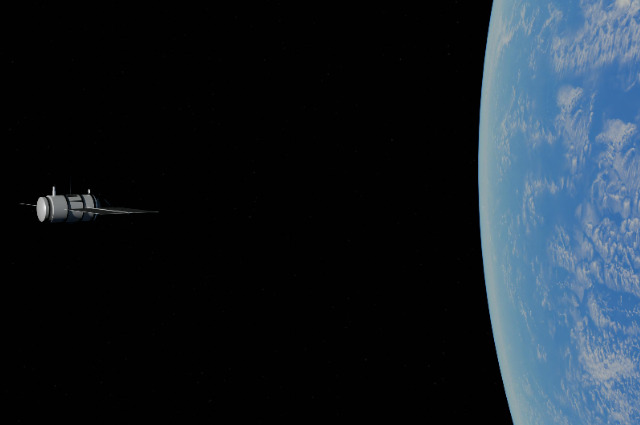
On the evening of April 1, 2026, four human beings left Earth for the first time in more than half a century and pointed themselves at the Moon. They did not land on it. They flew around it, took photographs of its far side that no human eye had ever seen directly, watched the Sun disappear behind it in a solar eclipse of extraordinary silence and beauty, and then came home. Ten days after liftoff, they splashed down in the Pacific Ocean off the coast of San Diego, healthy and intact, having traveled 252,756 miles from Earth — the farthest any human being has ever been from the planet they were born on.
And the question almost everyone asked, in living rooms and comment sections and morning conversations across the world, was some version of the same thing: why go all that way and not land?
The answer to that question is the story of what Artemis II actually was — what it needed to prove, what it risked, and what it was building toward. It is also, in a quieter way, the story of how spaceflight works when it is done carefully, by people who remember what happens when it is not.
The Longest Gap in Human History
The last time a human being traveled beyond low Earth orbit was December 1972. Harrison Schmitt and Gene Cernan descended to the lunar surface, collected samples, drove a rover across the highlands of Taurus-Littrow, and climbed back into their ascent vehicle. On December 14, the Apollo 17 lunar module lifted off the Moon. They splashed down on December 19. Cernan was the last person to step off the lunar surface.
That was 53 years ago.
In the intervening decades, humans have not been idle in space. The International Space Station has been continuously inhabited since November 2000. Hundreds of astronauts have lived and worked in low Earth orbit, conducting experiments, maintaining systems, performing spacewalks. But none of them went further than roughly 250 miles above the surface of the Earth. The Moon is 239,000 miles away. For more than half a century, no human being made that journey.
Artemis II was the first step back.
What Artemis II Was, and What It Was Not
The mission launched at 6:35 PM Eastern time on April 1, 2026, from Launch Complex 39B at Kennedy Space Center in Florida — the same pad from which Apollo 10 and several other Moon missions departed in the 1960s. Aboard the Orion spacecraft, which the four-person crew named Integrity, were NASA astronauts Reid Wiseman as commander, Victor Glover as pilot, and Christina Koch as mission specialist, along with Canadian Space Agency astronaut Jeremy Hansen, also a mission specialist. Hansen became the first Canadian ever to travel to deep space.
The spacecraft flew a free-return trajectory — a path that loops around the Moon using its gravitational field to swing the spacecraft back toward Earth without requiring a powered burn to return. This particular trajectory was chosen deliberately. It is inherently safe in a way that other trajectories are not. If propulsion fails at virtually any point along a free-return path, the spacecraft will still come home. Apollo 13 famously used a free-return trajectory in 1970 when an oxygen tank explosion crippled the service module — it is the reason that crew survived. The choice of a similar trajectory for Artemis II was not coincidence.
The mission was not designed to land on the Moon. It was not designed to enter lunar orbit. It was designed to test the Orion spacecraft — and everything aboard it — with a crew inside, in the actual environment of deep space, for real, with real consequences if something went wrong.
That distinction matters more than it might appear.
The Things You Cannot Test Without Humans
Artemis I, the uncrewed precursor mission that flew in late 2022, proved that the Space Launch System rocket and the Orion capsule could complete a lunar trajectory and return to Earth safely. The heat shield survived reentry. The parachutes deployed correctly. The systems held up in deep space. It was, by every technical measure, a successful test.
But there is a category of things that an uncrewed spacecraft simply cannot test. Life support systems — the equipment that scrubs carbon dioxide from the air, maintains atmospheric pressure, regulates temperature, manages water and waste — cannot be fully validated without human beings breathing, sweating, drinking, and existing inside them. Manual piloting controls cannot be evaluated without a pilot's hands on them. Emergency procedures cannot be rehearsed without a crew to rehearse them. The cumulative physiological effects of deep space radiation on the human body cannot be measured without humans in deep space.
Every one of those gaps was what Artemis II was designed to close.
Over the ten days of the mission, the crew operated Orion's systems directly, testing manual control, practicing emergency procedures, and working through the full sequence of operations that any future crew heading to the Moon's surface would need to execute. They performed the first flywheel exercise in deep space. They tested the spacecraft's toilet systems under real conditions. They transitioned communications from near-Earth relay satellites to the Deep Space Network, the global antenna system that tracks spacecraft across the solar system. They ate, slept, worked, and lived inside a spacecraft that had never carried humans before — and in doing so, they generated data that no simulation on the ground could have produced.
The Day the Record Fell
On Flight Day 6, April 6, 2026, the crew woke up 18,830 miles from the Moon. Christina Koch, looking out through Orion's windows as the spacecraft fell increasingly under the Moon's gravitational pull, radioed Mission Control: "We are now falling to the Moon rather than rising away from Earth. It is an amazing milestone."
At approximately 1:56 PM Eastern time that afternoon, the Orion spacecraft broke the record for the farthest distance from Earth ever traveled by a human being. The previous record had stood for 56 years — set by the crew of Apollo 13 during their harrowing emergency return, when the damaged spacecraft's trajectory carried them 248,655 miles from home. At 7:07 PM, Artemis II reached its maximum distance: 252,756 miles from Earth. The old record was gone by 4,111 miles.
Shortly after, the spacecraft passed behind the Moon, and radio signals between Orion and Earth fell silent for approximately 40 minutes — the same communications blackout that Apollo crews had experienced, caused by the Moon's bulk blocking transmission to Earth-based antennas. Mission Control, which had been in continuous communication with the crew for six days, waited.
When the signal came back, the crew described what they had seen: the lunar surface passing below them at closest approach — approximately 4,067 miles above the Moon's surface — in the stark, high-contrast light of deep space. They took high-resolution photographs of the far side, terrain that had been photographed by robotic probes but never observed directly by human eyes. They watched a solar eclipse from an angle no person had ever occupied, the Sun's corona glowing around the Moon's darkened edge, the solar atmosphere laid bare in a way impossible to see from Earth's surface.
President Trump spoke with the crew in a live call from the White House. The crew waved from Orion's windows, visible on screens across Mission Control.
The Journey Home
The return trip took four days. On Flight Day 10, April 10, the Orion spacecraft reentered Earth's atmosphere using a skip reentry technique — a maneuver in which the capsule dips into the upper atmosphere to bleed off speed, briefly bounces back up, and then descends for final entry. The approach had been modified from earlier plans following unexpected heat shield erosion observed after Artemis I's uncrewed reentry. The steeper trajectory used on Artemis II was designed to reduce the duration of peak heating, addressing the problem before crewed missions depended on the shield.
At 5:07 PM Pacific time on April 10, 2026 — 8:07 PM Eastern — the Orion spacecraft splashed down in the Pacific Ocean off the coast of California. The USS John P. Murtha, an amphibious transport dock ship, was waiting. Navy divers entered the water, stabilized the capsule with a sea anchor, attached an inflatable collar for balance, and connected a raft — called the "front porch" — to the side hatch. Within two hours, all four crew members had been extracted and flown by helicopter to the ship.
The Artemis II mission was complete. Total duration: 9 days, 1 hour. Total distance traveled: 252,756 miles at maximum distance from Earth.
What Went Wrong, and Why That Matters
No mission to space is flawless, and Artemis II was not designed to be. It was designed to find the problems before they become fatal.
Engineers identified a urine vent line issue during the mission. Post-splashdown analysis began immediately, with teams working to determine the root cause and develop corrective action for Artemis III. This is not a failure — it is precisely the function a test mission is supposed to serve. A urine vent line problem discovered during a flyby mission, with a crew safely returned to Earth, is a solved engineering problem. The same issue discovered during a lunar landing mission, with a crew on the surface of the Moon a quarter million miles from home, is something very different.
The heat shield erosion that had been observed after Artemis I was similarly addressed through the redesigned reentry trajectory flown on Artemis II. The system worked. The crew survived reentry without incident. But the correction was made because the problem had been found — found by a mission that was designed, deliberately, to find problems.
This is the logic of test flights. It is the logic that Apollo 1 — a fire on the launchpad in 1967 that killed three astronauts during a ground test — reinforced at terrible cost. It is the logic that the Space Shuttle Columbia disaster in 2003, and the Challenger disaster in 1986, reinforced again. Space is not forgiving of untested assumptions. The history of human spaceflight is, in part, a history of learning what happens when corners are cut.
Artemis II did not cut corners.
What Comes Next
The Artemis program's road to the lunar surface remains long and deliberate by design.
A commercial lander demonstration mission is scheduled for 2027, which will test one or both commercial lunar landers — developed by SpaceX and Blue Origin respectively — in low Earth orbit before they are trusted with a crew on the surface of the Moon. NASA continues to target early 2028 for Artemis IV, the first mission in which astronauts will actually descend to the lunar surface — landing near the Moon's south pole, in a region of permanent shadow where water ice has been confirmed, ice that could one day support a sustained human presence.
The Artemis program is not just about repeating what Apollo accomplished. It is about establishing the infrastructure — the knowledge, the tested hardware, the operational procedures, the international partnerships — for humans to return to the Moon not for a brief visit but to stay, to work, and ultimately to use it as a waypoint for the far longer journey to Mars.
None of that is possible without what Artemis II proved. The life support systems work. The Orion spacecraft, named Integrity by the crew who trusted their lives to it, held. The free-return trajectory worked. The heat shield held. The Deep Space Network communicated across 252,756 miles. Four human beings — the first in 53 years — went to the Moon and came back.
The surface is next.
References:
- NASA — Artemis II News and Updates: https://www.nasa.gov
- NASA — Artemis II Mission Page: https://www.nasa.gov
- NASA — Launch Day Updates: https://www.nasa.gov
- NASA — Flight Day 6: Crew Ready for Lunar Flyby: https://www.nasa.gov
- NASA — Flight Day 6: Lunar Flyby Updates: https://www.nasa.gov
- NASA — Flight Day 10: Splashdown: https://www.nasa.gov
- NASA — Artemis II Moonfarers Return to Earth: https://www.nasa.gov/
- NASA — Initial Artemis II Assessments: https://www.nasa.gov
- NASA — Artemis II FAQ: https://www.nasa.gov
- Wikipedia — Artemis II: https://en.wikipedia.org
- Space.com — Artemis 2 Splashdown Coverage: https://www.space.com
- ISSINFO — Artemis II Mission Tracker: https://issinfo.net