
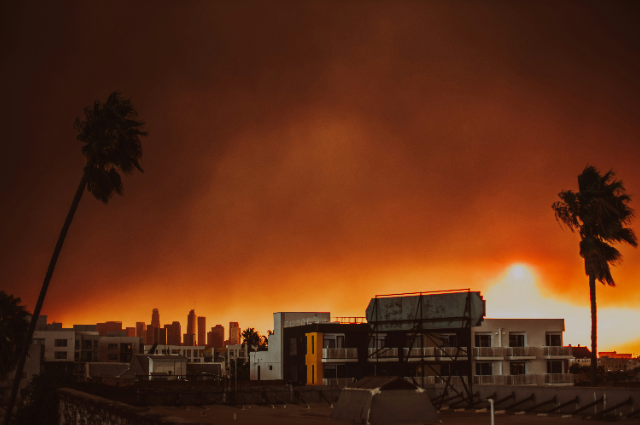
War has never been only about the battlefield. The bombs and the bullets are the visible part, the part that makes the news and fills the photographs. But the real cost of armed conflict spreads far beyond the front lines, seeping into food systems, economies, classrooms, hospitals, mental health, climate systems, and the daily lives of hundreds of millions of people who never fired a weapon or chose a side. In 2026, that cost has reached a scale that demands to be looked at honestly and in full.
As of March 2026, there are approximately 56 active armed conflicts around the world, according to the Uppsala Conflict Data Program. At least 10 of those are classified as major wars, causing significant casualties and mass displacement. The ACLED Conflict Index, which tracks conflict events globally across four indicators, including deadliness, danger to civilians, geographic spread, and the number of armed groups, recorded 204,605 conflict events between December 2024 and November 2025, resulting conservatively in over 240,000 deaths. Global violent-event fatalities rose by 23 per cent in 2025 compared to the previous year. The world is not becoming more peaceful. It is moving in the opposite direction.
The Wars That Are Shaping the World Right Now
The Russia-Ukraine war, which entered its fourth year following Russia's full-scale invasion in February 2022, remains the largest conventional armed conflict in Europe since the Second World War. Western sources estimate that approximately 350,000 people have been directly killed in the fighting, with roughly 250,000 Russian combatant deaths and nearly 100,000 Ukrainian combatant losses, alongside up to 15,000 verified Ukrainian civilian deaths documented by the OHCHR through the end of 2025. The Ukrainian army is experiencing severe attrition, both in personnel and equipment. Russian bombardment has badly damaged Ukraine's power grid, forcing millions of civilians through winter without reliable electricity or heating. Approximately 6.7 million Ukrainians remain displaced outside the country, constituting one of the largest refugee crises in Europe since 1945. Before the invasion, Ukrainian grain fed approximately 400 million people globally. The disruption to that supply chain pushed global food prices sharply upward in 2022 and 2023, and the effects continue to ripple through food-importing economies in Africa and the Middle East in 2025 and 2026.
The Sudan civil war, now entering its fourth year following its outbreak in April 2023 between the Sudanese Armed Forces and the Rapid Support Forces paramilitary group, has become one of the deadliest and most overlooked conflicts on earth. An estimated 150,000 people have been killed. Over 10 million people have been internally displaced, making Sudan the world's largest internal displacement crisis. The RSF overran El Fasher, the army's last major redoubt in western Sudan, in October 2025, deepening the country's de facto partition between a Darfur and Kordofan region under RSF control and the centre and east under army control. Famine was confirmed in Sudan in 2024, the first confirmed famine anywhere in the world since 2020, and it has continued into 2025 and is expected to extend into early 2026. The OCHA estimates that 33.7 million people in Sudan will require humanitarian assistance in 2026, a figure that represents a 10 per cent increase from the previous year. Both sides have been accused of ethnic cleansing, mass killings, and sexual violence on a scale that UN investigators have described as war crimes and potentially crimes against humanity.
The Gaza conflict, which escalated sharply following Hamas's attack on Israel on October 7, 2023, has by any humanitarian measure produced catastrophic results for the civilian population of Gaza. The Gaza Ministry of Health, whose methodology has been validated by independent epidemiologists, including those at The Lancet, documented that over 10 per cent of Gaza's pre-war population has been killed or injured. Over 800 attacks on health facilities have been recorded, leaving no hospitals fully functional. The 2025 September update of the Global Report on Food Crises confirmed famine in the Gaza Strip, with over 737,000 people newly displaced between March and July 2025 alone. A ceasefire brokered with US and regional involvement came into effect in October 2025, but violations were documented in the weeks immediately following it, and the humanitarian need remained at catastrophic levels entering 2026.
Myanmar's civil war, the longest in the world dating continuously to the country's independence in 1948 and sharpening dramatically following the 2021 military coup, recorded an estimated 15,420 casualties in 2024 and 2025. It holds one of the highest positions in ACLED's Conflict Index for civilian danger. Yemen's conflict, fueled by the Saudi-led coalition and the Iran-backed Houthi movement, has destroyed the country's economy and infrastructure to such a degree that 23.1 million people are projected to require humanitarian assistance in 2026, an 18 percent increase from the previous year, even as the UN's humanitarian response plan for Yemen received less than 25 percent of its required funding in 2025.
The Human Cost: Displacement on a Scale the World Has Not Seen
The most immediate and visible effect of ongoing wars is the displacement of people who can no longer live safely in their homes. The numbers are staggering in their size and in what they represent. Sudan alone accounts for 10 million internally displaced people. Syria, after more than 14 years of war and conflict, still has 7.4 million people internally displaced, with 5.6 million living as refugees in neighbouring countries. Most Syrians in Lebanon, one of the primary host countries, now live in extreme poverty. The DRC, whose conflict rarely receives the sustained international attention it deserves, has 14.9 million people requiring humanitarian assistance in 2026. South Sudan, still destabilised by internal conflict and the spillover from Sudan's war, faces catastrophic hunger levels with 28,000 people at daily risk of starvation as of early 2026 and food costs that have quadrupled while incomes have collapsed.
Globally, the pattern of displacement is being compounded by a simultaneous erosion of the international frameworks designed to manage it. Countries historically generous in hosting refugees, including Uganda and Kenya, are beginning to implement more restrictive policies in 2025 and 2026 as their own economic and political pressures mount. Funding for the international humanitarian system has been cut sharply. The US government slashed $387 million in humanitarian funding to Ethiopia in 2025 alone, cutting food distributions for millions and threatening malnutrition treatment for 650,000 women and children. Globally, humanitarian assistance operations reduced their targets in 2025 from 100 million people to 76 million, meaning 24 million people who were identified as urgently needing food and livelihood assistance were simply cut from coverage. The gap between the scale of humanitarian need and the resources available to meet it has never, in the post-Cold War era, been wider.
The people who bear the heaviest weight of all of this are women and children. The majority of refugees in virtually every active conflict zone are women and children. Many cross borders alone, weak and malnourished. Children in conflict zones are not only killed and injured at rates documented in annual UN reports on children and armed conflict, but are pulled out of school, forced into early marriage, conscripted into armed groups, and denied the years of education and development that shape the rest of their lives. The UN has documented that the number of children killed and maimed in conflicts worldwide has risen consistently every year since 2014.
The Economic Price Tag: Far Beyond the Battlefield
Wars cost money on a scale that few people who have not studied the numbers can intuitively grasp, and those costs are paid not only by the countries fighting but by the entire interconnected global economy.
The Israel-Iran war, which erupted in June 2025 following Israeli and US airstrikes on Iran's nuclear and military infrastructure, sent Brent crude oil prices jumping approximately 15 per cent in its opening days. Prices subsequently surged toward $120 a barrel as the conflict deepened and markets began pricing in sustained disruption to the Strait of Hormuz, through which approximately 20 million barrels of crude oil and oil products moved per day in 2025. The World Economic Forum's analysis of the conflict's global economic impact, published in March 2026, found that the war had landed in a global economy already navigating tariffs, post-pandemic debt overhangs, and inflationary pressures that central banks had only recently begun to contain. India, with thin strategic reserves and heavy reliance on Middle Eastern crude, has been among the most economically exposed countries outside the direct conflict zone, with higher energy prices feeding into domestic inflation, weakening the rupee, and threatening growth forecasts. Wheat prices moved higher simultaneously, and analysts warned that food and fuel-importing countries in the developing world face acute stress if the disruption continues.
Russia's war on Ukraine introduced a different set of global economic distortions. Western sanctions on Russia, which have expanded in 2025 to include tighter restrictions on Russian uranium exports and oil price caps, have imposed costs on both the Russian economy and on European economies that depended on Russian energy. High interest rates, an expensive ruble, declining oil prices, and a growing budget deficit are all pressing on Russia's economy simultaneously. Ukraine's agricultural production has been severely disrupted, with abandoned farmland, damaged infrastructure, and energy costs that have made producing and exporting food far more expensive than before the war. The country that was once called the breadbasket of the world now requires massive external financial support simply to function as a state.
The global military spending numbers tell another dimension of the economic story. Countries across Europe, Asia, and the Middle East are increasing their defence budgets at the fastest rate since the Cold War, diverting public resources from education, healthcare, infrastructure, and climate investment toward military readiness. This reallocation does not appear in the human casualty figures of any specific war, but it represents a massive opportunity cost borne by populations who never chose to be part of an arms race.
Food, Hunger, and the Manufactured Famine
One of the most consistently documented effects of armed conflict is its destruction of food systems. This is not a side effect or an unintended consequence. The deliberate targeting of agricultural land, food storage facilities, water infrastructure, and aid convoys has been documented by independent investigators in Sudan, Gaza, Yemen, and Myanmar as a deliberate strategy of war rather than incidental damage.
The 2025 Global Report on Food Crises, published by a consortium of 16 partners including the WFP, FAO, and UNICEF, found that conflict remains the primary driver of acute food insecurity globally. Afghanistan, Sudan, Syria, and Yemen consistently appear among the countries with both the highest numbers and highest shares of people facing catastrophic hunger. In Gaza, famine was confirmed in 2025, a finding validated by the Integrated Food Security Phase Classification system, the global standard for measuring the severity of food crises. In Sudan, famine conditions in North Darfur were first confirmed in August 2024 and have persisted. In South Sudan, 28,000 people face catastrophic starvation as of early 2026, with hunger's grip tightening because food costs have quadrupled while incomes have collapsed, a direct consequence of the war in neighbouring Sudan disrupting oil export routes through which 90 per cent of South Sudan's government income flows.
None of these famines are natural. They are manufactured by conflict, by the deliberate obstruction of aid, by the destruction of farmland and water systems, and by the political decisions of governments and armed groups that treat food as a weapon. The international legal framework that prohibits the use of starvation as a method of warfare, enshrined in the Rome Statute and the Geneva Conventions, exists precisely because this has happened before, and the world chose to prohibit it. The fact that it is happening again, in multiple places simultaneously, and that the UN Security Council has been unable to enforce those prohibitions, is one of the defining institutional failures of the current era.
Children, Education, and the Lost Generation
Every war produces what researchers call a lost generation: the cohort of children who were of school age when the conflict began and who emerge from it with broken or absent educations, physical and psychological trauma, and diminished life prospects measured in reduced income, reduced health outcomes, and reduced civic participation across their entire adult lives. The effects of this loss are not confined to the children themselves. They compound across generations.
In Gaza, the education system has been entirely disrupted. Schools have been destroyed, converted into shelters, or rendered inaccessible by active fighting. Children who should be in classrooms are instead living in tents, witnessing violence, and experiencing levels of trauma that child psychologists describe as among the most severe ever documented in a civilian population. In Sudan, an estimated 19 million children were out of school by mid-2025, the largest school disruption of any current conflict. In Yemen, more than two million children have been out of school for years. In Ukraine, Russian bombardment has destroyed or damaged thousands of school buildings, and the government has been compelled to shift to online education for millions of students, a system that works only for those with reliable electricity and internet access, neither of which can be taken for granted in frontline and recently occupied areas.
The mental health consequences of conflict exposure for children are deeply and durably documented. Post-traumatic stress disorder, depression, anxiety disorders, and behavioural problems are significantly elevated in populations of children who have experienced war, bombardment, forced displacement, and the loss of family members. These conditions, if untreated, affect cognitive development, educational attainment, employment outcomes, and physical health across a lifetime. Treatment capacity in active conflict zones is, by definition, severely constrained. The IRC, MSF, and UNICEF all document that mental health services are among the first casualties of conflict and among the last to be restored.
The Environment Pays Too
Armed conflict imposes costs on the natural environment that receive almost no attention in the standard accounting of war's damage, yet which are significant both in their immediate effects and in their long-term consequences for the communities that must live in and depend on those environments after the fighting ends.
Military operations consume enormous quantities of fossil fuels. A single fighter aircraft sortie burns thousands of litres of fuel. The vehicles, generators, heating systems, and logistical chains of a large military operation produce carbon emissions comparable to mid-sized industrial facilities. The US Department of Defence is one of the largest single institutional consumers of fossil fuels in the world, and in wartime, that consumption surges.
Beyond the direct carbon footprint of military operations, conflict destroys the environmental infrastructure that communities depend on: water treatment systems, irrigation networks, forests that prevent erosion, and wetlands that buffer against flooding. In Ukraine, the destruction of the Kakhovka Dam in June 2023 released a catastrophic flood that destroyed farmland, contaminated drinking water for hundreds of thousands of people, and devastated the ecology of the lower Dnipro river basin in ways that environmental scientists say will take decades to recover. In Gaza, the destruction of water and sewage infrastructure has created a public health catastrophe that is inseparable from an environmental one: untreated sewage flows into agricultural land and the Mediterranean Sea, groundwater is contaminated, and the long-term habitability of densely populated areas has been compromised.
A World That Is Choosing This
The most uncomfortable truth about the effects of ongoing wars is that they are not natural disasters. Earthquakes, cyclones, and droughts happen to us. Wars are chosen by governments, by armed groups, by the political leaders who decide that violence is a more useful tool than negotiation, and by the international community that consistently fails to prevent, contain, or end them.
The Doomsday Clock of the Bulletin of the Atomic Scientists moved to 89 seconds to midnight at the beginning of 2026, the closest it has ever been to midnight in its history, reflecting the judgment of a group of nuclear scientists and security experts that the world is closer to catastrophic conflict than at any point since the weapon was invented. The Council on Foreign Relations' 2026 Preventive Priorities Survey, drawing on responses from approximately 620 US government officials, foreign policy experts, and academics, identified the Gaza conflict, the Ukraine war, Iran-Israel tensions, and the risk of a cyberattack on critical infrastructure as the four highest-priority Tier I concerns. Russia-NATO clashes and a crisis in the Taiwan Strait were each assessed as having an even chance of occurring in 2026 and rated high-impact.
None of this is inevitable. Conflicts can be prevented. Wars can be ended. The tools of diplomacy, mediation, economic incentives, and credible international enforcement mechanisms exist, even if they are being used with decreasing consistency and effectiveness. What is missing is not the knowledge of how to stop wars. It is the political will to do so, applied with sufficient urgency and sustained with sufficient commitment to actually succeed.
What is being spent instead, in human lives, in economic resources, in food, in children's futures, in mental health, in environmental damage, and in the global trust and institutional credibility that takes generations to build and months to destroy, is a bill that no generation that chooses to pay it in full will ever fully recover from. The question of whether this generation will be the one to change course is, at 89 seconds to midnight, among the most consequential questions in the world.
References:
- ACLED Conflict Index, December 2024 to November 2025 — https://acleddata.com
- ACLED Conflict Watchlist 2026 — https://acleddata.com
- International Crisis Group, 10 Conflicts to Watch in 2026 — https://www.crisisgroup.org
- Council on Foreign Relations, Conflicts to Watch in 2026 — https://www.cfr.org
- International Rescue Committee, Top 10 Crises the World Cannot Ignore in 2026 — https://www.rescue.org
- Concern Worldwide, The 10 Worst Humanitarian Crises to Know in 2026 — https://concernusa.org
- Global Report on Food Crises 2025 and September Update — https://www.fightfoodcrises.net
- Global Network Against Food Crises, GRFC September Update 2025 — https://www.fightfoodcrises.net
- World Economic Forum, The Global Price Tag of War in the Middle East, March 2026 — https://www.weforum.org
- World Economic Forum, Global Risks Report 2026 — https://www.weforum.org
- World Food Programme USA, Largest Refugee Crises and Effects on Hunger — https://wfpusa.org
- The New Humanitarian, Ten Humanitarian Trends to Keep an Eye on in 2026 — https://www.thenewhumanitarian.org
- Stimson Centre, Top Ten Global Risks for 2026 — https://www.stimson.org
- Janes, Global Security Threats 2026 — https://www.janes.com
- IISS, Armed Conflict Survey 2025, Editor's Introduction — https://www.iiss.org
- Statista, Conflicts Worldwide 2025 — https://www.statista.com
- World Population Review, Countries Currently at War 2026 — https://worldpopulationreview.com
- The World Now, Current Wars in the World 2026 — https://www.the-world-now.com
- Context by TRF, Four Humanitarian Crises That Demand More Attention in 2025 — https://www.context.news
- Bulletin of the Atomic Scientists, Doomsday Clock Statement 2026 — https://thebulletin.org