
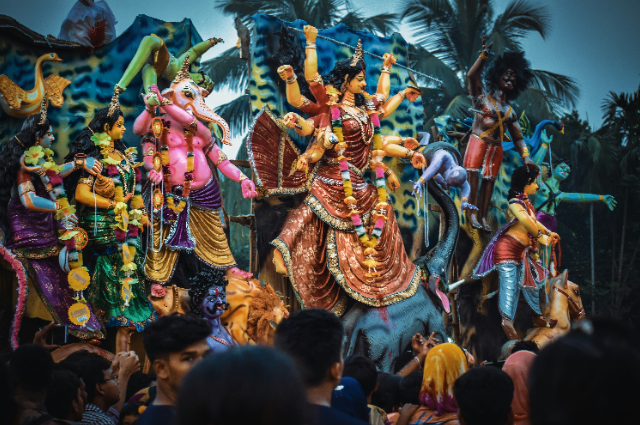
Every year, as the sky of autumn turns deep blue and the air fills with the divine fragrance of shiuli blossoms, Bengal prepares for its grand celebration, Durga Puja. For most people, the festival represents devotion, artistry, nostalgia, and reunion with loved ones. The rhythmic sound of the Dhak (Bengali Drum), the glow of beautifully decorated pandals, and the joy of wearing new clothes create an atmosphere that very few festivals in the world can match.
Yet, beneath the neon flare of the lights and the rhythmic, heart-thumping beat of the Dhak, lies a narrative that is often whispered but rarely analysed with the gravity it deserves. Durga Puja is not a mere festival of faith; it is a sophisticated, multi - layered economic engine. It is a season that drives livelihoods, sustains micro businesses, and acts as the primary fuel for Bengal’s annual fiscal health.
Several studies and economic assessments highlight the massive financial impact of the festival. A widely cited report prepared in 2019 by the British Council and Queen Mary University of London, in collaboration with IIT Kharagpur, estimated that Durga Puja generates more than ₹32,000 crore of economic activity within a short span of a few weeks.
The figure is remarkable for a festival concentrated mainly in one state. To understand the scale, the estimated economic turnover is comparable to the annual economic output of some small countries. In recent years, with rising tourism, digital marketing, and corporate participation, experts believe that the economic impact has grown even further.
However, the true story of this economic ecosystem cannot be understood only through numbers. Behind these statistics, there are countless individuals whose lives are deeply connected with the festival.
One of the most iconic examples is Kumartuli, the historic potters’ quarter of Kolkata. For generations, skilled potters here have been crafting clay idols of Goddess Durga, Mahishasura and her family, i.e., Goddess Laxmi, Saraswati, Lord Ganesh, Kartikeya and Shiva Mahadev. Months before the festival begins, narrow lanes of Kumartuli become workshops of creativity. Sculptors carefully shape clay figures, painters bring divine life to the faces of clay statues, and craftsmen decorate the idols with intricate details. These idols are then transported not only to different parts of West Bengal but also to other states like Maharashtra, Delhi NCR and to foreign countries with a large Bengali diaspora, such as the United Kingdom, the United States, Canada, and Australia and so on.
For these artisans, Durga Puja is not just a cultural tradition. It is their main source of income. A successful season ensures that their families can sustain themselves for the rest of the year. Every idol sold represents food on the table, school fees for the children, and dignity in work. The economic chain begins from the clay collected from riverbanks and continues through transport workers, decorators, painters, and distributors.
The economic wave of the festival spreads far beyond idol makers. Construction of pandals creates employment for thousands of carpenters, bamboo workers, electricians, painters, and fabric decorators. In recent years, pandal designs and themes have become increasingly innovative and scientific. Some pandals replicate historical monuments or famous temples, with contemporary art and social themes, while others do scientific experiments with Artificial Intelligence (AI) and showcase India's success in Technical fields like Chandrayaan - 3 in Spacetech and Akash System in defence. These structures require weeks of planning and teamwork, effectively turning the festival into a temporary creative industry.
For many workers in the informal sector, pandal construction provides seasonal employment that helps them sustain during months when regular work may be limited. In this sense, Durga Puja functions almost like a temporary economic stimulus program, distributing income among a wide network of labourers and craftsmen.
Retail trade experiences another major surge during the festive season. Durga Puja is traditionally associated with buying new clothes, gifts, sweets, and household items. As a result, garment shops, jewellery stores, and footwear outlets record some of their highest sales of the year during this period. Even street markets and small shops witness a dramatic increase in customers. Even small tea stalls near pandals experience higher sales because thousands of people gather there throughout the night.
Street vendors get significant benefits from this seasonal boost. Sellers of snacks, toys, accessories, and decorative items set up temporary stalls near pandals and crowded markets. Food stalls selling rolls, chowmein, chop, muri, phuchka, ghugni and sweets operate late into the night as people move from one pandal to another. For many of these small entrepreneurs, the income earned during the festival may exceed what they make in several ordinary months.
This phenomenon can be termed the democratisation and liberalisation of economic opportunity. Unlike some industries where wealth is concentrated among a few large companies, the economic benefits of Durga Puja spread across different levels of society. From large shopping malls and branded retailers to roadside vendors and temporary stall owners, everyone becomes part of the economic cycle.
Tourism is another major component of the festival’s economic impact. In 2021, Durga Puja in Kolkata received global recognition when UNESCO inscribed it on the Representative List of the Intangible Cultural Heritage of Humanity. This recognition significantly increased international attention toward the festival. Travel agencies began promoting “pandal hopping tours,” and cultural organisations across the world began to highlight the festival as a unique example of living heritage.
As a result, visitors from different parts of India and from overseas travel to Kolkata during the festival season. Hotels and guest houses often report full occupancy, while transport services such as taxis, app cabs, local trains, trams and metro railways experience heavy demand. Tour guides, photographers, and event organisers also find new opportunities during this time.
The hospitality sector benefits greatly from this surge in visitors. Restaurants introduce special festive menus, cafes remain open late into the night, and heritage walks are organised to explain the history of famous puja pandals.
The media and entertainment industry also gets a boost during the Durga Puja season. Television channels produce special programs and interviews with artists and organisers. Newspapers publish festive editions filled with cultural features and advertisements. Corporate brands launch large marketing campaigns, often linking their products with the emotions of the festival.
In recent years, digital media has added a new dimension to this cultural economy. Social media platforms are filled with content creators documenting pandal designs, food trails, fashion trends, and night-long pandal hopping experiences. These videos and posts attract millions of netizens and indirectly promote tourism and local businesses.
Another interesting trend is the increasing participation of corporate sponsors. Many large puja committees now receive sponsorship from companies in sectors such as telecommunications, consumer goods, and financial services. In return, companies gain visibility among the massive crowds that visit the pandals. This partnership between culture and commerce demonstrates how traditional festivals can integrate with modern marketing strategies.
Despite its enormous economic benefits, Durga Puja also faces certain challenges. One major concern is the rising cost of organising large pandals. Decoration materials, lighting systems, labour costs, and security arrangements have become increasingly expensive. For smaller neighbourhood committees, arranging sufficient funds has become more difficult.
Environmental concerns have also become an important issue in recent years. Traditional idols were made of clay and natural colours, but at times synthetic paints and non-biodegradable materials were used, raising concerns about river pollution after immersion ceremonies. In response, many puja committees have started adopting eco-friendly practices. Clay idols with natural colours, LED lighting systems that consume less electricity, and better waste management practices are gradually becoming more common.
These environmental initiatives are not only beneficial for nature but also create new opportunities for innovation. Entrepreneurs are developing sustainable materials, designers are experimenting with recycled decorations, and environmental organisations are collaborating with puja committees to promote responsible celebrations.
Recent economic developments have also influenced the scale of Durga Puja. The pandemic years temporarily disrupted celebrations, affecting artisans and small businesses that depend heavily on the festival. However, the post-pandemic revival of Durga Puja demonstrated the resilience of this cultural economy. As restrictions eased, crowds returned, tourism increased again, and many businesses experienced a strong recovery.
At the same time, inflation and rising raw material costs remain important concerns. Artisans often struggle with higher prices for clay, bamboo, and transport. Experts have suggested that better institutional support, easier access to loans, and structured training programs could help traditional craftsmen strengthen their economic position.
Ultimately, Durga Puja represents something much larger than a festival. It is a powerful example of how culture and economy can interact to create opportunities for millions of people. The festival creates a cycle of production, employment, consumption, and celebration that connects artists, workers, entrepreneurs, and visitors in a shared experience.
It also reminds us that economics is about not only statistics and financial models, but also real lives and aspirations. A clay idol shaped in a small workshop can support an artisan’s family for months. A sari sold in a local market can help a shopkeeper sustain his business. A plate of street food enjoyed during pandal hopping can provide income for a vendor’s household.
As autumn arrives and the goddess once again takes her place in beautifully decorated pandals, people gather with devotion and joy. Yet at the same time, the festival quietly sustains thousands of dreams across the state. Durga Puja is therefore not just a celebration of faith and culture. It is a living economic ecosystem that keeps Bengal vibrant, creative, and hopeful.
In that sense, Durga Puja truly remains the festival that feeds a thousand dreams.