
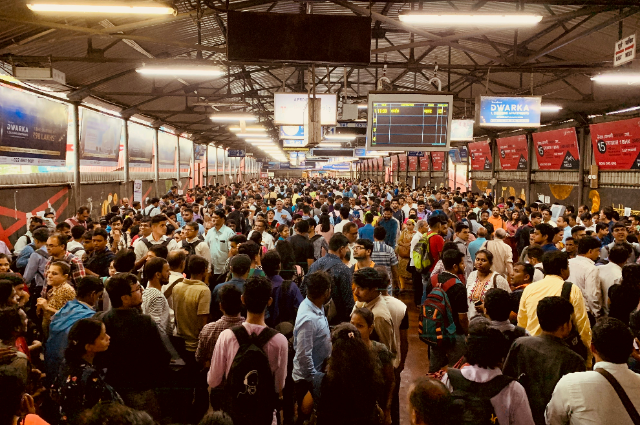
In an extraordinary address to the nation on May 10, 2026, Prime Minister Narendra Modi issued a sweeping call for personal sacrifice — asking every Indian, from households to farmers to corporate boardrooms, to change daily habits to protect India's economy from the gathering storm of a Middle East war.
Speaking at a public event in Hyderabad, Modi urged Indians to work from home, avoid international trips, stop buying gold, reduce cooking oil use, and cut fertiliser consumption — a list so broad it touched virtually every aspect of Indian daily life. The appeal, widely seen as one of his most consequential since the COVID-19 lockdown, came as India's foreign exchange reserves haemorrhaged and the rupee slid toward record lows against the dollar.
Modi framed the moment as a new kind of patriotism: "Patriotism is not only about the willingness to sacrifice one's life on the border. In these times, it is about living responsibly and fulfilling our duties to the nation in our daily lives."
The Economic Crisis Behind the Appeal
The trigger is unmistakable: the US-Israeli war on Iran has disrupted global energy markets in ways that strike at the heart of India's import-dependent economy. Crude oil prices were trading above $100 per barrel at the time of Modi's speech, having touched a 52-week high of $126 per barrel at the end of April 2026.
India's vulnerability is structural. The country imports nearly 85% of its fuel needs and relies on the Strait of Hormuz — the flashpoint of the current conflict — for approximately 50% of its crude oil imports, 60% of its liquefied natural gas, and almost all of its liquefied petroleum gas (LPG) supplies. With the Strait effectively under siege, every passing week adds billions of dollars to India's import bill.
The numbers are stark. India spent $174.9 billion on crude oil and petroleum products in the financial year ended March 2026 — a staggering 22% of its total import bill. Add to that $72 billion spent on gold imports, making India the world's second-largest gold buyer after China. The combined weight of oil and gold alone accounts for a dominant share of India's trade deficit.
India's foreign exchange reserves tell the story with particular clarity. As of late February 2026, reserves stood at a healthy $728.5 billion. By May 1, they had fallen to $690.69 billion — a drop of nearly $38 billion in just over two months. The rupee has also come under severe strain, trading near an all-time low against the dollar. The International Monetary Fund projected India's current account deficit at $84 billion for 2026 — a deeply uncomfortable figure for policymakers.
Seven Appeals to 1.4 Billion Indians
Modi laid out seven specific asks — each one targeting a different category of foreign exchange outflow.
- Conserve Fuel
Modi urged citizens to embrace public transport, carpooling, and the work-from-home model that was pioneered globally during COVID-19. He specifically called for online meetings to replace physical gatherings wherever possible, arguing that reducing road and air travel by even a fraction of the population would meaningfully dent India's fuel import bill. "In the current situation, we must place great emphasis on saving foreign exchange," he said. - Stop Buying Gold for a Year
Perhaps the most striking appeal was his request to Indians to avoid purchasing gold for at least a year. India's love affair with gold is deep-rooted — the metal is central to weddings, festivals, and savings habits across the country. Yet that cultural attachment carries a steep economic price: $72 billion in gold imports last year alone, making gold the second biggest drain on India's foreign exchange after crude oil. Modi also asked citizens to reconsider destination weddings abroad, a growing trend among affluent Indians that adds to the foreign exchange outflow. - Cut Overseas Travel
About 32.7 million Indians travelled abroad in 2025, including more than 14 million leisure travellers — a number that has grown sharply in recent years as the Indian middle class has expanded. Modi asked Indians to avoid nonessential overseas travel for at least a year, framing it as a temporary but necessary patriotic act in the national interest. - Farmers: Cut Fertiliser Use by Half
India is the world's largest importer of urea — importing around 10 million tonnes of the fertiliser annually, according to S&P Global. Nearly half of the world's traded urea and large volumes of other fertilisers are exported from Gulf countries through the Strait of Hormuz. With those supply chains severely disrupted, Modi asked farmers to reduce their fertiliser use by as much as half — a request that carries significant implications for agricultural productivity and food security. - Reduce Cooking Oil Consumption
India is heavily dependent on imported edible oils — particularly palm oil from Southeast Asia and sunflower oil — which add to the country's import bill. Modi called on families to reduce their cooking oil consumption, cleverly framing the ask as both a health measure and a patriotic duty, making it easier to sell to ordinary households.
Markets React Swiftly
The financial markets did not wait for Indians to respond to Modi's appeal — they reacted immediately. Shares of Indian jewellery companies fell by as much as 10% on the Monday following Modi's Sunday speech. Tata group-owned jeweller Titan — one of the country's most prominent gold retail brands — fell nearly 6% in early trade as investors priced in the prospect of a significant dip in gold demand.
Airlines, too, felt the chill. Shares in IndiGo, India's largest carrier, fell 2.8% following the speech. The airline had been aggressively expanding its international routes, with plans for overseas flights to account for 40% of daily services by 2030 — an ambition that looks considerably more challenging if Indian demand for foreign travel dips sharply in the near term.
India in the Eye of a Global Storm
India is not alone in feeling the pressure. Several Asian economies have been encouraging lower fuel consumption as energy costs climb. But India's exposure is particularly acute given the scale of its oil dependency and the sheer size of its import bill.
On the same day as Modi's speech, US President Donald Trump declared Iran's counterproposal to end the war "TOTALLY UNACCEPTABLE!" — dashing hopes of an early resolution and pushing oil prices higher still. The geopolitical horizon shows little sign of clearing soon.
For Modi, the appeals represent a gamble on the goodwill and civic-mindedness of the Indian public. None of the measures is compulsory — they are requests, not mandates. Whether 1.4 billion Indians will voluntarily reshape their consumption habits in response to a distant war remains an open question. But the fact that India's Prime Minister felt compelled to make such an appeal is itself a measure of how seriously New Delhi views the economic risks ahead.
References
- Al Jazeera — "Iran war effect: Why is Modi asking Indians to avoid foreign trips, gold?" (May 11, 2026)
- CNBC — "Modi says Iran war poses severe risks to India, urges cuts in fuel use and gold purchases" (May 11, 2026)
- DD News On Air / News On Air — "PM Modi urges citizens not to buy gold for a year, reduce fuel consumption and conserve foreign exchange amid West Asia crisis" (May 13, 2026)
- Reserve Bank of India — Foreign Exchange Reserves data (as of May 1, 2026)
- S&P Global — India urea import analysis
- International Monetary Fund — India Current Account Deficit projection, 2026