
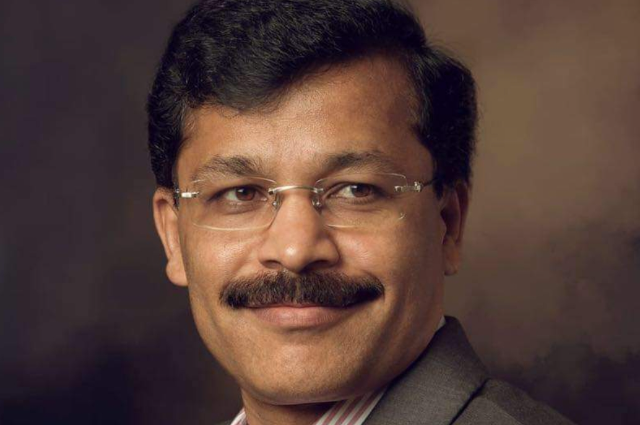
In May 2026, Maharashtra's General Administration Department issued a routine-looking transfer order. Tukaram Mundhe, Secretary in the state's Disaster Management, Relief and Rehabilitation, Revenue and Forest Department, was being moved again — this time to the Food and Drug Administration as Commissioner. It was his 25th transfer in a 21-year administrative career. Bureaucratic circles, only half-joking, called it his “silver jubilee” of transfers.
Six weeks earlier, he had been moved into that very Disaster Management post — itself only a few months after a posting to the Divyang (Disability) Welfare Department. That April 2026 reshuffle made it his second transfer in less than two months. Run the numbers and the picture is almost absurd: an officer who has spent an average of less than a year in each of his postings, against an administrative norm that recommends a three-year tenure.
This is not a story about an officer who couldn’t hold a job. It is the opposite. Tukaram Mundhe is, by most independent accounts — citizen petitions, press coverage spanning a decade, and the testimony of corporators who opposed him — one of the most effective administrators Maharashtra has produced. The transfers are not a verdict on his competence. They are the price of it.
A Farmer's Son, an All-India Rank, and a Promise to Himself
Tukaram Mundhe was born in Tadsonna, a small village in Maharashtra’s Beed district, to a farming family that struggled to make ends meet — in a mud-brick home, with agriculture as the only source of income and debt to local moneylenders adding to the family’s hardships. Power supply was erratic enough that he had to wake at 2 a.m. just to water the family’s crops when electricity returned. He studied in Marathi medium and only later transitioned to English for competitive exams — eventually earning a Bachelor’s degree in History and a Master’s in Political Science from Dr Babasaheb Ambedkar Marathwada University, Aurangabad.
He cleared the UPSC with an all-India rank in the low twenties and joined the civil services in 2005, allotted to the Maharashtra cadre — his home state. He began his career in August 2005 as a supernumerary assistant collector in Solapur, one of his longest postings, lasting roughly two years. Even there, the pattern that would define his career announced itself almost immediately: within days of taking charge, he raided an illegal bar owned by a powerful local politician, then moved against the sand mafia, corruption rackets, and land encroachments.
It was during this period, friends and profiles say, that he settled on a simple internal test for every administrative decision he would make for the next two decades: every action had to be legal, morally correct, and in the public interest — and if a decision was legal plus one of the other two, he would proceed without hesitation. It is a small detail, but it explains almost everything that follows: a bureaucrat who decided early that procedural correctness was a floor, not a ceiling.
Navi Mumbai: The Posting That Made Him a Household Name
If one posting turned Mundhe from “another honest officer” into a near-mythical figure, it was Navi Mumbai, where he served as Municipal Commissioner from May 2016 to March 2017.
He moved fast. He suspended ten officials for dereliction of duty within months, including a Deputy Municipal Commissioner who had controlled the property tax department for nine years — three times longer than the permitted tenure. He went after the city’s open secret: gaothans, clusters of land that residents had given up decades earlier for the city’s development, which had since sprouted over 15,000 illegal structures. Mundhe ordered demolitions of more than 250 such structures built after a 2012 cutoff.
He didn’t stop at illegal construction. He scrapped projects he considered wasteful or politically motivated outright — a ₹20 crore marble statue and a ₹163 crore solar project at a dam — redirecting the funds toward pavements, gardens, and disabled-accessibility upgrades. Over his tenure, civic data cited at the time showed 1,916 illegal hawkers removed, 1,808 unauthorised hutments cleared, 1,010 illegal hoardings taken down, and 2,492 commercial establishments fined for operating without occupation certificates.
He also tried to fix the city’s tax base at its root. He proposed Navi Mumbai’s first-ever comprehensive property survey, after uncovering what was described as a “scam” in which over 15,000 property owners had allegedly evaded municipal tax for a decade. The survey was reportedly stonewalled by unwilling corporators for over 90 days before it could proceed.
The backlash was immediate and cut across party lines. Politicians and residents organised a city-wide bandh against him, and a Shiv Sena standing committee chief suspended committee proceedings indefinitely to pressure him into halting the demolitions. By October 2016, opposition had hardened into something more formal: corporators across the NCP-ruled corporation passed a no-confidence motion against him, 105 votes to 6, accusing him of “undemocratic functioning.” Mundhe’s public response was characteristically unbothered — he told reporters he would simply continue as administrative head for as long as the government wished him to.
What made the episode remarkable wasn’t just the no-confidence vote — it was the citizen reaction to it. An online petition supporting him gathered over 6,000 signatures, with the hashtag #istandwithtukarammundhe trending locally, and residents organised under banners like the Citizens’ Unity Forum. One civic activist summed up the dynamic that would repeat itself across his career:
“Unfortunately, honest and hardworking officials are met with this treatment... if you have to bring in some discipline, you need someone with a clean character and behaviour, and someone who is a hard task-master.”
He didn’t survive the year. He was transferred out to head Pune’s public transport utility.
PMPML: Taking On a Transport Union and 158 Drivers
At PMPML (Pune Mahanagar Parivahan Mahamandal), Mundhe inherited an organisation haemorrhaging money: an earning of ₹51 per kilometre against an operating cost of ₹84 per kilometre, driven by a bloated establishment, an undisciplined contractual workforce, and b.
His fixes were blunt. He sacked 158 contractual drivers over poor attendance records and pushed out senior employees who failed to bring down the rate of bus breakdowns, rattling the workers’ unions. Within three months, staff absenteeism fell from roughly 40 per cent to about 6 per cent, and the number of out-of-service buses dropped from around 300 to roughly 50. He also pushed PMPML toward becoming, by its own claim, the first transport unit in India to go live with real-time online e-ticketing, with electronic ticketing machine usage rising from 40 percent to 100 per cent in three months.
The union response, recorded after he left, was bitter. Workers shouted slogans against him as he exited the PMPML building for the last time, and the union president accused him of being “totally autocratic,” someone who “never believed in dialogue” and was “anti-worker.” A board member who was otherwise sympathetic to his integrity put it starkly:
“Mundhe is a 100 percent honest bureaucrat. He is not corrupt at all. But he causes more harm to the system and to people with his arrogance and his tendency to take unilateral decisions than any other officer can cause by being corrupt.”
That sentence, more than any other on record, captures the central argument his critics make against him — and the one his supporters reject entirely.
He lasted under a year. He was transferred to Nashik as Municipal Commissioner.
Nashik: The Tax Hike That Outlived His Tenure by Years
In Nashik, Mundhe did something that, almost a decade later, the city is still litigating. On March 31, 2018, he issued an order raising the taxable value of properties across the city, increasing property tax on new properties by 30 to 70 percent — and extending the hike to open plots and agricultural land as well. Reporting from 2024 described it more starkly as a roughly fivefold increase that caused significant public discontent.
The political reaction was furious and durable. Farmers protested the tax on agricultural land, and the corporation’s general body voted twice to cancel the hike. But the resolutions were never implemented in the way the council wanted, and the matter ended up in the Bombay High Court. By 2024, six years on, all hearings had concluded but the hike still hadn’t been formally cancelled — and Chief Minister Eknath Shinde was still being asked to order a re-evaluation. As of late 2024, the corporation was still seeking the state government’s guidance on whether to revoke or adjust the increase, and citizens had by then been paying it for five years.
It is, in a strange way, the most telling data point in his entire career: a single order, signed in a moment of bureaucratic anonymity, that outlasted his own tenure in the city by years and is still generating headlines and court hearings nearly a decade later. Whatever one thinks of the policy, it was not timid, and it was not designed to be popular.
Nagpur: Tax Reform Without Discretion
From Navi Mumbai, his reformist instincts followed him to Nagpur, where he served as Municipal Commissioner, including through the early, chaotic months of the COVID-19 pandemic. His tenure there is credited with COVID management efforts alongside more conventional civic reforms — reducing teacher absenteeism and continuing his now-familiar campaign against administrative laxity.
His instinct in Nagpur, as in Navi Mumbai, was structural rather than punitive in isolation. In mid-2020 he restructured the Tax and Tax Assessment Department, observing that property tax revenue was disproportionately low relative to the corporation’s jurisdiction and lower than comparable corporations elsewhere in the state. Rather than rely on individual officers’ discretion — historically a major source of corruption in municipal tax assessment — he removed discretionary power entirely, fixing clear monetary and area-based slabs that determined which official level could handle which property tax case, and mandated strict penalties for unauthorised construction discovered through GIS surveys. He explicitly told officials that “no laxity in this regard will be tolerated.”
It’s a pattern worth naming: Mundhe’s reforms across cities share a common DNA. He doesn’t usually rely on catching individual corrupt officials — he tries to redesign the system so that the opportunity for discretion-based corruption disappears. The PMPML e-ticketing system, the Navi Mumbai online grievance redressal platform with auto-escalation, and the Nagpur tax slabs are all the same idea wearing different clothes.
The Long Tail: Mumbai, Disability Welfare, and the 2026 Reshuffles
By 2025 and into 2026, Mundhe’s record shows the same rhythm, just compressed further. He served as Development Commissioner (Un-organised Labour) in Mumbai before being posted, in August 2025, as Secretary of the Divyang Kalyan (Disability Welfare) Department. In his brief seven-month stint there, he reportedly initiated a large-scale verification drive to weed out bogus disability certificates and took action against negligent staff — a less headline-grabbing fight than builder demolitions, but the same instinct applied to a quieter corner of the bureaucracy.
Then came the rapid sequence that defines his most recent chapter: transferred on March 31, 2026, to Secretary, Disaster Management, Rehabilitation and Rehabilitation, Revenue and Forest Department, then moved again on May 19–20, 2026, to Commissioner of the Food and Drug Administration — his 25th posting in 21 years, and his second transfer in under two months. Notably, the FDA post was upgraded to a super-time pay scale specifically to accommodate his appointment, suggesting the state government, even while moving him constantly, has continued to place him in posts it considers consequential.
The Pattern, Stated Plainly
Strip away the city names and the pattern is stark. Mundhe takes a posting. He identifies the place where money quietly leaks out of public systems — tax evasion, discretionary assessment, ghost employees, illegal construction tied to political patronage, contractor capture of public transport. He removes the human discretion that allows the leak. He enforces the new rule without exceptions for status or connections. Within months, the people who benefited from the old discretion — corporators, contractors, union leaders, builders — organise against him, sometimes across party lines that agree on nothing else. He is transferred.
As one outlet observed after his 24th transfer: “When an upright officer is moved 24 times in 21 years, it sends a discouraging signal to the entire civil service: that efficiency and honesty may be rewarded with displacement rather than support.” It’s worth taking that observation seriously without romanticising it. Mundhe is not universally beloved even among people who respect his integrity. The PMPML board member’s comment — honest, but arrogant, and unilateral to the point of causing harm — is a real critique, made by someone with no obvious motive to protect corruption. Workers’ union leaders accused him of refusing dialogue entirely, dismissing over 150 workers without, in their telling, attention even to disabled employees among them. Administrative reform that bulldozes consultation can be effective and still be a legitimate problem in a democracy, where elected corporators and union representatives have their own claim to legitimacy.
But that tension is exactly why his career functions as a diagnostic for the system rather than a simple morality tale. India’s transfer-and-posting apparatus for IAS officers gives state governments enormous, largely unchecked discretion over where officers serve and for how long. Commentators have repeatedly drawn the comparison to Haryana’s Ashok Khemka, another officer whose transfer count became a kind of national shorthand for “honest officer punished by the system.” What both careers show is that the transfer power, originally meant to be an administrative tool, has become — in the hands of any government, regardless of party — the single most effective lever available to neutralise an inconvenient official without ever having to prove a charge against him. No vigilance case. No disciplinary proceeding. No need to demonstrate wrongdoing. Just a one-line order, signed by a joint secretary, moving a person from one chair to another.
Mundhe himself has spent an average of less than a year in each of his postings against a recommended norm of three — which means that by the time any reform of his actually begins to compound, to become institutional memory rather than one official’s personal project, he is generally already gone, and the next posting’s incumbent is free to quietly let the old order lapse, exactly as happened with the Nashik property tax case, still tied up in court eight years after he left.
Why This Story Keeps Getting Told
Every few months, a new headline runs some version of the same sentence: another transfer, another number. He is popularly called “Singham” after the fictional, incorruptible police officer — a nickname that says as much about how starved public discourse is for examples of bureaucratic integrity as it does about Mundhe himself. The fact that an honest, competent district and municipal administrator has become a folk hero, with petitions and hashtags organised in his defence by ordinary residents who have never met him, is itself a kind of indictment. In a functioning system, doing your job without taking bribes shouldn’t be remarkable enough to need a nickname.
What Mundhe’s file ultimately shows isn’t a single villain — not one corrupt minister, not one builder lobby, not one union. It’s a structural incentive that recurs at every level of state government: officials who enforce rules without exception create losers among people with the power to retaliate, and the institutional tools available to those people are faster and quieter than the tools available to defend the official. Public petitions and viral hashtags can slow that process down. They have never yet stopped it.
He is, as of this writing, Commissioner of Maharashtra’s Food and Drug Administration. Whether that becomes posting number 25 in a 21-year career, or the start of a longer chapter, is not something his record gives much reason to predict.
Sources
- The Print, “IAS officer Tukaram Mundhe transferred for 24th time in 21 years of service,” March 31, 2026
- Siasat.com, “IAS officer Tukaram Mundhe transferred for 24th time in 21 years of service,” March 31, 2026
- The Logical Indian, “24 Transfers in 21 Years: IAS Officer Tukaram Mundhe, Often Referred to as ‘Singham,’ Transferred Again,” April 2026
- Pune Pulse, “IAS Officer Tukaram Mundhe Gets 25th Transfer in 21 Years, Appointed Maharashtra FDA Commissioner,” May 20, 2026
- Indian Masterminds, “Maharashtra Govt Transfers 4 IAS Officers; Tukaram Mundhe Gets 25th Posting as FDA Commissioner,” May 21, 2026
- Hello Mumbai News, “IAS Officer Tukaram Mundhe Gets Key Posting as Mumbai FDA Commissioner,” May 19, 2026
- India.com, “Who is Tukaram Mundhe? Meet IAS Officer who has been transferred 23 times in 19 years,” August 2025
- The Print, “A Maharashtra bureaucrat transferred 11 times in 13 years, for being honest but tough,” March 6, 2018
- The Quint, “Navi Mumbai’s Very Own No-Nonsense Nayak: Tukaram Mundhe, IAS,” July 28, 2016
- India.com, “Tukaram Mundhe issues demolition notice to institute for ‘violations’,” October 29, 2016
- Change.org petition, “Politicians are trying to remove Honest Municipal Commissioner,” 2016
- DNA India, “Tukaram Mundhe gets a bitter farewell,” February 9, 2018
- YourStory, “Meet the man on a mission – IAS officer Tukaram Mundhe,” 2017
- Free Press Journal, “Nashik: NMC Seeks Maharashtra Govt’s Guidance To Revoke Or Adjust Tax Hike,” October 9, 2024
- Lokmat Times, “CM orders to re-evaluate increased property tax,” March 2024
- The Live Nagpur, “Mundhe restructures Tax Department, to rationalise property tax,” August 9, 2020
- Indian Masterminds, “IAS Tukaram Mundhe: The No-Nonsense Officer Who Refuses to Compromise,” September 2025