
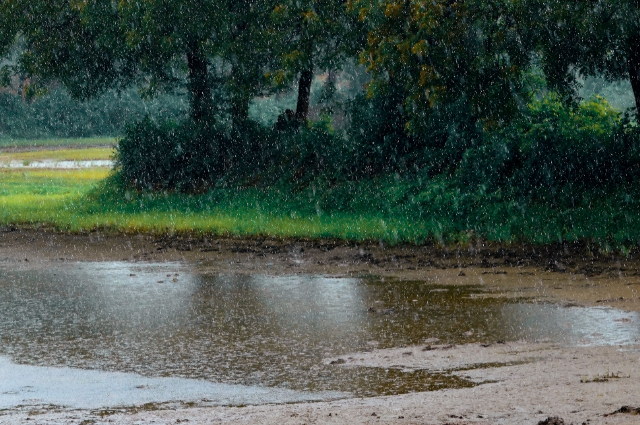
In a quiet farming hamlet called Virparda, tucked into Morbi taluka in Gujarat, an ordinary well has turned into the most talked-about patch of water in the state. Since the second of August 2026, the well on farmer Pranjivanbhai Sadariya's land has been rippling continuously, its surface rising and falling in wave-like patterns strong enough, on occasion, to send water spilling over the rim. There is no pump running, no bucket dropping, no wind strong enough to explain it, and no obvious reason the water should be moving at all.
What makes the phenomenon stranger is its selectivity. The well is barely three months old, freshly dug ahead of this year's monsoon, yet wells just a short distance away on neighbouring farms have stayed completely calm throughout. Videos of the churning water, filmed by curious onlookers, spread rapidly across social media, pulling in traffic from the nearby highway and crowds from surrounding villages who came simply to watch the water move on its own.
From Ghost Stories to Geology
Unsurprisingly, the internet reached for the most dramatic explanations first. Online commentary ranged from claims that the well was haunted to theories linking the movement to an impending earthquake. A more romantic local belief also took hold: that Morbi, sitting relatively close to Gujarat's coastline, might have a well connected to the Arabian Sea through some hidden underground channel, its water rising and falling in step with the tides.
District officials moved quickly to rule out the more alarming theories. Authorities confirmed there was no seismic activity or fault-line movement in the area that could account for the ripples, and the tidal-channel theory remains, by most accounts, an unverified folk explanation rather than a scientifically established one.
District Collector Swapnil Khare ordered a formal probe once the videos began circulating widely, and geologists were dispatched to inspect the site directly. Their preliminary assessment points toward a far less mystical culprit: trapped air. As heavy monsoon rainfall recharges the groundwater table, water moving through soil and fractured rock can displace pockets of air held in the rock's pore spaces. If that trapped air escapes upward into the well, it can disturb the surface and produce the rippling, wave-like motion residents have been recording. Officials have also floated the well's roadside location and local wind flow as a possible secondary contributor, though they stress that a definitive cause has not yet been established.
A "Well Seiche" in the Making
District geologists have described the event in terms resembling a well seiche, a standing-wave oscillation that can occur in a confined body of water when it is disturbed by an external pressure change, such as shifting groundwater or escaping gas beneath the surface, rather than by wind or direct contact. In this reading, the newly dug well, still settling into the surrounding aquifer, may simply be more sensitive to this season's unusually heavy groundwater recharge than its older, more established neighbours, which could explain why nearby wells have remained undisturbed.
The Gujarat Groundwater Research Institute has been formally asked to carry out a detailed study, and a scientific team from Gandhinagar is now expected to examine the site to confirm or refine the trapped-air theory before authorities issue a conclusive explanation.
Crowds, Barricades, and a Warning Against Rumours
As footage of the surging well travelled across Instagram, X, and WhatsApp, Virparda found itself with an unlikely tourist attraction. Motorists on the adjoining highway pulled over to watch, and villagers from neighbouring areas gathered daily around the farm to see the water churn for themselves. To manage the crowds and protect the site while the investigation continues, local authorities have barricaded the well and appealed to the public not to spread rumours or draw unfounded conclusions, particularly the persistent suggestion that the ripples are an early warning sign of an earthquake.
For now, the science points toward an explainable, if unusual, hydrogeological event rather than anything supernatural or seismic. But until the Gandhinagar team completes its fieldwork and the Groundwater Research Institute delivers its report, the well in Virparda will keep drawing curious visitors, still rippling like a tide with nowhere near a coastline to answer to.
References:
- Business Today — "Gujarat's Morbi 'waving well' mystery: Experts explain why water moved for days like ocean waves" (Aug 7, 2026)
- Free Press Journal — "Gujarat's Oscillating Mystery Well In Morbi Leaves Internet Scratching Heads" (Aug 7, 2026)
- Curly Tales — "Gujarat Has A Haunted Well? Viral Video Of Mysteriously Shaking Well Sparks More Questions Than Answers" (Aug 7, 2026)
- NewsX — "Gujarat's 'Shaking' Well In Morbi Leaves Villagers Curious: What's Behind The Mystery?" (Aug 7, 2026)
- Dainik Jagran (English) — "Gujarat: Mysterious Waves In THIS Village Well Leave Locals Stunned; Here's What Experts Reveal" (Aug 7, 2026)
- SantaBanta — "Gujarat's Haunted Well Leaves Locals Baffled With Strange Waves"