
The Cockroach Janta Party (CJP) began this year as a satirical online youth movement. It grew into a street force, helping push Education Minister Dharmendra Pradhan out of office after the summer’s exam-leak protests in Delhi. Its new target is Chief Election Commissioner Gyanesh Kumar. The trigger was a newspaper report, as described by wire services, that two other Election Commissioners had repeatedly raised objections to decisions in the Special Intensive Revision (SIR) of electoral rolls, including on deletions and access to roll data. Opposition parties say the exercise has wrongly stripped voters from the lists; Election Commission data cited by Reuters puts the names excluded from draft rolls at more than 133 million.
The Election Commission rejects the allegations. It says its decisions were legally valid and that the report showed “only one part of the picture,” arguing that differing views are a routine part of decision-making. It describes the SIR as a drive to remove fraudulent registrations while keeping eligible voters on the rolls, and says wrongly deleted voters can re-enrol. Union Minister J P Nadda has accused the opposition of misleading the public. The Supreme Court has since asked the government and the Commission to explain decisions linked to the revision.
A denied permission and a defiant call
On 27 September, Mumbai Police refused permission for a protest at Shivaji Park. Police cited a Bombay High Court judgment, the absence of a mandatory civic-body letter, the park’s status as a silence zone surrounded by homes, and fears of traffic jams that could block ambulances heading to nearby hospitals. CJP founder Abhijeet Dipke responded the next day by announcing a “Jail Bharo Andolan” for 2 October, Gandhi Jayanti, under the slogan “Gyanu Must Go”. On the morning of the protest, police barricaded the park’s entrance.
Shivaji Park on 2 October
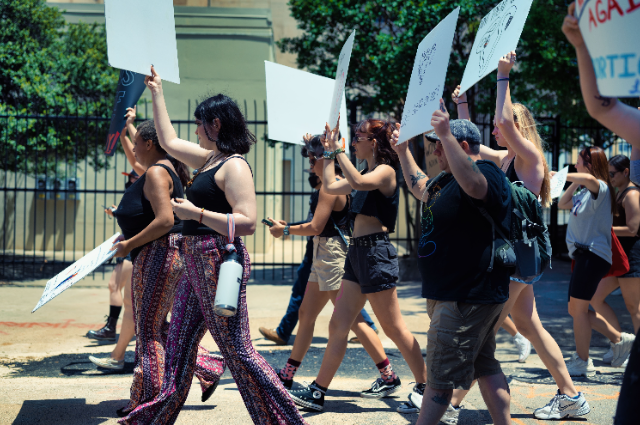
Thousands of mostly young protesters nonetheless gathered in the afternoon heat. Not all outlets agree on scale: one described the turnout as hundreds, and no official crowd figure has been published. Dipke first paid floral tributes to Mahatma Gandhi’s statue in south Mumbai. At the park, actors Naseeruddin Shah and Shabana Azmi, filmmaker Vishal Bhardwaj, musician Vishal Dadlani, and Gandhi’s great-grandson Tushar Gandhi joined. Shah embraced Dipke in a video the CJP shared, and Dadlani raised slogans against Kumar. Shiv Sena (UBT) and the MNS extended support, according to National Herald.
The protest was not without opposition. Some Shivaji Park residents objected that it would disrupt daily life. A group calling itself Gen Next Mumbai, which describes itself as a youth-led advocacy group, held a counter-demonstration near the Ambedkar statue; one of its protesters accused Dipke of speaking about dismantling the Constitution, an allegation made by the protester and not independently verified. The CJP’s own event ended peacefully, and Dipke publicly thanked Mumbai Police for their cooperation. He also announced a conditional march to Jantar Mantar in Delhi on 10 October if Kumar did not step down.
The legal aftermath
On 3 October, Mumbai Police registered an FIR on the complaint of a Shivaji Park resident. It names the organisers and 400–500 unidentified persons and invokes the Bharatiya Nyaya Sanhita and the Maharashtra Police Act for unlawful assembly and wilful disobedience of a public servant’s order. A Shivaji Park police station official said no one had been arrested at that point.
Delhi: a parallel protest
The same day, a separate Jantar Mantar protest was called by the All India Students’ Association, RJD MP Manoj Jha and lawyer Prashant Bhushan, with AAP leaders and Indian Youth Congress members expected to attend. Delhi Police denied permission and deployed paramilitary forces. AAP leaders urged supporters to turn up, with Sanjay Singh claiming more than 13 crore names had been deleted nationwide, a figure that is the party’s claim. Media reports said Delhi Police detained more than 500 people near Jantar Mantar, with some reports putting it above 700. The CJP was not expected to join the Delhi event.
Since then
The confrontation has widened. On 10 October, Delhi Police detained more than 3,000 people ahead of a CJP-led “Jantar Mantar 2.0” call, including opposition leaders; Dipke and co-leaders Saurav Das and Ashutosh Ranka were taken into preventive custody on arrival at Delhi airport. Rahul Gandhi publicly backed the young protesters, saying he was proud of them. The three CJP leaders were released the next day on a bail bond, with a condition not to breach the peace for a year. Dipke was detained again on 16 October and freed by a magistrate on 17 October. The Commission continues to deny favouring any party.
Why it matters
The episode sits on two live questions. The first is substantive: whether the SIR is a legitimate clean-up of the rolls, as the Commission and its defenders argue, or a mechanism that disenfranchises eligible voters, as the opposition and the protesters allege. Courts are now examining that question. The second is procedural: how far authorities can restrict assemblies at a historically political venue such as Shivaji Park on grounds of noise, traffic and court orders, and how far organisers may defy such restrictions. Residents who complained and counter-protesters who disagreed with the CJP are part of that debate, as are supporters who see peaceful defiance on Gandhi Jayanti as the point. What the Mumbai protest demonstrated, whatever one’s view of the merits, is that a movement born online can now fill a major public ground within days.
References:
- UNI India, "CJP announces 'Jail Bharo' stir in Mumbai on October 2 after protest permission denied", 28 Sep 2026. https://www.uniindia.com
- Siasat, "Dipke announces Jail Bharo Andolan on October 2 in Mumbai", 28 Sep 2026. https://www.siasat.com
- National Herald, "Shivaji Park erupts in 'Gyanu must go' chants as CJP demands CEC's exit", 2 Oct 2026. https://www.nationalheraldindia.com
- National Herald, "Thousands gather at Shivaji Park for CJP protest against CEC Gyanesh Kumar", 2 Oct 2026. https://www.nationalheraldindia.com
- Business Today, "CJP protest Mumbai: Bollywood celebrities gather at Shivaji Park over SIR controversy", 2 Oct 2026. https://www.businesstoday.in
- ThePrint, "Naseeruddin Shah, Vishal Dadlani join CJP protest in Mumbai", 2 Oct 2026. https://theprint.in
- Outlook India, "Who Are Gen Next Mumbai? The Group Which Held Counter-Protest Against CJP In Mumbai", Oct 2026. https://www.outlookindia.com
- Siasat, "CEC protest: Dipke dares CM to arrest Shivaji Park protesters", 2 Oct 2026. https://www.siasat.com
- iTechGuides, "CJP Mumbai protest ends: why Abhijeet Dipke thanked Mumbai Police", Oct 2026 (summarising The New Indian Express). https://www.itechguides.com
- Deccan Chronicle (PTI), "CJP Mumbai protest: FIR against organisers, 400-500 unidentified persons", 3 Oct 2026. https://www.deccanchronicle.com
- Deccan Chronicle (PTI), "Delhi Police denies permission for Oct 2 protest at Jantar Mantar", 1 Oct 2026. https://www.deccanchronicle.com
- Outlook India, "AAP Appeals To Public To Reach Jantar Mantar Protest On Gandhi Jayanti", 1 Oct 2026. https://www.outlookindia.com
- Kuwait Times (AFP), "Why India's oppn wants top election official removed", Sep 2026. https://kuwaittimes.com
- The CSR Journal, "Congress Intensifies Protests for CEC Gyanesh Kumar's Resignation Ahead of INDIA Bloc Meeting", 28 Sep 2026. https://thecsrjournal.in
- Kuwait Times (AFP), "India Supreme Court seeks explanations from election body", Oct 2026. https://kuwaittimes.com
- Khaleej Times (Reuters), "India election commission protests: major issues", Oct 2026. https://www.khaleejtimes.com
- ThePrint, "Delhi protest crackdown: Rahul backs young protesters", 10 Oct 2026. https://theprint.in
- Khaleej Times, "India's Cockroach Party leaders Abhijeet, Saurav, Ashutosh released from detention", 11 Oct 2026. https://www.khaleejtimes.com
- Tribune (Reuters), "India's 'cockroach' movement founder released a day after detention", 17 Oct 2026. https://tribune.com.pk
- IBTimes India, "Gyanesh Kumar resign: Shabana Azmi, Naseeruddin Shah, Vishal Dadlani join CJP protest at Shivaji Park, Mumbai", 2 Oct 2026. https://www.ibtimes.co.in