
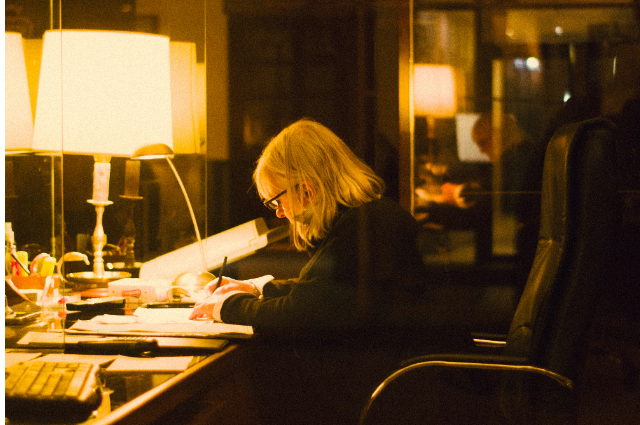
Truth often arrives late, yet still arrives, especially when someone continues pushing through years of resistance. Power thrives where quiet rules - where fear mutes survivors, systems look away, and attention drifts elsewhere. Yet occasionally, defiance sparks in just one individual who will not allow wealth, manipulation, or polished falsehoods to bury fairness completely. From that standoff, justice slowly reemerges, worn but speaking at last. One such brave woman is Julie Knipe Brown. Her path is traced by persistence when everything demanded forgetting. She got the story while others moved on, gave up. She kept digging, kept asking, kept reporting even if it cost her peace.
Born in 1961, Julie Knipe Brown works as an investigative journalist in the United States, sticking mostly with the Miami Herald through the years. Not far from Philadelphia, one parent brought her up; at sixteen, she moved out, taking on low-paying work until school became possible. She graduated magna cum laude from Temple University in 1987 with a degree in journalism, then worked at the Philadelphia Daily News before joining the Herald around the year 2000. Four years she stayed at the Herald, digging into how prisoners were mistreated across Florida, until her attention shifted toward Epstein. Known not for speed but depth - her work built on long talks with insiders, stacks of paper trails - a style that has become increasingly rare in an era of shrinking newsrooms. When powerful people pushed back, she kept moving anyway.
Her Investigation
Brown began investigating Epstein in early 2017. This shift came as Alexander Acosta faced confirmation for the Labour Secretary. He once oversaw the 2008 agreement that shielded Epstein. Her focus narrowed on one point - clear yet harsh. A person tied to harming many young girls walked free too easily. That outcome defied expectation. Why did justice appear so light? Each fact led back to that core doubt.
Started back in 2005, the probe followed a report from parents stating their 14-year-old was abused at Epstein’s residence in Palm Beach. At least 35 young females were later found by law enforcement with accounts matching hers. Charges were prepared by federal officials; however, rather than move toward court proceedings, Acosta arranged a deal shielding Epstein from broader prosecution. Guilty pleas came only on two lesser counts related to underage prostitution under state laws. His time behind bars totalled merely 18 months - much of which occurred outside prison walls through work release programs. After many months spent gathering information, Brown found around 80 people believed to have been harmed, a number being just 13 or 14 years old; eight eventually chose to speak openly about what happened. It emerged through her work that the hidden agreement erased federal charges tied to sex trafficking while halting an ongoing FBI investigation - one that could have exposed additional victims - alongside offering protection to others possibly involved alongside Epstein. Her landmark series, published in November 2018, was titled "Perversion of Justice." The reporting showed that Epstein had leveraged his extraordinary wealth and social connections — which included politicians, royalty, scientists, and celebrities — to intimidate his victims and insulate himself from accountability. Brown described how he would tell girls he had just spoken with world leaders, show them photographs with the famous and powerful, and use this manufactured proximity to power to silence them.
The Impact
The impact was swift. Epstein was arrested in July 2019 on federal sex trafficking charges. One month later, on August 10, 2019, he was found dead in his jail cell at the Metropolitan Correctional Centre in New York. The medical examiner ruled the death a suicide by hanging, though Epstein's brother hired an independent medical examiner who reached a different conclusion, and questions about the circumstances of his death have never been fully resolved. The fallout continued. Alex Acosta resigned as Labour Secretary under pressure following renewed scrutiny of the 2008 plea deal. In July 2020, Epstein's longtime confidant Ghislaine Maxwell was arrested on charges of recruiting and grooming several of his victims. She was ultimately convicted and sentenced to 20 years in federal prison.
Recognition & Backlash
Brown received a George Polk Award for Justice Reporting for "Perversion of Justice," and was included in Time magazine's 100 Most Influential People of 2020. However, Brown did not receive a Pulitzer, though the reporting was widely considered among the most significant of the decade because of the most aggressive push that came from Alan Dershowitz, a Harvard Law professor and one of Epstein's attorneys during the 2006–2008 criminal investigation. In April 2019, Dershowitz wrote an open letter urging the Pulitzer Prize committee not to honour Brown and the Herald for the series.
Another Early Voice
Brown's investigation was not the first attempt to expose Epstein. Fifteen years earlier, British journalist Vicky Ward had come strikingly close — and been stopped. In 2002, Ward was assigned by then-Vanity Fair editor Graydon Carter to profile the little-known billionaire. During her reporting, she became the first journalist to speak with Maria and Annie Farmer — two sisters who provided on-the-record accounts of sexual abuse by Epstein. Annie Farmer had been a minor at the time of the alleged assault. Their mother also spoke on the record. The sisters also accused Ghislaine Maxwell of participating in Epstein's predatory scheme.
Ward included their allegations in her draft. But after she presented Epstein for comment, he contacted Carter directly, showing up unannounced at the Vanity Fair offices at Condé Nast. Shortly before the piece went to press, the Farmer sisters' accounts were removed from the article.
The Story Continues
As of early 2026, the Epstein case is again dominating headlines. Millions of additional documents have been released by the Justice Department under political and legal pressure, though significant files remain sealed or redacted.
REFERENCES
- Julie K. Brown – Wikipedia. https://en.wikipedia.org
- Perversion of Justice: The Jeffrey Epstein Story (book) – Amazon / William Morrow. https://www.amazon.com
- Miami Herald journalist who broke Jeffrey Epstein case tells WLRN feds cannot ignore crimes, victims – WLRN, February 17, 2026. https://www.wlrn.org
- Julie K. Brown's reporting exposed Jeffrey Epstein. She responds to the new docs – NPR, January 4, 2024. https://www.npr.org
- Julie K. Brown: In Pursuit of Justice – ArtSpeak / FIU. https://artspeak.fiu.edu
- Vicky Ward – Wikipedia. https://en.wikipedia.org
- What the New Yorker Got Wrong – Vicky Ward Investigates. https://www.vickywardinvestigates.com
- I Tried to Warn You About Sleazy Billionaire Jeffrey Epstein in 2003 – Vicky Ward / The Daily Beast. https://www.thedailybeast.com
- What are the latest developments in the Jeffrey Epstein case? – NPR Fresh Air, February 11, 2026. https://www.npr.org
- Journalist Julie K. Brown on What's Still Missing in the Epstein Case – Yahoo News / Katie Couric Media, March 2026. https://www.yahoo.com