
A birthday visit, a crime, an arrest
On the evening of Monday, 21 September 2026, a 17-year-old girl visited the Kalkaji Mandir area of south Delhi to mark her birthday. She was allegedly gang-raped inside Aastha Kunj Park, a 142-acre green space run by the Delhi Development Authority (DDA), by three men [1][2]. All three accused were arrested, and a Delhi court later sent them to 14 days of judicial custody [2]. As with any case still before the courts, the allegations remain to be tested at trial.
The attack drew attention to a park that locals described as having a bad reputation after dark. Residents and local welfare associations pointed to poor lighting, broken boundary walls and a lack of clear ownership over such enormous spaces [3]. A visit by journalists found the park officially locked at night, yet men could still be seen climbing over a low perimeter wall [2].
The official response: controlled access
Within days, the DDA ordered tighter security across its parks. Parks with multiple gates would shift to controlled entry after sunset, with additional CCTV cameras, more lighting, more security staff and increased night patrols, alongside a wider safety audit [4]. Safety information boards were also ordered within seven days [4].
Some of these steps, such as lighting and patrols, are what safety advocates have long requested. But the idea of limiting access after dark struck many young women as the wrong lesson. One alumna of Delhi University, speaking at a march, described the move as patriarchal thinking rather than a genuine safety measure. She added that visible patrolling appeared only after the case made headlines, though locals had raised these issues for years [5].
"Hum Auratein Azaad Hain"
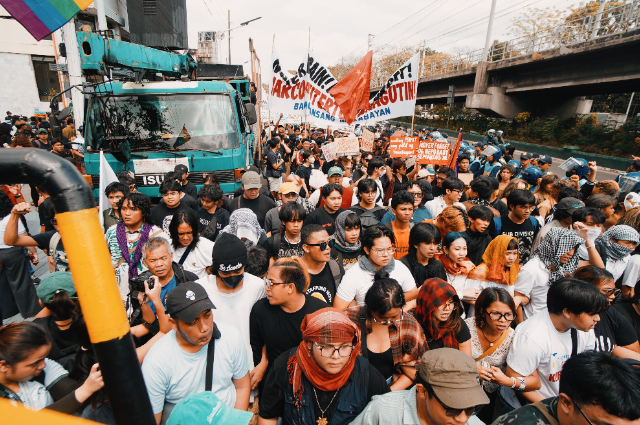
On Friday, 25 September, women from several Delhi University colleges marched from the gate of Kamala Nehru College under the message "Hum Auratein Azaad Hain" (We, the women, are free) [6][7]. The march was open to all women and gender minorities [7]. Students from Gargi and Lady Shri Ram College joined or led related protests, and heavy police deployment was reported at one site [5][8].
Their demands were consistent: better street lighting, reliable public transport and measures that let women use public spaces without fear, rather than restrictions that place the burden of safety on women [6][7]. They also argued that surveillance alone is not enough, and floated the idea of drafting a joint Charter of Demands [6]. In their statement, the students linked a park in Kalkaji to the experience of women feeling unsafe on unlit streets elsewhere in the country [7].
The protests continued into October. Hundreds marched in North Campus from Miranda House towards the Faculty of Arts, and on 1 October a girls-only march began near Rajdhani College, organised by students with political organisations kept out [9].
Not every college treats its women the same
The debate has also exposed unevenness within the university. Reports and students point out that Miranda House operates without a women's curfew, while other DU colleges still impose hostel timings. That contrast undercuts the claim that restrictions are a necessary price of safety: if one college can function without them, the rules look more like policy choices than inevitabilities. (This point rests on student accounts and campus reporting; readers should check each college's current hostel rules directly.)
An older fight: Pinjra Tod
The argument is not new. In 2015, women students and alumni formed Pinjra Tod ("Break the Cage"), a collective challenging restrictive hostel and paying-guest rules for women across Delhi [10]. The movement submitted a petition to the Delhi Commission for Women in October 2015, and the Commission later issued notices to seven colleges asking why curfews differed for men and women [10]. In December 2015, Pinjra Tod organised a multi-city protest called Bus Teri Meri, Chal Saheli [10].
In 2018, the campaign returned to its home ground, with a protest at DU's Arts Faculty on 8 October and a charter of demands handed to the vice chancellor, seeking an end to curfews [11]. When Miranda House informally extended curfew hours by half an hour, Pinjra Tod rejected such extensions as tokenistic and insisted on abolition [12]. Activists framed curfews as part of a broader logic that confines women to homes and hostels, and argued the real goal was to dismantle the divide between private and public space [13]. As feminist historian Uma Chakravarti put it, governments tend to answer insecurity by restricting women instead of solving the security problem [14].
Seen this way, the post-Aastha Kunj marches are the latest chapter in a struggle now more than a decade old, over whether safety is delivered by shrinking women's freedom or by improving the places they move through.
What remains unresolved
The DDA's measures include real infrastructure, so the line between "controlled access" and a curfew on women will depend on how the rules are enforced and whether lighting, working cameras, and policing actually improve. The students' core question stands: if a park is dangerous after dark, should the response be to keep people out, or to make it safe for everyone to be there?
References:
- Outlook India, "Restricted Entry In Delhi Parks After Sunset Post Astha Kunj Gang-Rape." https://www.outlookindia.com
- ThePrint, "After 17-yr-old's gangrape, deadly silence hangs over Aastha Kunj, Delhi park with 'notorious reputation'." https://theprint.in
- Deccan Chronicle, "Delhi's Aastha Kunj rape case puts DDA park safety under scrutiny." https://www.deccanchronicle.com
- Outlook India (as above, ref. 1), for the DDA's controlled-access, CCTV, lighting, patrol and safety-audit directions.
- ANI report, "DU students hold protest outside Gargi, Kamala Nehru College over alleged gang rape near Kalkaji Temple," 26 September 2026. https://news.webindia123.com
- NewsBytes, "After alleged Aastha Kunj Park rape, Kamala Nehru students march." https://www.newsbytesapp.com
- The Daily Jagran (PTI), "DU students hold protest, demand safer public spaces for women after Aastha Kunj gang rape case." https://www.thedailyjagran.com
- Brut India, "Delhi University Students Protest After Minor's Alleged Gang Rape Near LSR Campus." https://www.brut.media
- Siasat Daily, "DU students hold women's safety march near Rajdhani College." https://www.siasat.com
- Wikipedia, "Pinjra Tod." https://en.wikipedia.org
- The Wire (LiveWire), "Pinjra Tod Returns to Delhi University as Students Await Proctors' Decision on Curfew Timings." https://livewire.thewire.in
- The Wire (LiveWire), "Pinjra Tod Adopts No-Negotiation Policy; Holds Nightlong Protest on Miranda House Grounds." https://m.thewire.in
- Anveshi, email interview with Pinjra Tod. https://www.anveshi.org.in
- SheThePeople, "How is Pinjra Tod revolutionizing gender based politics in universities." https://www.shethepeople.tv