
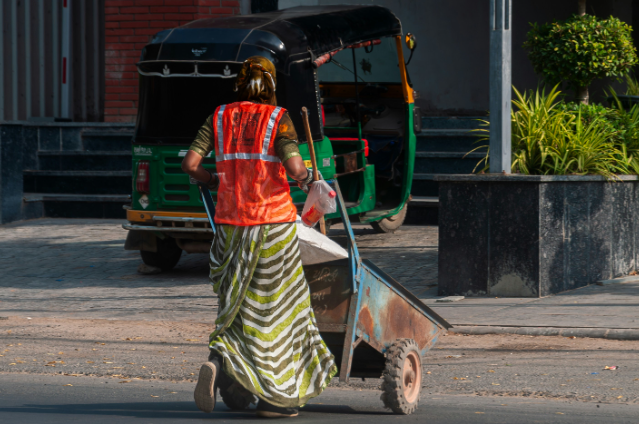
India is home to over 1.4 billion people and encompasses extraordinary diversity in geography, economy, language, and culture. It is simultaneously a rising global power and a country grappling with foundational development challenges. Nowhere is this tension more visible than in the domain of public health, sanitation, and environmental cleanliness.
Global indices — from the Environmental Performance Index (EPI) to WHO air quality rankings and the Swachh Survekshan urban cleanliness survey — consistently place many Indian cities and regions at the lower end of cleanliness metrics. These rankings trigger headlines, social media debates, and at times, sweeping generalisations about Indian culture and governance.
The reality, as with most complex social phenomena, is far more layered. This article attempts to do justice to that complexity — acknowledging the genuine problems while situating them within their proper historical and economic context.
The Reality: Why India Faces Serious Cleanliness Challenges
Air Pollution: A National Emergency
Air pollution represents perhaps India's most acute cleanliness crisis. According to the 2023 World Air Quality Report by IQAir, 83 of the world's 100 most polluted cities were in India, with Begusarai (Bihar) ranking as the most polluted metropolitan area globally. Delhi, once infamous as the world's most polluted capital, continues to record PM2.5 levels that routinely exceed WHO safe limits by more than ten times during the winter months.
The causes are multiple and interconnected:
- Vehicle emissions from an ageing and rapidly growing fleet of internal combustion engine vehicles
- Stubble burning in Punjab, Haryana, and Uttar Pradesh — a practice by which farmers burn post-harvest crop residue, which contributes significantly to seasonal smog
- Industrial activity, especially in the Indo-Gangetic Plain, where geography traps pollutants
- Construction dust from one of the world's fastest-growing urban development programmes
- Biomass burning for domestic cooking fuel, particularly in rural areas
Sanitation and Open Defecation
India was once home to the largest proportion of the world's open defecation. In 2014, when the Swachh Bharat Mission (SBM) was launched, an estimated 550 million people — roughly 45% of the population — defecated in the open, according to UNICEF and WHO joint monitoring data. The consequences included severe public health burdens: diarrhoeal diseases, cholera, typhoid, and child stunting were significantly worsened by contaminated groundwater.
The Swachh Bharat Mission Phase I (2014–2019) claimed the construction of over 100 million household toilets and the declaration of all rural districts as Open Defecation Free (ODF). Independent evaluations, including a study by the Research Institute for Compassionate Economics (RICE), found that actual usage lagged behind construction — but also documented measurable reductions in open defecation and meaningful child health improvements in states with high coverage.
"Every 1% increase in toilet coverage was associated with a 0.49% reduction in child stunting." — Spears & Lamba, Economic & Political Weekly, 2016
Challenges persist: toilets built without a water supply, poor maintenance, and cultural resistance in some regions mean the battle is far from won. The 2021 Census data and subsequent NFHS-5 surveys suggest continued progress but also remaining gaps.
Solid Waste Management
India generates approximately 62 million tonnes of municipal solid waste per year, of which only about 43% is processed, according to a 2016 estimate by the Central Pollution Control Board — figures that have seen incremental improvement since, but remain concerning. Landfills such as the Ghazipur dumping site in Delhi have become symbols of the crisis: Ghazipur's garbage mountain now stands taller than the Qutub Minar and continues to grow.
The Solid Waste Management Rules of 2016 introduced a framework for source segregation, composting, and waste-to-energy. Implementation has been uneven. Cities like Indore have achieved genuine transformation — winning the Swachh Survekshan title for seven consecutive years through rigorous door-to-door collection and segregation — while many mid-sized and smaller cities continue to struggle.
River Pollution
India's rivers, including the Ganga — sacred to hundreds of millions of Hindus — are under severe ecological stress. The National Mission for Clean Ganga (NMCG), launched under the Namami Gange programme in 2014, acknowledged that approximately 2,953 million litres per day (MLD) of sewage flows into the Ganga, while treatment capacity stood at only around 1,000 MLD at the time of the mission's launch.
Pollution sources include:
- Untreated or partially treated municipal sewage from cities along the river's course
- Industrial effluents, particularly from tanneries in Kanpur and chemical plants in Uttar Pradesh
- Agricultural runoff carrying fertilisers and pesticides
- Religious practices, including the immersion of flowers, ashes, idols, and other organic and inorganic materials
Progress has been made — the NMCG reports improvement in dissolved oxygen levels and the return of Gangetic dolphins to certain stretches — but the river's full restoration remains a long-term challenge.
Littering and Civic Behaviour
Widespread public littering is an observable reality in many Indian public spaces. Researchers and urban planners attribute this to a combination of factors: inadequate public bin infrastructure, inconsistent enforcement of anti-littering laws, low civic awareness, and — crucially — a historical bifurcation in India between the concept of the home (kept spotlessly clean) and public space (treated as a commons requiring no personal responsibility).
Sociologists have noted that this distinction is not unique to India and has historical roots in caste-based labour divisions, where waste removal was the responsibility of a designated occupational community, reducing personal accountability for cleanliness. Urbanisation has disrupted these structures without replacing them with modern civic norms at the necessary scale.
Why the Narrative Is Also Unfair
The Scale of the Challenge
Context is not an excuse, but it is essential to honest analysis. India manages more people than any country in history at this level of economic development. With a GDP per capita of approximately $2,500 (World Bank, 2023), India is classified as a lower-middle-income country — yet it is regularly compared, implicitly or explicitly, to high-income nations with per-capita incomes ten to twenty times greater and decades of investment in sanitation infrastructure.
The United Kingdom, for instance, did not provide universal access to indoor sanitation until the mid-twentieth century, more than a century after its industrial revolution. Germany and France had open sewers in their capital cities well into the nineteenth century. Holding India to a standard that wealthier nations themselves only recently achieved — and demanding it on a compressed timeline — reflects a selective application of historical memory.
The Stereotype Problem
The "dirty India" narrative is disproportionately amplified in Western media relative to comparable problems in other parts of the Global South — and indeed, relative to serious environmental issues in wealthy nations. The United States, for example, is home to some of the world's worst per-capita plastic waste generation, the most toxic Superfund sites, and significant urban homelessness with associated public health crises. These realities receive far less international censure than India's.
Selective imagery — whether in documentaries, travel journalism, or social media — can entrench stereotypes by focusing on the most photogenic poverty while ignoring the coexisting modern infrastructure, clean neighbourhoods, and civic achievements that also characterise contemporary India.
Real Progress Deserves Acknowledgement
Between 2014 and 2023, India made measurable, significant progress across multiple dimensions:
- Over 110 million toilets were constructed under the Swachh Bharat Mission Phase I
- Urban cleanliness ranking surveys (Swachh Survekshan) created competitive accountability among cities, driving measurable improvements in waste collection and street cleanliness.
- Air quality monitoring expanded dramatically — India now has one of the largest real-time air quality monitoring networks in Asia.
- India is committed to reaching net-zero emissions by 2070 and has rapidly expanded renewable energy capacity, adding 175 GW of renewable power.
- The Jal Jeevan Mission aims to provide piped drinking water to every rural household by 2024, with significant progress already achieved.
Acknowledging this progress is not triumphalism — major gaps remain — but its omission from international discourse renders critique incomplete.
Root Causes: A Structural Diagnosis
Any honest account of India's cleanliness challenges must engage with its structural roots:
Rapid and Unplanned Urbanisation
India is urbanising at a historically unprecedented pace. Between 2001 and 2021, India's urban population grew by approximately 250 million people — equivalent to adding the entire population of Brazil to its cities within two decades. Urban infrastructure — sewage systems, waste management facilities, water treatment plants — has simply not kept pace with this growth. Many cities are managing populations two to three times larger than those for which their infrastructure was designed.
Economic Inequality and Poverty
Access to sanitation, clean fuel for cooking, and waste disposal services is, at its core, an economic question. More than 20% of Indians still live below the national multidimensional poverty line. For a household spending the majority of its income on food, investing in or maintaining a toilet, purchasing LPG cylinders, or paying waste collection fees is not always a realistic option. Behavioural change campaigns must be paired with economic enablement to be effective.
Institutional and Enforcement Gaps
India has robust environmental legislation on paper — the Environment Protection Act (1986), the Water (Prevention and Control of Pollution) Act (1974), and the Air (Prevention and Control of Pollution) Act (1981) — but enforcement has historically been weak. Regulatory capture, inadequate staffing of pollution control boards, and political economy considerations mean that industrial polluters frequently operate with impunity. Strengthening institutions is as important as strengthening laws.
Civic Education
Sustained improvement in public cleanliness requires a culture of civic responsibility that is cultivated over generations. India's school curriculum has, in recent years, incorporated environmental awareness, but consistent, age-appropriate civic education focused on waste management, public hygiene, and community responsibility has not been systematically embedded. Countries with strong public cleanliness norms — Singapore, Japan, and Switzerland — invest heavily in civic education from early childhood.
Colonial Infrastructure Legacy
Much of India's urban infrastructure was designed during the colonial period to serve a far smaller administrative population, with no anticipation of the demographic and economic explosion of the post-independence era. Drainage systems, water supply networks, and road layouts in cities like Mumbai, Kolkata, and Chennai still reflect nineteenth-century planning assumptions. Retrofitting colonial-era infrastructure for a twenty-first-century megacity is an enormous and underappreciated challenge.
The Path Forward
Addressing India's cleanliness challenges requires action across several interconnected fronts:
- Increased public investment in urban sanitation infrastructure, particularly sewage treatment capacity in secondary cities
- Accelerated implementation of the Solid Waste Management Rules with robust monitoring and penalties for non-compliance
- Aggressive transition to clean cooking fuels and electric vehicles to reduce air pollution, supported by subsidies and infrastructure investment
- River rejuvenation through the construction of sewage treatment plants, industrial effluent monitoring, and community stewardship programmes
- Civic education integration into the national curriculum from primary school onwards
- Strengthening of the pollution control board capacity, independence, and enforcement power
- Community-led sanitation and waste management models that localise accountability and build ownership
"The measure of a civilisation is how it treats its weakest members and its shared spaces." — Adapted from Mahatma Gandhi.
India's trajectory matters not only for its own 1.4 billion citizens but for the global effort to achieve the United Nations Sustainable Development Goals (SDGs), particularly SDG 6 (Clean Water and Sanitation) and SDG 11 (Sustainable Cities and Communities). The world has a stake in India's success — and that is reason for partnership, not condescension.
India's cleanliness challenges are real, measurable, and consequential for public health and environmental sustainability. They stem from a complex interplay of poverty, rapid urbanisation, institutional gaps, civic culture, and the legacy of colonial infrastructure. They deserve honest, rigorous attention and sustained political will.
They do not, however, deserve to be reduced to a caricature. A country that built 110 million toilets in five years, that is home to the world's cleanest city competitions (Swachh Survekshan), and that is deploying solar energy at a scale unprecedented in the developing world, is a country in serious, if uneven, motion.
The most useful response to India's environmental challenges is neither dismissal nor despair, but clear-eyed engagement: acknowledging what is broken, celebrating what is working, and maintaining the pressure — internal and international — for the investment and accountability that will carry India toward the cleaner, healthier future its people deserve.
References
- IQAir. (2023). World Air Quality Report 2023. IQAir Group, Switzerland. Available at: https://www.iqair.com
- Central Pollution Control Board (CPCB). (2023). Annual Report 2022–23. Ministry of Environment, Forest and Climate Change, Government of India.
- WHO/UNICEF Joint Monitoring Programme for Water Supply, Sanitation and Hygiene (JMP). (2014). Progress on Drinking Water and Sanitation. Geneva: WHO.
- National Family Health Survey (NFHS-5). (2021). Key Indicators Report. Ministry of Health and Family Welfare, Government of India.
- Spears, D. & Lamba, S. (2016). "Effects of Early-Life Exposure to Sanitation on Childhood Cognitive Skills: Evidence from India's Total Sanitation Campaign." Journal of Human Resources, 51(2).
- Research Institute for Compassionate Economics (RICE). (2018). No Pots to Pee In: Sanitation and Well-Being in India. r.i.c.e Policy Brief.
- National Mission for Clean Ganga (NMCG). (2022). Status of Sewage Treatment along the River Ganga. Ministry of Jal Shakti, Government of India.
- Doron, A. & Jeffrey, R. (2018). Waste of a Nation: Garbage and Growth in India. Harvard University Press.
- Ministry of Jal Shakti. (2023). Jal Jeevan Mission Annual Report 2022–23. Government of India.
- Ministry of New and Renewable Energy (MNRE). (2023). Annual Report 2022–23. Government of India.
- World Bank. (2023). World Development Indicators: GDP per capita, India. Washington DC: World Bank Group.
- Swachh Survekshan. (2023). Annual Cleanliness Survey Results. Ministry of Housing and Urban Affairs, Government of India.
- Environment Protection Act, 1986. Government of India.
- Ashenburg, K. (2007). The Dirt on Clean: An Unsanitized History. North Point Press, New York.
- Mercer, C. (2014). 'Global Media and the Postcolonial Gaze.' Third World Quarterly, 35(7), pp. 1248–1265.