
The Night People Fought Back
In the early hours of June 28, 1969, New York City police raided the Stonewall Inn — a Mafia-owned bar in Greenwich Village that served as one of the few spaces where gay, lesbian, and transgender people could gather openly. Raids were routine. What was not routine was what happened next.
Rather than disperse quietly, patrons and onlookers pushed back. The uprising lasted six days. Though the roots of LGBTQ+ organising stretch further back — the Mattachine Society was founded in 1950, the Daughters of Bilitis in 1955 — Stonewall became the galvanising moment that transformed scattered resistance into a mass movement.¹
"The riots were not just a flash of anger. They were the opening act of a decades-long struggle for legal recognition, safety, and dignity."
The Woman Who Invented Pride Month
Ask most people who invented Pride Month, and they’ll gesture vaguely at Stonewall. Fewer know the name, Brenda Howard. A bisexual activist, Howard organised the first Christopher Street Liberation Day March on the riot’s first anniversary in 1970. She also conceived of extending a single commemorative day into a week-long series of events — the model that gave rise to Pride Month as celebrated worldwide today.²
Along with Robert A. Martin and L. Craig Schoonmaker, Howard is credited with popularising the very word “Pride” to describe these gatherings — a deliberate reframing of what society had weaponised as shame.
Eight Stripes, Not Six
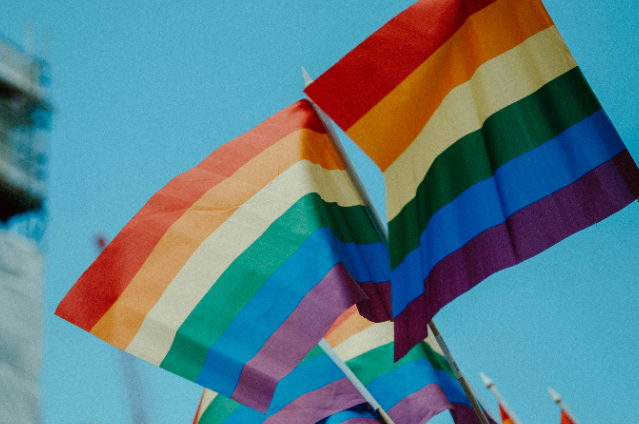
Gilbert Baker designed the original rainbow flag in 1978 at the request of Harvey Milk, the first openly gay elected official in California. That original flag had eight colours, each assigned a meaning:
| Pink: Sex | Red: Life | Orange: Healing | Yellow: Sunlight | Green: Nature | Turquoise: Art | Indigo: Harmony | Violet: Spirit |
After Milk’s assassination in November 1978, demand for the flag surged, and hot pink fabric became unavailable, so it was dropped. Turquoise was later removed for a practical reason: an even number of stripes allowed the flag to be split cleanly down the middle and hung on both sides of a parade route. The six-stripe version we know today was born of supply chains and city logistics, not a redesign.³
Before the Rainbow, a Reclaimed Wound
In Nazi concentration camps, gay prisoners were forced to wear a downward-pointing pink triangle as a mark of identification and humiliation. In the 1970s and especially during the AIDS crisis of the 1980s, activists reclaimed it — most famously in ACT UP’s “Silence = Death” campaign — inverting it and transforming an instrument of persecution into a symbol of resistance and survival.⁴
The rainbow flag eventually supplanted it as the dominant symbol, partly because communities wanted something that looked forward rather than back. But the pink triangle remains an emblem of the movement’s roots in survival under state violence.
Official Recognition, Eventually
Pride Month was not formally recognised by a U.S. president until Bill Clinton declared June “Gay and Lesbian Pride Month” in 1999 and again in 2000. President Barack Obama later extended the designation to include bisexual and transgender people. Recognition has since fluctuated with administrations — a reminder that official acknowledgement and legal protection are not the same thing.⁵
The Tension Inside the Celebration
Some of the movement’s earliest organisers — including members of the original 1970 march committee — have grown critical of what Pride has become: a heavily sponsored spectacle in which corporations display rainbow branding in June while their political action committees fund legislators who oppose LGBTQ+ rights. The term “rainbow-washing” has entered common use to describe this gap between visibility and solidarity.
The debate is not between insiders and outsiders. It lives within the community itself — between those who see mainstream celebration as hard-won legitimacy and those who argue that legitimacy without protection is theatre. Pride, in other words, remains what it always was: contested, alive, and political.
"Joy today is built on courage from fifty years ago. The question is what we build on the joy."
References
- Carter, D. (2004). Stonewall: The Riots That Sparked the Gay Revolution. St. Martin’s Press.
- Bronski, M. (2011). A Queer History of the United States. Beacon Press. — on Brenda Howard’s role as “Mother of Pride.”
- Baker, G. (2015). Rainbow Warrior (memoir). On the design and modifications of the original flag. See also: gilbertbaker.com
- Gallo, M. (2006). The Pink Triangle: The Nazi War Against Homosexuals. Henry Holt. — on the reclamation of the symbol via ACT UP.
- Clinton, W. J. (June 1999 & June 2000). Presidential Proclamations on Gay and Lesbian Pride Month. Office of the Federal Register, National Archives.