
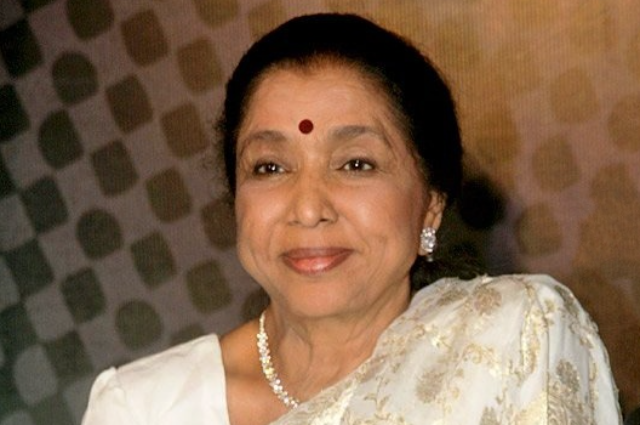

Early Life & Personal Background
To understand the archive, you have to understand the woman who built it, born on September 8, 1933, in Sangli, Maharashtra, into a Maharashtrian family of performers. Asha grew up immersed in music. Her father, Deenanath Mangeshkar, a classical singer and th actor, initially trained her with her first lessons, while her elder sister Lata Mangeshkar became her lifelong mentor and rival, in the most productive sense of the word. She debuted at the age of 10 in 1943 with the Marathi film Chala Nav Jata, singing "Chala Tumko Lekar Chaliye," after her father’s death, leaving the family in financial distress. Then, at 16 in 1949, Asha eloped with 31-year-old Ganpatrao Bhosle, who had happened to be Lata’s then own personal secretary, against family wishes, including her senior sibling’s disapproval, severing ties in the process. Nevertheless, the marriage descended into abuse, as he isolated her from family, controlled her earnings, and mistreated her while pushing her singing career for profit. Pregnant with the youngest son, Anand, she finally fled in 1960, reclaiming independence in the only way she could. But love, stubborn and generous, found her again after she met Rahul Dev "Pancham" Burman in the studios, sparking a legendary partnership. He, who was six years younger, proposed repeatedly despite her scars and his mother's opposition, until she finally said yes, and they married in 1980 after years of persuasion, creating icons like "Dum Maro Dum" (Hare Rama Hare Krishna, 1971) and "Chura Liya Hai Tumne" (Yaadon Ki Baaraat, 1973). Their union lasted until his 1994 death, blending personal healing with musical gold.
A Number that grew with the Career
It was against this life that the archive took shape. Asha Bhosle made her proper film debut with Chunaria in 1948, and between that debut and the late 1950s, she sang more songs than almost any other playback singer in the industry. Yet most of those recordings were for small, indistinct productions where she was relegated to singing for the heroine's sidekick or buried in background chorus work, and these early recordings represent the first archival black hole in her discography, uncatalogued, undigitised, and in many cases physically lost on acetate discs that did not survive the storage conditions of mid-century Bombay.
By 2006, Bhosle herself stated in interviews that she had recorded over 12,000 songs across her career, which got repeated widely, cited in major publications, and eventually became the basis on which the Guinness Book of World Records acknowledged her in 2011 as the most recorded artist in music history. The certificate, presented at The Asian Awards ceremony in London, was more specific, eventually recognising her for recording up to 11,000 solo, duet, and chorus-backed songs in over 20 Indian languages since 1947. While there is an immediate and telling discrepancy between 11,000 and 12,000, and the gap is not a rounding error, it reflects the fundamental challenge of cataloguing a life's work that spans eight decades, multiple languages, hundreds of composers, and an industry that kept inconsistent records at the best of times.
Awards & Global Milestone
That said, the awards, at least, were easier to count. Asha won her first National Film Award for Best Female Playback Singer in 1981 for the soulful thumri "Dil Cheez Kya Hai" from Umrao Jaan, directed by Muzaffar Ali, showcasing her mastery of classical semi-classical forms. She secured a second National Award in 1986 (presented in 1987) for the poignant "Mera Kuch Saamaan" from Gulzar's Ijaazat, a track that captured deep emotional longing with subtle nuances. In 2000, she received the Dadasaheb Phalke Award, India's highest cinematic honor, recognizing her eight-decade contribution to playback singing. The Padma Vibhushan, the nation's second-highest civilian award, followed in 2008, affirming her cultural impact across genres and languages. Her 1997 album Legacy, a collaboration with sarod maestro Ustad Ali Akbar Khan, earned a Grammy nomination for Best World Music Album, marking her as one of the first Indian singers to achieve this international recognition and highlighting her fusion of classical Indian traditions with global appeal. She also garnered seven Filmfare Awards, a 1996 Special Award for Rangeela, and honours such as the Asian Awards Lifetime Achievement Award (2011) and a place on the BBC's list of the top 100 women in music, which round out a body of recognition that, even taken together, still feels inadequate for the scale of what she gave.
The Digital Era: Gap Filler or Gap Maker?
The digital era arrived promising to fill in the gaps, and it has, though not without creating new ones of its own. Digitization efforts over time have surfaced rare tracks, including vinyl rips, cassette transfers, and unreleased gems on YouTube playlists like "ASHA BHOSLE (DIGITAL SONGS)" or Archive.org collections, aiding enthusiasts in piecing together her vast output. Streaming platforms like Spotify, JioSaavn, and Qobuz list Asha Bhosle with hundreds of albums. Take, for example, Qobuz, which shows around 540, representing nothing but a tiny fraction of her verified 12,000-plus songs, highlighting persistent gaps in comprehensive digital cataloging. However, challenges abound as licensing disputes have caused Bollywood songs, including some by Asha, to vanish from Spotify (e.g., Zee Music c removals in 2023), and incomplete metadata leads to duplicates, misattributions, and unverified uploads. Additional issues include AI voice cloning lawsuits (Bombay High Court granted her interim relief in 2025 against unauthorized use), complicating authentic archival preservation. Much like jazz legends with emerging alternate takes, Asha's regional and B film recordings continue resurfacing, yet the scale of her 20-language oeuvre defies full consolidation, making digital tools both rescuers and new barriers.
Human Memory as an Archive
What the platform cannot hold, people carry without a centralized institutional catalog. Asha Bhosle's vast legacy of over 12,000 songs endures through personal memories, fan collections, music historians, and fellow artists, forming a living, shared cultural inheritance across generations. Prasar Bharati Central Archives, tied to All India Radio (AIR) and Doordarshan, preserves rare interviews and recordings, including her own reflections on her Guinness-recognized output of 11,000+ songs in 20 languages, and archivists there have digitised footage unearthing tracks once thought lost amid the era’s famously informal documentation. Besides these, an oral-history layer thrives alongside the international one, built on anecdotes from musicians and contemporaries, such as flautist Milind Date, who marvelled at her stamina for recording 10 songs in a single day during her peak years.
Asha Bhosle’s musical archive is dynamic, in the most restless sense of words, with new recordings continuing to emerge and old ones being rediscovered, while digital platforms reshape access to her work in ways that leave no room for doubt. Into her 90s, Asha mentored artists, ran restaurants, and fused genres as Indi-pop’s undisputed queen until cardiac arrest took her at 92 in Mumbai, leaving behind a voice eternally defining India's heart. For researchers, this presents both a challenge and an opportunity: on the one hand, the challenge lies in navigating incomplete and fragmented data; on the other hand, the opportunity lies in the possibility that the archive is never truly finished. There will always be another song to find, another recording to verify, or another story to uncover, which perhaps is the most fitting legacy for an artist like Asha Bhosle that, even in her absence, she keeps being found.
References:
- https://timesofindia.indiatimes.com
- https://www.msn.com/en-in
- https://www.dnaindia.com
- https://news24online.com
- https://timesofindia.indiatimes.com
- https://www.tribuneindia.com
- https://www.hindustantimes.com
- https://www.instagram.com
- https://www.facebook.com/
- https://www.guwahatiplus.com
- https://theprint.in
- https://timesofindia.indiatimes.com
- https://www.jiosaavn.com
- https://punemirror.com
- https://www.siasat.com
- https://theindianeye.com
- https://www.theweek.in
- https://www.moneycontrol.com
- https://m.dailyhunt.in
- https://www.qobuz.com
- https://www.youtube.com
- https://www.onmanorama.com
- https://edition.cnn.com
- https://archive.org
- https://www.youtube.com
- https://www.muthirai.com
- https://www.indiatoday.in
- https://m.dailyhunt.in
- https://timesofindia.indiatimes.com
- https://www.seema.com
- https://www.youtube.com
- https://www.lokmat.com