
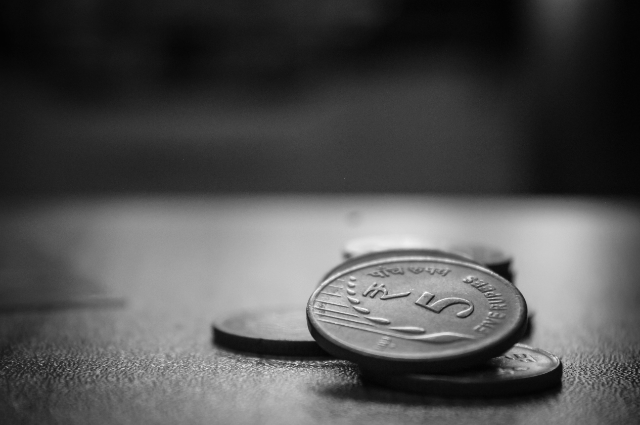
When the Indian rupee is mentioned in conversation, economists and currency dealers feel unease. The fear of witnessing a currency that, according to every structural logic, ought to be performing better but isn't, rather than the abrupt warning of a collapsing economy, is more gradual and unsettling. It is now hard to ignore that fear in 2026. The rupee has become Asia's worst-performing currency of the year after falling to a record low of ₹95.8 against the US dollar. Crude oil dependence, capital flight, geopolitical shocks, and the structural weaknesses that no single policy can resolve overnight are all part of the story behind that figure.
The Oil Anchor Around India's Neck
To understand the rupee's ongoing decline, one must first consider oil. India is one of the world's most import-dependent large economies, importing over 88.6% of its crude oil needs. India's import cost nearly always skyrockets when the price of crude oil rises, as it has during the current West Asia crisis. Every dollar spent on oil must come from currency markets, and the rupee is directly under pressure to decline as a result of this ongoing demand for foreign exchange. During the 2008 oil shock, the 2013 taper tantrum, and the 2018 spike in petroleum prices, the rupee hit then-record lows. However, the fact that the oil shock is hitting concurrently with multiple other converging forces, giving the currency very little breathing room, is what makes the current crisis especially unpleasant.
Capital Flight and the $18 Billion Wound
So far this year, foreign portfolio investors have removed $18 billion from Indian stocks. That is a fundamental loss of confidence rather than a rounding error, and it has an immediate and mechanical impact on the rupee. The currency market is flooded with supply-side pressure on the INR and demand-side pressure on the USD when foreign investors leave Indian markets and sell their rupees for dollars. As a direct result, the rupee depreciates. Although India is not alone in experiencing this trend, with emerging markets more broadly facing capital outflows as global investors shift toward US assets in search of higher returns within a high-interest-rate American economy, the impact is especially pronounced in India because of the scale of foreign participation in its equity markets, where substantial foreign institutional investor holdings in the BSE Sensex and NSE Nifty mean that when capital exits, the currency inevitably feels the pressure as well.
The Structural Weight of a Persistent Deficit
India has a chronic current account deficit, which is a deeper, older issue beneath the current turbulence. This indicates that India consistently buys more products and services than it exports, necessitating a constant outflow of foreign currency to close the imbalance. In order to finance its deficit, a nation in this situation is structurally dependent on capital inflows, foreign direct investment, portfolio movements, and remittances. The currency is directly impacted when those inflows slow or reverse.
The deficit reflects far more than a trade imbalance, revealing India’s broader consumption-driven import pattern that extends beyond oil to include machinery, electronics, and gold. India is one of the biggest importers of gold, a commodity that serves financial and cultural purposes but adds little to export revenue. The rupee is structurally sensitive to any external shock because the current account has been in deficit for the majority of the last 20 years due to the mix of energy imports and discretionary commodities imports.
The Dollar's Strength and the Fed's Shadow
The strength of the US dollar, an external force beyond India's control, exacerbates its domestic vulnerabilities. Dollar-denominated assets have continued to be very appealing to investors throughout the world since the US Federal Reserve has kept interest rates higher than markets had first predicted. The rupee and other emerging market currencies endure a disproportionate amount of this adjustment since a stronger dollar is, by definition, a weaker everything else. This pattern was evident in 2022, when strong Fed tightening contributed to a widespread dollar spike that negatively impacted numerous emerging-market currencies, notably the Indian rupee. Similar external pressure is being faced by India in 2026, but it has less capacity to withstand it due to additional domestic and trade-related shocks.
Geopolitical Risk and the 6.5% Slide
Since the start of 2026, the rupee has lost more over 6.5% of its value, with the increase of conflict in West Asia accounting for about 5.22% of that fall. Currencies are impacted by geopolitical risk in a number of ways at once, including increased oil prices, investor risk aversion, and uncertainty that deters new capital inflows. The indirect impacts of that conflict exacerbate the direct ones for a nation as dependent on West Asian crude supply as India.
Historical precedents remain instructive, particularly during the Gulf War of 1990–91, when soaring oil prices and a sharp decline in remittances from Indian workers in the Gulf triggered a significant depreciation of the rupee. The current conflict carries echoes of that episode, though the financial system is now more complex and the channels of contagion more numerous.
Regulation, Arbitrage, and the Shallow Market Problem
The rupee's weakening is a result of its own market structure in addition to macroeconomic factors. Given the size of its economy, India's foreign currency market is rather small, and the variety of hedging options is restricted by stringent capital account laws. This makes it possible for offshore-onshore arbitrage traders to exaggerate currency movements beyond what fundamentals alone would support by taking advantage of price disparities between the onshore spot market and the non-deliverable forward market in Singapore or Dubai.
India has increasingly been described as being caught in a “service export trap,” where its expanding IT and business process outsourcing sectors generate significant foreign exchange earnings yet still fall short of fully compensating for the country’s persistent goods trade deficit. While service exports provide important economic support, they cannot replace the need for a stronger manufacturing export base, something that requires years of sustained industrial policy and long-term structural investment to develop.
The RBI's Uncomfortable Position
The Reserve Bank of India has publicly committed to allowing market forces to determine the exchange rate, a position that signals maturity and confidence in India's macroeconomic fundamentals. In practice, however, the RBI has reportedly intervened aggressively on certain days to prevent the rupee's slide from turning into a rout. This tension between stated policy and operational reality is not unique to India; most central banks that claim to allow free-floating exchange rates intervene selectively, but the inconsistency creates a layer of uncertainty that investors find unsettling. Market participants pay an extra premium for uncertainty when they are unable to foresee whether the central bank will intervene or remain neutral. Ironically, this could exacerbate the very volatility that the central bank is attempting to stop.
What This Means Going Forward
The rupee's record low has significant implications: rising import costs drive domestic inflation, especially for fuel and electronics; corporate borrowers face increased repayment burdens on dollar-denominated debt; and the government's fuel subsidy bill grows as it attempts to shield consumers from price hikes. The pressures on the rupee are unlikely to resolve soon, with the West Asia conflict ongoing, the Fed unlikely to change course rapidly, and India's current account dynamics needing years of reform. The currency poses challenges not due to a crisis, but because it represents a blend of structural vulnerability and external shocks, both of which are currently in play.
References
- https://timesofindia.indiatimes.com
- https://indianexpress.com
- https://english.hindusthansamachar.in
- https://chahalacademy.com
- https://www.moneylife.in
- https://economictimes.indiatimes.com
- https://www.madhyam.org.in
- https://theprint.in
- https://www.business-standard.com
- https://upstox.com
- https://www.imf.org
- https://economictimes.indiatimes.com
- https://economictimes.indiatimes.com
- https://in.tradingview.com
- https://www.thehindubusinessline.com
- https://bfsi.economictimes.indiatimes.com
- https://oilprice.com
- https://www.youtube
- https://vajiramandravi.com
- https://www.indiabudget.gov.in
- https://www.investing.com
- https://www.facebook.com
- https://www.reuters.com
- https://www.federalreserve.gov
- https://timesofindia.indiatimes.com
- https://timesofindia.indiatimes.com
- https://www.moneycontrol.com
- https://www.moneycontrol.com
- https://macrofinance.nipfp.org.in
- https://www.indiacode.nic.in
- https://www.wionews.com
- https://www.newindianexpress.com
- https://cfo.economictimes.indiatimes.com
- https://www.business-standard.com
- https://www.reuters.com
- https://www.fxstreet.com
- https://www.slideshare.net
- https://www.imf.org