
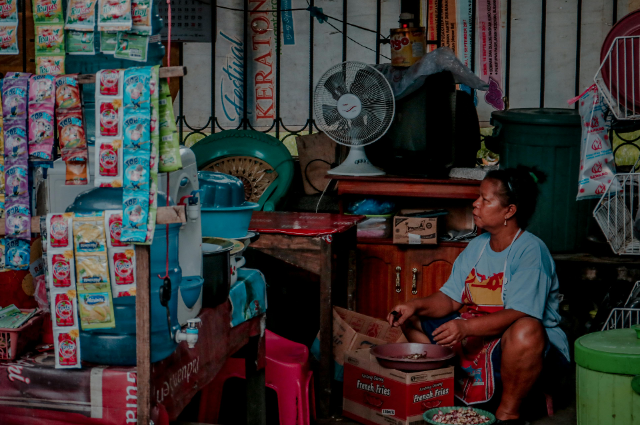
When delving into the conversation about rural India, poverty often comes into focus through the important lenses of income, employment, and access to education. Yet a closer examination of household spending patterns reveals a more insidious, often overlooked reality. According to the Household Consumption and Expenditure Survey (HCES) 2023-24 data, rural households spend only about 2.5% of their total consumption on education, while nearly 4% is allocated to tobacco products. This incongruence raises an uncomfortable question:
Why are families with limited resources spending more on substances like gutka than on education that could improve their future?
However, the answer lies in a tangled web of addiction, economic vulnerability, cultural normalisation, and systematic policy failures, all of which collectively perpetuate a vicious cycle, quietly entrenching indigence across rural landscapes.
The Gutka Explosion
Across rural India, over 70% of households in the bottom 40% of the income distribution consume tobacco, highlighting the alarming spread of gutka use among the economically vulnerable population. According to the Household Consumption Expenditure Survey conducted by the National Statistics Office (NSO) under the Ministry of Statistics & Programme Implementation (MoSPI) between August 2023 and July 2024, the share of rural households consuming gutka has surged nearly sixfold, from a mere 5.3% to a staggering 30.4%. Consequently, gutka now accounts for 41% of total tobacco expenditure in rural areas, cementing its position as the dominant tobacco product by value. As highlighted by Shamika Ravi and Partha Protim Barman in The Indian Express, the survey findings underscore a troubling trajectory, which states that tobacco consumption is becoming increasingly normalized across demographic segments, with pronounced prevalence in northern states and a discernible uptick in the south as well, yet this trend is far from uniform, most acutely concentrated in the central belt, particularly Madhya Pradesh, Uttar Pradesh, Bihar, Chhattisgarh, and Rajasthan. In rural Madhya Pradesh, more than 60% of households consume gutka, while in Uttar Pradesh, the figure has surpassed 50%. Notably, the prevalence is even higher in states such as Uttar Pradesh, Madhya Pradesh, and Bihar, where tobacco consumption exceeds 85% among the lower-income population. What renders this pattern particularly disquieting is its profound entanglement with economic vulnerability. Moreover, poorer households allocate a larger share of their limited incomes to tobacco than their wealthier counterparts. This gives rise to a stark paradox in which those least able to afford such expenditures are the ones most deeply invested in a non-essential, inherently harmful product. The opportunity cost of this spending is far from trivial. Redirecting even a fraction of these resources could yield meaningful improvements in nutrition and overall well-being. Research suggests that reallocating tobacco expenditure could add more than 500 calories per day to the diets of children in these households, offering a tangible pathway to mitigating undernutrition (Husain et al., 2016).
The Trapdoor of Habit
To truly understand the persistence of gutka consumption, one must look beyond aggregate statistics and consider everyday realities. For countless informal labourers and migrant workers, existence is defined by gruelling physical toil, erratic incomes, and chronic financial precarity. In this context, a ₹5 sachet of gutka becomes more than just a habit, but rather a quick form of relief. It momentarily suppresses hunger, delivers a fleeting sense of stimulation, and offers a brief respite from relentless fatigue. Unlike healthier alternatives, it is cheap, ubiquitously available, and socially sanctioned. This makes it an attractive option for individuals who may not have access to regular meals or recreational outlets. Over time, what begins as occasional use can turn into dependency, further draining already limited household resources.
Compounding this economic vulnerability is a dense web of cultural and behavioural factors. In many rural communities, tobacco use is not seen purely as an individual choice but as part of social interaction. Offering gutka or tobacco can be a gesture of hospitality or camaraderie among workers. In some cases, it is even associated with rituals and traditional practices. Additionally, these cultural norms are further reinforced by persistent misconceptions that gutka aids digestion, alleviates stress, or soothes dental ailments. Such beliefs, coupled with limited awareness of the associated health risks, render conventional information campaigns insufficient to shift deeply entrenched consumption patterns.
Furthermore, psychological dynamics add yet another layer of complexity. Individuals often adapt gutka use through intergenerational transmission, observing and emulating parents who are already addicted, or through the influence of peers. When families fail to intervene or inadvertently enable the behaviour, a subtle but profound lesson takes root, viz., a parent’s addiction can supersede the family’s collective well-being. From a psychological standpoint, this normalization not only heightens the risk of developing addictive patterns later in life but can also shape relational choices, predisposing individuals to form bonds with others who exhibit similar dependencies.
The Health Fallout
The health consequences of this far-reaching tobacco use add another layer to this issue. Tobacco consumption is a leading cause of non-communicable diseases in India, including lung cancer, heart disease, chronic obstructive pulmonary disease (COPD), and various oral cancers linked specifically to smokeless products like gutka. According to the Ministry of Health and Family Welfare, tobacco is responsible for approximately 13 lakh deaths annually in India. The economic burden is equally severe, as for every ₹100 the government earns from tobacco taxes, society bears a cost of ₹816 in healthcare expenses and productivity losses, clearly showing that the perceived economic benefits are far outweighed by the long-term social tariffs (John et al., 2020).
The Regulatory Failure
The obstinacy of gutka consumption despite regulatory efforts highlights significant policy failures. Although gutka was officially banned in India in 2012, manufacturers quickly adapted by introducing a twin-sachet system, where pan masala and tobacco are sold separately and later mixed by the consumer. This loophole allows companies to bypass the ban while continuing to sell essentially the same product. The Apex court identified this issue as early as 2016, yet enforcement remains weak even today. The continued availability of these products raises questions about regulatory effectiveness and the influence of industry practices on public health policies. At a broader level, the issue reflects a disconnect between different areas of policy. While governments invest in nutrition programs, education, and healthcare, they often fail to address competing household expenditures. The data suggest that rising incomes do not necessarily lead to reduced tobacco consumption or increased spending on essential needs.
Ultimately, the growing consumption of gutka in rural India is not just a public health concern but an economic and social issue that directly impacts poverty. Dismantling this cycle demands more than prohibitions or sporadic awareness drives and policies attuned to rural realities. Until then, the small daily expenses on gutka will continue to carry a much higher hidden cost for millions of households.
References
- https://www.news18.com
- https://indianexpress.com
- https://www.opindia.com
- https://annalsofglobalhealth.org
- https://www.youtube.com
- https://www.timesnownews.com
- https://www.researchgate.net
- https://www.indiatoday.in