
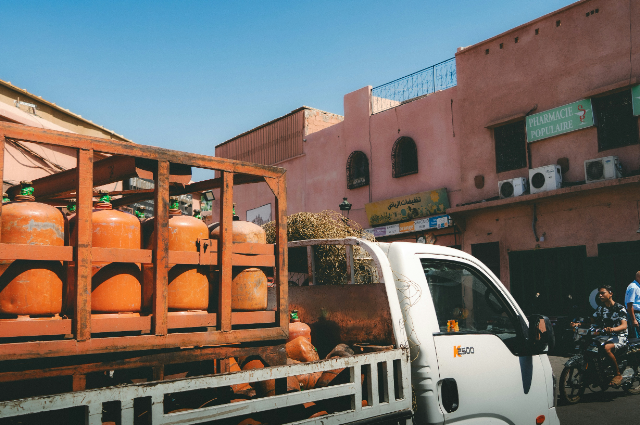
A waterway narrower than most rivers sits six thousand kilometres from India’s coastline, and when it snapped shut, inexplicably, India’s pressure cookers went cold. When Iran and Israel duelled on 28 February 2026, the Strait of Hormuz took 80% of India’s LPG supply down with it, and the consequences arrived not on any battlefield but quietly, in kitchens, from March onwards, where restaurant menus shrank, and families began rationing their last cylinder. A nation of 1.4 billion was finally forced to confront what it had spent decades avoiding, viz., its energy security was always one geopolitical tantrum away from collapse. This was never about a war or a flood or a fire. It was always about a quieter, far more damning failure, which has been kept hidden in plain sight for decades, disguised as the norm, compounding slowly, silently, until a faraway conflict flipped a switch and left an entire nation unable to look away. But before we get to the failure, we need to understand the fuel. So, what exactly is LPG?
Liquefied Petroleum Gas (LPG) is one of those invisible necessities that most of us barely think about until it’s gone. It’s a clean-burning fuel, siphoned from natural gas, and it powers everything from kitchen stoves to restaurant burners to industrial vats. LPG is an essential commodity, forming the backbone of cooking and food services for millions. However, lately, LPG has been yanked out of the shadows and thrust into the headlines, as the country faces a growing shortage affecting both urban and rural life. What appears to be a distant international conflict is now directly influencing kitchens, businesses, and livelihoods across India.
Here’s the bottom line…
The shortage didn’t arrive with a bang. It seeped in cylinder by cylinder, burner by burner, until one day, the absence became impossible to ignore.
Across many cities like Delhi, Bengaluru, and Mumbai, restaurants began quietly gutting their menus except for the low-flame survivors such as rice, lentils, tea, and coffee. Anything that demanded frying or slow simmering vanished temporarily without explanation; some kitchens simply locked up altogether, due to lack of supply. Reports suggest that nearly 20% of restaurants in parts of Delhi, as well as in Mumbai, have faced a brief pause in operations. A roadside eatery in New Delhi said it all with a handwritten note pasted on its shutter: “We are serving only rice and lentils today.” Manpreet Singh of the National Restaurant Association of India, who represents roughly 500,000 restaurants across the country, honestly puts, “Menus are being curtailed, some are cutting lunch services and opening for dinner” he also added to his grief, “Three restaurants in Delhi were shut yesterday – two have already reopened. It’s a fluid situation”.
Students' hostels felt it in the most unglamorous way possible. Shared cylinders, already rationed through booking cycles, stopped arriving on schedule, and the unofficial refill shops that students had quietly depended on for years shut down overnight. Hostels began restricting cooking hours, and even tea became a negotiation. For many students, this was no longer an inconvenience but a daily recalibration of what they could and could not eat.
Workplaces adapted in ways that would have seemed absurd a year ago. An automobile parts plant in Gujarat quietly pulled fried items off its canteen menu and replaced tea with lemon water and buttermilk. These changes may read as minor adjustments, but they point to something far larger.
At home, the shortage has created anxiety and behavioural changes. Cylinder deliveries that once arrived within a day began taking anywhere between two and eight days, and families started doing careful mental math on their last booking. Induction cooktops, long treated as a novelty or an upgrade, sold out across and offline markets with prices climbing alongside the panic. The shift happened fast, as it always does in a crisis, but speed is a luxury that lower-income households rarely have, and for them, an induction cooktop was never an alternative, rather an expense they could not afford.
Prices and the Shadow Market
Perhaps the most troubling twist in this crisis has been the silent surge of prices and the dark underbelly of black-market dealing that follows in its wake.
In early March 2026, the price of a standard 14.2kg domestic cylinder jumped by roughly ₹60, while commercial cylinders saw a hike of over ₹110. In cities like Mumbai, the price of a commercial cylinder reportedly surged from around ₹1600 to nearly ₹3000. In extreme cases, some businesses have paid as much as ₹6000 for a single cylinder in urgent situations. These aren’t just price hikes. They’re a feeding frenzy for illegal profiteering, and that only twists the knife deeper.
The Government Strikes Back!
Faced with a lot of spiralling situations, the Indian Government finally rolled out a series of measures to wrestle control back. The Essential Commodities Act resurrected a blunt but powerful tool to crack down on hoarding and police distribution. Refineries have been instructed to maximize LPG production, while oil marketing companies have been directed to prioritise domestic supply. The government also scrambled to diversify imports, reaching across oceans to the United States, Norway, Canada, and Russia, reducing dependence on the Strait of Hormuz.
On home ground, domestic production was nudged up by about 10%. And alternative fuels like biomass and kerosene have been temporarily permitted for use.
The Reality Gap
Official statements promise weeks of stock, whilst the ground reality tells a different story. Although authorities claim that sufficient LPG stock is available for weeks on end, reports of restaurant closures, reduced menus, and public anxiety suggest otherwise. Surge buying and market volatility have further intensified the situation, making it difficult to assess the true extent of the shortage.
Overall, the LPG shortage in India is not merely an issue of fuel supply but a reflection of broader Geo-economic entanglement. The crisis exposes vulnerabilities in energy dependence while also demonstrating the resilience and adaptability of people in the face of uncertainty. Subsequently, it also raises important questions about energy security, diversification of supply sources, and the need for more sustainable alternatives. In the end, this shortage offers a sobering lesson for an interconnected world: your local stability is only as strong as the global peace you take for granted, and peace, like gas, is never guaranteed.
References
- https://www.reuters.com
- https://www.man-es.com
- https://www.abc.net.au
- https://www.bbc.com
- https://gulfnews.com
- https://www.thehindu.com
- https://www.jmfinancialservices.in