
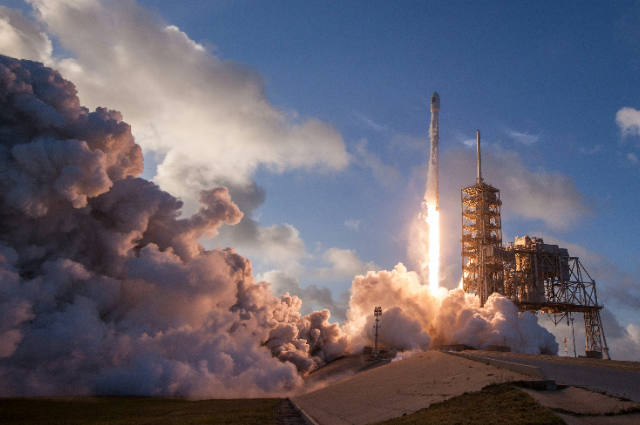
54 years is an extraordinary stretch to remain earthbound. The last time humans ventured beyond low Earth orbit, Richard Nixon occupied the White House, the Vietnam War raged on, and the notion of a personal computer belonged to science fiction. Then, on April 1, 2026, NASA’s Artemis II lifted off from the Kennedy Space Centre, marking the first crewed Orion mission to transit beyond low Earth orbit since Apollo 17 in 1972. For the first time in over half a century, a quartet of space farers broke free from Earth’s gravitational grip and set their course for the Moon: not to land, not yet, but to demonstrate that the ambition to explore still burns.
Mission Overview
Artemis II heralds a new epoch in humanity’s relationship with the Moon. Unlike earlier missions fixated on landing, this flight is designed as a deliberate rehearsal for what comes next. Its significance, however, reaches far beyond experimentation, laying the groundwork for a sustained human presence in deep space. At its core, Artemis II is a crewed lunar flyby mission, carrying four astronauts on an approximately ten-day journey around the Moon and back to Earth. For the first time, the mission tested Orion's life support systems with humans aboard, turning every breath, meal reheated with a food warmer, and hour of sleep in deep space into valuable data points. As part of the mission's early activities, the crew performed a manual piloting demonstration to assess the capsule's handling qualities, using the Interim Cryogenic Propulsion Stage (ICPS) as a docking target. Following a successful demonstration, Orion executed an automated departure burn to retreat to a safe distance. Beyond this, the mission covers an initial phase in high Earth orbit, followed by a meticulously calculated translunar injection burn that places the spacecraft on a trajectory toward the Moon. Although Artemis II does not include a lunar landing, its importance resides in validating the systems that will support subsequent missions, including Artemis III, which aims to land humans on the lunar surface.
The Unprecedented Crew
The Artemis II mission is crewed by four space voyagers representing both NASA and the Canadian Space Agency (CSA). Commander Reid Wiseman leads the mission, supported by Pilot Victor Glover and Mission Specialist Christina Koch, alongside Canadian astronaut Jeremy Hansen. Together, they embody the living proof of concept for every moon base blueprint, every Mars mission timeline, and every child who has ever gazed upwards and pondered what it would actually feel like to venture beyond Earth. Notably, Victor Glover becomes one of the few Black astronauts to travel beyond Earth’s orbit, while Christina Koch, who previously set a record for the longest single spaceflight by a woman, brings extensive experience in long-duration missions, and with Jeremy Hansen aboard, Canada’s first participation in a crewed mission beyond low Earth orbit, underscoring the global significance of Artemis II.
The Hardware of Ambition
At the heart of Artemis II lie two defining technologies, the Space Launch System rocket and the Orion spacecraft, both making their first crewed appearance in a mission that serves as a critical test of their reliability for future deep space exploration. The Orion capsule, aptly named Integrity, is built to endure the demands of such journeys, equipped with advanced life support systems, radiation shielding, and precise navigation capabilities that allow it to operate far beyond Earth’s protective orbit. The promise of engineering excellence was showcased spectacularly during the launch when Orion lifted off from Launch Pad 39B at Kennedy Space Centre at 6:35 p.m. EDT on April 1, which utilised twin solid rocket boosters that generated more than three-quarters of the total thrust, alongside four RS-25 engines. Together, they produced an impressive 8.8 million pounds of force, propelling the 5.75-million-pound vehicle into the sky and marking the start of its autonomous journey. In the hours that followed, one of the mission’s earliest milestones unfolded with quiet precision as Orion’s solar array wings extended flawlessly, stretching to nearly 63 feet and beginning to draw the energy that will sustain the spacecraft across the vast and unforgiving expanse of space.
A Moonward Arc
The mission unfolded through a series of meticulously coordinated stages, each designed to examine both the spacecraft’s systems and the crew’s capacity to operate beyond the familiar confines of Earth’s orbit. After launch, Orion lingered in high Earth orbit for roughly a day, affording the astronauts time to manually pilot the crew module and gauge its responsiveness, a crucial rehearsal in ensuring that human intervention could seamlessly override automated systems in the event of failure. On April 2, 2026, the European-built service module executed a translunar injection burn lasting approximately six minutes, propelling the spacecraft on its path toward the Moon and marking humanity’s first deliberate traverse into deep space since the close of the Apollo era in 1972.
As the mission advanced, it entered its most visually arresting and scientifically consequential phase: the lunar flyby. Six days after departure, on April 6, 2026, the journey reached another historic milestone when the Artemis II crew travelled 248655 miles away from Earth, shattering the record for the farthest excursion ever undertaken by humans. The previous benchmark, set during the Apollo 13 mission in 1970, emerged from a moment of crisis rather than design, when a failed mission carried its crew farther from Earth in the midst of a struggle for survival. That this threshold has now been crossed through a mission defined by precision and calm scrutiny speaks volumes about the maturation of human spaceflight, transforming what was once an accident of circumstance into an achievement reached with intention, control, and quiet confidence.
Over the course of nearly seven hours, the crew swept past the lunar surface, capturing high-resolution imagery of regions on the far side that no human eye has ever beheld directly. The Moon, a steadfast companion in the night sky, revealed a far more severe and intricate character up close, its terrain sculpted by a chiaroscuro of shifting light and shadow that disclosed textures and formations invisible from terrestrial vantage points. While onboard cameras dutifully archived these details, the astronauts themselves functioned as irreplaceable observers, interpreting subtleties in topography, illumination, and depth in ways that instruments alone cannot fully decode.
The flyby also offered a moment that blurred the boundary between empirical observation and solemn human witness. From their distant perch, the crew recorded the Moon fully eclipsing the Sun, creating nearly fifty-four minutes of totality, a celestial spectacle no human had ever encountered before. In that moment, the lunar disc appeared wreathed in a luminous silver corona, while stars asserted themselves in the surrounding abyss, a sight utterly unattainable from our own planet. It was a reminder that exploration is not only about data collection but also about expanding the boundaries of human perception.
Despite these achievements, some critics have dismissed Artemis II as anticlimactic simply because it did not culminate in a lunar landing, and such an assessment fundamentally misreads the mission’s purpose. Artemis II was never meant to be a marvel but an architectural cornerstone. Every system tested, every manoeuvre refined, and every anomaly catalogued fortifies the integrity of the expeditions that will follow. The Moon, in this context, serves not as an ultimate destination but as a rigorous proving ground where the perils of deeper space exploration can be methodically confronted and mitigated. The wisdom harvested here will shape future missions that aim not just to visit the Moon, but to stay, and eventually extend that reach to the plains of Mars.
Reaching this juncture was not simply a matter of technological prowess but also of persistence through years of delay and uncertainty. Early forecasts envisioned a launch window between 2019 and 2021, yet the program was repeatedly buffeted by fiscal constraints, technical tribulations, including concerns about Orion’s heat shield, and the sweeping disruption of a global pandemic. Large-scale space missions are as much political and logistical endeavours as they are scientific ones, often slowed by competing priorities and institutional inertia. That Artemis II launched at all reflects a kind of quiet determination, a sustained commitment to exploration despite obstacles that might have easily derailed it.
The Long Haul
While Artemis II is fundamentally a test flight, it also carries a suite of scientific investigations designed to illuminate the physiological rigours of deep space travel, and chief among these is the AVATAR experiment, which deploys organ-on-a-chip technology to scrutinise the effects of cosmic radiation and microgravity on human tissue. These miniature biological platforms emulate the function of human organs, granting researchers an unprecedented window into how the body responds to an environment stripped of Earth's protective atmospheric embrace. The resulting data will prove indispensable for the orchestration of longer-duration missions, particularly those bound for Mars, where astronauts will endure prolonged exposure to elevated levels of cosmic radiation. By weaving substantive scientific inquiry into the fabric of a demonstration flight, Artemis II ensures that every increment of exploration deepens our collective grasp of human survival beyond the cradle of our home planet.
NASA continues to look ahead, targeting early 2028 for the first Artemis lunar landing under Artemis IV, during which astronauts will transfer from Orion to a commercial lunar lander for their descent to the surface. The broader vision extends far beyond a single landing, aiming for a sustained human presence through a permanent lunar base and, eventually, missions to Mars, as Dr. Lori Glare (Acting Associate Administrator for the Exploration Systems Development Mission Directorate at NASA Headquarters) noted, “Their mission is carrying our promise to return to the Moon’s surface, this time to stay.” Within this larger arc, Artemis II holds a quieter but more foundational significance. When the crew splashes down off the coast of San Diego on April 10, 2026, they will return not as those who set foot on the Moon, but as those who made such a future possible. They will have demonstrated that the systems function, that the calculations endure, and that human beings can still travel into the vast silence of deep space and come back to speak of it. In that sense, the Moon was never the destination in itself, but the first proof that the journey beyond it is within reach.
References
- https://www.astronomy.com
- https://www.space.com
- https://www.nasa.gov
- https://www.nasa.gov
- https://www.nasa.gov
- https://www.nasa.gov
- https://www.nasa.gov
- https://satelliteprome.com
- https://www.desertsun.com
- https://www.nasa.gov
- https://www.nasa.gov
- https://www.cnbctv18.com
- https://www.nasa.gov
- https://www.space.com
- https://oig.nasa.gov
- https://www.aapg.org
. . .