
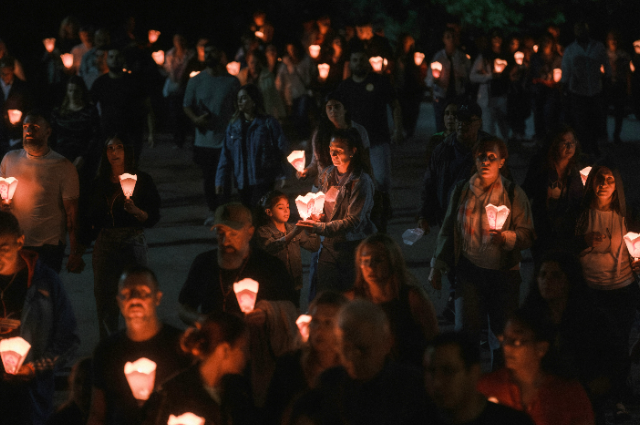
In a ritual we know too well, a new name surfaces. On cue, the country lights candles, trends hashtags, and demands justice, only to let go and move on like a tree shedding its last leaf in autumn, until the next game, the next vigil, or the next cycle of borrowed grief.
In December 2012, a nation woke to a name it was not allowed to know. She became Nirbhaya, the fearless one, a pseudonym given to a young woman whose real name the law chose to protect but whose story the country chose to carry. Protests erupted in Delhi’s bitter winter cold; candles were lit, amendments promised, and a fast-track court was established. Four men were eventually hanged, and somewhere amid all this, we convinced ourselves that something had fundamentally changed.
But one must sincerely ask: Where is the evidence of that change? Does it truly exist?
No sooner had the case closed than the candles guttered out, the hashtags fossilised into digital debris, and the country resumed its patient, unwitting wait for the next name to jolt it from slumber.
The Geometry of Two Crimes
The Nirbhaya case (2012) and the Atul Nihale case (2024), though separated by over a decade, reveal unsettling continuities in India’s criminal justice landscape. Nirbhaya, a 23-year-old woman, was brutally gang-raped and assaulted in Delhi on the dark and cold night of December 16, 2012, leading to her death on December 29, 2012, and sparking nationwide protests and major legal reforms, including stricter laws and fast-track courts. Similarly, the Atul Nihale case involves the abduction, sexual assault, and murder of a five-year-old girl in Bhopal, marked by extreme brutality and systemic lapses, as the accused had prior criminal records. While both cases resulted in the invocation of the rarest of rare doctrine and death sentences, the prolonged legal processes and recurring nature of such crimes highlight that, despite reforms, the fundamental issues of prevention, timely justice, and victim protection remain largely unresolved.
The Geography of Repetition
We did not fail the toddler of Shahjahanabad because we forgot Nirbhaya; we failed her because we never truly understood what Nirbhaya was trying to tell us. The names that followed did not arrive hesitantly, or by accident, but in a relentless, almost mechanical succession: Unnao, Hathras, Kathua, Badaun, Manipur, and now Atul Nihale, each carrying the same devastating architecture of a victim, a delayed reckoning, and an outrage that flares white-hot before retreating into silence. The geography shifts, the social equations rearrange, and the faces of the perpetrators vary, yet the underlying structure of both the crime and our response remains disturbingly unaltered. There is something deeply unsettling about this consistency, for it suggests that we are not witnessing a series of isolated failures but a structural condition where violence is not an aberration but a recurring, almost anticipated, feature of the landscape.
Convictions without Conclusions
After 2012, India moved swiftly to amend its criminal laws on sexual violence, with the Criminal Law Amendment Act of 2013 expanding definitions, strengthening penalties, and introducing new categories of offence, marking what appeared to be a decisive legislative shift. Yet, this urgency on paper collided with institutions that remained largely immovable, where police stations still interrogate survivors about their clothing, courtrooms turn cross-examinations into secondary assault, and hospitals carry out medico-legal procedures like the “Two-Finger test” without proper counselling or informed consent. The law evolved, but the machinery meant to uphold it did not, leaving behind a structure that looks complete from a distance but lacks a humane foundation at its core.
The Atul Nihale case, like many that followed Nirbhaya, did not falter because of an absence of law but because of the persistence of attitudes the law was meant to challenge. The individuals entrusted with delivering justice often carry the same biases that breed injustice, thus revealing a deeper truth that reform cannot be achieved through legislation alone, empathy cannot be written into statutes, and culture cannot be amended through policy, which is why, despite stronger laws, the lived reality of justice continues to fall short.
The Spectacle of Grief
A country that waits for violence to turn viral before it reacts has not solved its problems; it has merely learned to perform its guilt in public. What we have become dangerously adept at is not justice but the choreography of outrage. Within hours of a case gaining visibility, social media floods with black squares, demands for the death penalty, calls for chemical castration, and comparisons so dehumanising that even animals would reject them. Politicians appear before cameras with rehearsed solemnity, while prime-time anchors convert anger into spectacle, amplifying rage for ratings. For a brief, intense moment, this creates the illusion that something meaningful is unfolding, yet beneath the noise, very little actually shifts. Those who speak of witness protection are overshadowed by those demanding instant retribution, and those raising concerns about survivor rehabilitation are barely audible over the relentless clamour for execution. India’s record after the Nirbhaya executions in March 2020 shows that harsher penalties alone don’t prevent crimes, with silence speaking louder than outrage, and this claim was further strengthened by DCW chief Swati Maliwal, who said on December 16 on the 11th anniversary of this case, “Nothing has changed in the past decade, and crimes against women in Delhi have only gone up.”
In this environment, outrage is not only loud but also selective. Not every name becomes Nirbhaya, and that’s the quiet truth that lingers under the veneer of every public display of grief. The young woman in 2012 became a national symbol not only because of the brutality she endured but also because her story reflected a social reality that many could recognise as their own. Others have not been granted the same immediacy of empathy. Take the case of the Dalit woman in Hathras; she did not receive collective outrage without delay and resistance, and the survivor in Manipur, whose suffering was captured and circulated, waited months before the country chose to respond. Even in the Atul Nihale case, the toddler of that community remained unseen until circumstances forced attention upon her. This bypass is not accidental; it reveals how society assigns value to suffering. Selective outrage begins to function like a map, showing whose pain is acknowledged, whose safety is prioritised, and whose lives are treated as worthy of attention.
The Atul Nihale case, prosecuted under the POCSO framework, is a stark reminder of how a law born out of urgency and outrage continues to struggle in practice. Introduced in 2012 in the aftermath of the Nirbhaya case, the Protection of Children from Sexual Offences Act (POCSO) aimed to safeguard children by recognising their vulnerability and protecting them from trauma. Conviction rates under POCSO continue to be distressingly low, while cases languish in courts for years, stretching childhood into prolonged legal battles. Children who report abuse at 8 years old find themselves testifying at 14, often without psychological support, sometimes in the presence of their abusers, within a system still ill‑equipped to treat them with sensitivity or care. The issue, then, is not the absence of legal frameworks but the absence of a cultural shift. India does not lack laws to protect children; instead, it lacks a consistent recognition of children as individuals with rights rather than extensions of their families or passive subjects of the state. Until those changes, every new law may remain merely symbolic, as seen in cases like Atul Nihale’s, which underscore an unfulfilled promise.
When Justice Isn’t Enough
Survivors often spend years navigating a system that questions their credibility, with families pressured to withdraw or settle, and children testifying repeatedly due to bureaucratic delays. For many, justice becomes a prolonged ordeal rather than a resolution, profoundly affecting their lives beyond the original crime. Their exhaustion is personal and cumulative, stemming from trust in a system that reduces trauma to paperwork. When discussing justice, we must consider who truly experiences it, how long it takes, and what it costs because a conviction after a decade feels more like a formal closure than true justice, as the lived reality remains unresolved. Nevertheless, true accountability is built through consistent structural change rather than dramatic moments. It involves holding police officers responsible for discouraging complaints, ensuring effective fast-track courts with adequate resources, and having public prosecutors specially trained in handling sexual violence cases. Survivors should receive immediate psychological support rather than delayed assistance. While these changes may not grab headlines, they are essential for prevention and require sustained financial, political, and cultural investment.
To claim that nothing has changed between Nirbhaya and Atul Nihale would be inaccurate, because change has occurred in visible and meaningful ways. For example, laws have been strengthened, certain perpetrators have been convicted who may once have escaped, and conversations around consent and bodily autonomy have found space in classrooms and public discourse. These shifts matter, and they deserve acknowledgement. Yet, the pace and depth of this change remain out of step with the magnitude of the crisis, as much of what has been achieved feels reactive rather than preventive, symbolic rather than structural, and episodic rather than sustained. It is as though we have reinforced the walls of a house while ignoring the fire still raging within it. The real tribute to Nirbhaya, and to every victim whose name followed, cannot lie in repeated cycles of outrage, petitions, or demands for harsher punishment alone. It must be found in the quieter, more demanding work of reshaping the conditions that allow such violence to exist in the first place, but until that happens, the uncomfortable truth remains that new names will continue to emerge, each one a reminder that progress, however real, has not yet been enough to break the pattern.
References:
- https://timesofindia.indiatimes.com
- https://www.whiteblacklegal.co.in
- https://subratabiswas.com
- https://frontline.thehindu.com
- https://reflections.live
- https://aarambhindia.org
- https://ijlmh.com/paper
- https://ijme.in/articles
- https://www.drishtiias.com
- https://blogs.lse.ac.uk
- https://www.thehindu.com
- https://theleaflet.in
- https://www.quora.com
. . .