
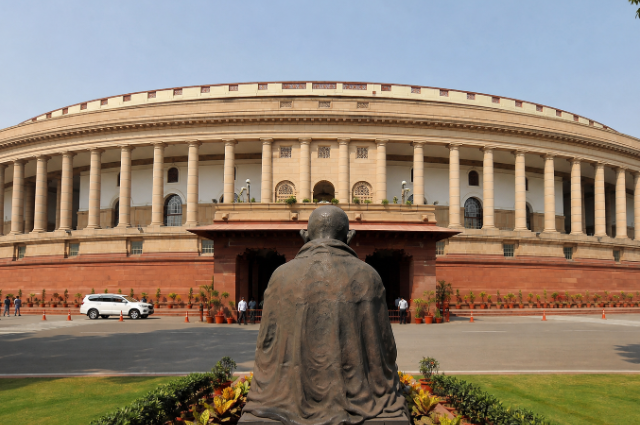
It was meant to be India’s greatest feminist triumph. Instead, it became the government’s biggest parliamentary humiliation. In 2023, the Women’s Reservation Bill was passed to thunderous applause as the 106th Constitutional Amendment, fulfilling the promise that one-third of India’s Parliament and state assemblies would be reserved for women. This was a significant victory after decades of waiting. However, what many did not realise is that the law came with an undisclosed expiration date. Critics who read the fine print called it an election gimmick, a promise timed precisely for the 2024 general elections, carrying no binding obligation to deliver. Fast-forward to April 2026. The BJP government returns with a grand new plan, a bigger Parliament, more seats, same promise. But when the votes were counted on the Lok Sabha floor, something unprecedented happened. For the first time in over a decade, a government bill fell, and that’s when India realised that the promise was nothing but a Trojan horse.
A Promise Wrapped in a Trojan Horse
On April 16, 2026, the government tabled three bills as a single package. The first, the 131st Constitutional Amendment Bill, proposed expanding the Lok Sabha from its current 543 seats to 850, approx a 56 per cent increase, coinciding with the seating capacity of the new Parliament building inaugurated in 2023. The second was a Delimitation Bill that proposed redrawing all constituency boundaries using the 2011 Census data. The third extended these changes to Union Territories such as Delhi and Puducherry. The government argued that by expanding the Lok Sabha ceiling and then reserving 33% of all seats (including the new ones), the women’s quota could be implemented without immediately ejecting sitting MPs, since delimitation and seat‑allocation would be based on the new structure. However, the underlying 33% reservation framework already exists in the 106th Constitutional Amendment (2023); the 2026 package merely sought to implement it through higher seat numbers and fresh delimitation. The political appeal was clear as existing power structures remained intact, allowing the government to take credit for women's reservation through the Constitution-amendment bills. These required a special majority under Article 368, which meant about 352 votes were needed from roughly 528 MPs present. However, the final tally showed 298 in favour and 230 against, falling short despite the ruling NDA bloc holding around 293 seats. The bills fell short and were defeated, marking a rare and significant moment in Indian parliamentary history.
The South India Problem
The opposition to these bills was not simply partisan obstruction. The most substantive critique came from southern states like Tamil Nadu, Kerala, Karnataka, Andhra Pradesh, and Telangana, and it centred on the consequences of using 2011 population data to redraw constituency maps. Southern states pursued aggressive family planning over the past five decades. Tamil Nadu, which currently has a fertility rate below the replacement level, would see its Lok Sabha seats reduced from 39 to 31 under the proposed delimitation. Similarly, the combined strength of Andhra Pradesh and Telangana would decrease from 42 seats to 34. Meanwhile, states with larger populations and slower progress in socio-economic development, many of which are governed by the BJP, stand to gain significantly. For instance, Uttar Pradesh would gain 11 seats, bringing its total to 91. Bihar would gain 10 seats, raising its total to 50. Madhya Pradesh would gain 4 seats, resulting in a total of 33, and Rajasthan would add 6 more, increasing its total to 31 seats. These changes would give the BJP a clear advantage in parliamentary arithmetic. If the total number of Lok Sabha seats is increased to 848, South India would see its seat count rise to 164. However, even with this increase, its overall share of representation would still be 19.34% lower than its current level. In contrast, the gains in the Hindi belt would be substantial. Uttar Pradesh would gain 63 seats, reaching a total of 143. Bihar would see an increase of 39 seats, bringing its total to 79. Maharashtra would grow to 76 seats with the addition of 28 new seats. Madhya Pradesh would rise to 52 seats with 23 additional seats, while Rajasthan would reach 50 seats with an increase of 25. The demographic math is punishing in its irony: the very states that complied most faithfully with national population policy would lose political weight, while the states that did not would be rewarded with greater representation. The freeze on delimitation since the 1971 Census was, in fact, a deliberate political compromise to protect southern states from exactly this outcome. India's constituency boundaries have not meaningfully changed in over fifty years precisely because successive governments recognised that updating them would punish demographic responsibility. The 2026 bills proposed to undo that compromise at a stroke.
Why Use 2011 Data When a Fresh Census Is Already Underway?
Compounding the controversy was the government's decision to use 2011 Census data. A new census, delayed by the COVID-19 pandemic, is currently underway in 2026 and will include caste enumeration for the first time, providing valuable demographic data. The use of 2011 data for redrawing constituencies is contested, as the 2026-27 data may significantly affect reservation outcomes and seats. The opposition argues this choice is a tactic to avoid waiting for the final figures, which may not be fully available until post-2027.
The Missing OBC Quota and the Demands Left Unanswered
The debate around women's reservation includes a significant third dimension concerning Other Backwards Classes (OBC). Currently, there are no political reservations for OBC communities in Parliament or state assemblies, unlike the Scheduled Castes and Scheduled Tribes, which have constitutionally mandated reserved seats. Parties such as the Samajwadi Party and the Rashtriya Janata Dal, representing substantial OBC constituencies in northern India, have called for a sub-quota specifically for OBC women within the women's reservation. They argue that this would ensure the benefits of reservation do not disproportionately favour women from dominant castes. However, implementing such a sub-quota is constitutionally complex and would require detailed demographic data, precisely what the 2026 Census is intended to provide. Therefore, the BJP has chosen not to include any OBC provisions in the reservation, and hence, for parties focused on OBC representation, this exclusion has been orchestrated into a major issue, believing that a women's quota without specific provisions for OBC women does not truly represent all women in India, but rather serves a narrow segment of the population.
The Rajya Sabha Imbalance
A less-discussed but constitutionally serious concern involves the balance between the two Houses of Parliament. Currently, the Lok Sabha has 543 seats and the Rajya Sabha has 245, a ratio of approximately 2.2 to 1. If the Lok Sabha were expanded to 815 seats, that ratio would shift to approximately 3.3 to 1. The significance of this lies in joint sittings. When the two Houses deadlock on a bill, the Constitution provides for a joint sitting where both Houses vote together. In such a setting, the larger House dominates by sheer numbers. At a 3.3:1 ratio, a government that controls even a simple majority in the Lok Sabha can override a two-thirds majority in the Rajya Sabha. The Rajya Sabha is, by design, the chamber where state governments and smaller parties have a meaningful voice. It acts as a check on the majoritarian impulses of whichever party happens to control the lower house. Diluting its effective weight undermines the federal character of Indian democracy in a structural, lasting way.
The Aftermath
After the bills were defeated on April 17, 2026, the BJP quickly turned to the cameras. Prime Minister Modi addressed the nation, while Home Minister Amit Shah stated in Parliament that the opposition's votes demonstrated not merely disagreement with the method, but a fundamental opposition to women's reservations themselves. This framing conflates criticism of a specific mechanism with a broader opposition to women's rights, a familiar rhetorical strategy. Analysts note that this approach is also effective, where the BJP has a documented history of transforming failed legislative battles into sustained electoral narratives. A defeated women's reservation bill, framed as a betrayal by the opposition, provides the party with a powerful campaign issue leading into the 2029 general elections. They can present a narrative over the next three years that "we tried to secure rights for women, and they stopped us." Whether or not this framing is accurate, and evidence suggests it is a significant oversimplification, it is politically potent. The real question that India's electorate faces is whether they are witnessing a genuine attempt at women's empowerment that was thwarted or a carefully constructed political performance that was designed to fail to succeed at the ballot box.
References
- https://www.drishtiias.com
- https://www.livelaw.in
- https://www.theindiaforum.in
- https://www.nextias.com
- https://www.youtube.com
- https://thewire.in
- https://prsindia.org
- https://www.insightsonindia.com
- https://www.scconline.com
- https://www.newsgram.com
- https://www.pib.gov.in
- https://www.drishtiias.com
- https://www.instagram.com
- https://indianexpress.com
- https://learnpro.in
- https://www.thehindu.com
- https://www.counterview.in
- https://timesofindia.indiatimes.com
- https://kpiasacademy.com
- https://www.bbc.com
- https://www.dmk.in
- https://timesofindia.indiatimes.com
- https://www.aljazeera.com
- https://www.youtube.com
- https://www.youtube.com
- https://timesofindia.indiatimes.com
- https://www.youtube.com
- https://www.youtube.com
- https://abclive.in
- https://www.isas.nus.edu.sg
- https://www.newindianexpress.com
- https://www.tribuneindia.com
- https://www.youtube.com
- https://castecensusindia.com
- https://www.facebook.com
- https://knowindia.india.gov.in
- https://www.youtube.com
- https://www.youtube.com
- https://www.youtube.com
- https://www.indiatvnews.com
- https://www.mid-day.com
- https://www.newindianexpress.com
- https://www.theweek.in
