
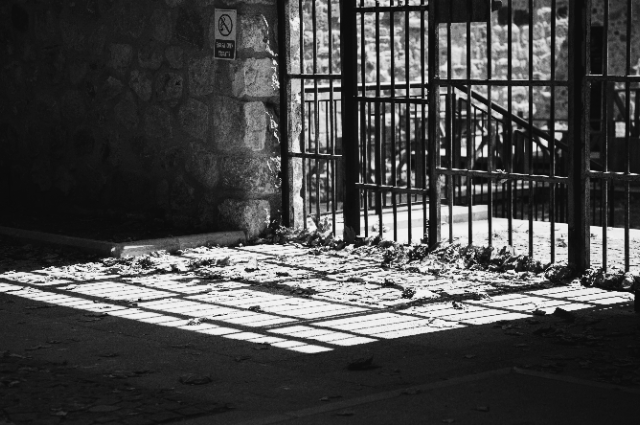
The 148-year-old Chanchalguda Central Jail in Telangana, which was founded under the Nizam's rule in 1876, opened its iron-grilled doors on Tuesday, May 12, 2026, by invitation rather than a court order. Visitors can spend 12 hours inside from 6 a.m. to 6 p.m. for ₹1,000, or 24 hours from 6 a.m. to 6 a.m. for ₹2,000. Those under the age of 18 are not allowed to participate. This campaign was dubbed the "Feel the Jail" program, or Jail Anubhavam in Telugu, by the Telangana Prisons Department. Telangana Governor Shiv Pratap Shukla launched the project alongside the State Institute of Correctional Administration (SICA), Chanchalguda's new Jail Museum, and it quickly gained popularity on the internet. Pictures of inquisitive onlookers gazing through iron bars like tourists rather than inmates were widely shared. Prison officials claim that rather than promoting prison life as entertainment, the program was created as an educational and awareness-focused effort meant to assist people in understanding prison systems, discipline, rehabilitation, and correctional administration. In its own unique way, it is an impressive initiative.
What the Programme Actually Offers
Far from being a theatrical experience, guests are obliged to give up their phones and live in iron-grilled barracks that are meant to mimic actual prison circumstances. They must sleep on simple jail mattresses, eat meals prepared with steel utensils, and adhere to a strict daily schedule. Officials have made it clear that contact with a reality that most Indians seldom experience is more important than comfort.
In addition to the overnight stay, old shackles, gallows, fetters, hand-operated labour equipment, flour-grinding stones, and handlooms that were once used by prisoners for tasks like processing turmeric and chillies are all shown in museum exhibits. Narratives of well-known inmates like Dasarathi Krishnamacharyulu and Bhakta Ramadasu, including prison industries, rehabilitation programs, historical prison records, and administrative documents that are rarely accessible, depict the history of Indian incarceration from the Nizam era to the present. Along with audio-visual displays that show jail life in various eras, the museum also reconstructs historic prison barracks. The involvement of prisoner labour in building the Nagarjuna Sagar Dam between 1961 and 1968, one of the biggest masonry dams in the world and one of independent India's most renowned infrastructure accomplishments, is one example that sticks out due to its almost complete obscurity in public memory. Most textbooks don't mention that it was built by prisoners. Now, Chanchalguda does. This is India's fifth jail museum, joining an established circuit that includes the Andaman Cellular Jail, a site of genuine national memory, where the colonial state imprisoned freedom fighters in conditions designed to break the human will. When implemented carefully, the legacy tourism strategy centred upon these establishments is well-researched and acknowledged by academics.
The Case Being Made and Why It Has Merit
According to Director General of Prisons Soumya Mishra, the museum was created as a hub for awareness, education, study, and introspection. She recalled that the department had revived and expanded the idea at Chanchalguda after the previous jail museum at Sangareddy collapsed a few years prior. According to her, the museum chronicles the evolution of prison systems through subject galleries, replicated jail buildings, and displays on reforms in correction and rehabilitation. The larger concept is based on a study on what scholars refer to as "dark tourism," which is the voluntary visitation of prisons, war zones, concentration camps, and disaster sites because immersive physical experiences frequently elicit a deeper moral reflection than images or documentaries ever can. Likewise, the program's financial system is clear and admirable, with all proceeds going toward prisoner welfare and rehabilitation aims. The Telangana Prisons Department seems to be harnessing public curiosity to fund one aspect of a severely stretched penal system rather than making money from spectacle.
The Exit Door Changes Everything
Despite stainless utensils and regimented routines, those who pay ₹2,000 to sleep at Chanchalguda are assured that the barracks door will open in the morning. It is not a small thing that this awareness is a psychological assurance of departure. It is the complete distinction between reality and simulation. Studies on stress, captivity, and trauma suggest that the deepest harm of confinement comes not only from the physical environment but from the loss of agency and the uncertainty of when freedom will return. A person who enters such a space voluntarily, fully aware that they can leave at any time, does not experience imprisonment in the same psychological sense but instead occupies a condition of controlled restriction entered into by choice.
The people who actually cannot leave Chanchalguda or any of India's 1,333 prisons are a very different population from the middle-class visitors likely to book this experience. India's prison system currently operates at 112.7% of its official capacity. More starkly, 72.6% of all inmates in Indian jails are undertrials, people who have not been convicted of any crime, who are awaiting trial, and who remain incarcerated primarily because they cannot afford bail. In many cases, they have been waiting for years. The Constitution guarantees the presumption of innocence. The bail system, in practice, guarantees the opposite for those without money. This undertrial population's demographic makeup is not arbitrary. In comparison to their proportion of the overall population, Muslims, Dalits, and Adivasis are disproportionately overrepresented, a pattern that reflects both poverty and systemic bias in the way that police, arrests, and bail decisions are made throughout Indian states. Scheduled Castes, Scheduled Tribes, and Other Backward Classes account for roughly one-third of India's prison population, according to a worrying trend in the country's prison demography revealed in a 2022 data table in the Lok Sabha. Because their incarceration is not voluntary, temporary, or conscious, Jail Anubhavam cannot replicate the experiences of these individuals.
What the Programme Cannot Address
The genuine critique of "Feel the Jail" is not that it is incorrect, but rather that it is inadequate and that inadequacy bears a risk. The state runs the risk of creating a sense of transparency without the substance of accountability when it curates an experience of its most problematic institutions. After spending a whole day at Chanchalguda, a tourist who leaves having "understood" the prison system actually understood the version that the Prisons Department wanted them to see, which was controlled, intentional, told historically through a museum, and left on their own terms.
No display depicts the actual prison issue in India. It can be found in the annual Prison Statistics India report from the National Crime Records Bureau, which details the heartbreaking reality of overcrowding, insufficient legal aid, a dearth of public defenders, and a court system so backlogged that undertrial detention spans years for crimes that, if proven, could result in sentences shorter than the time already served. Families outside of district courts who are unable to raise the money for a surety bond exhibit it. It manifests itself in the lack of mental health facilities that house a huge number of individuals under extreme psychological stress. Sleeping on a jail bed for a single night while knowing that breakfast and an autorickshaw home are waiting for you conveys none of that.
The Question Worth Asking When the Door Opens
This does not make the programme worthless. The Nagarjuna Sagar Dam exhibit alone is a genuine contribution to public historical memory. The museum, if it continues to expand honestly, could become a site of real civic education. And if even a fraction of visitors leave with questions about why three-fourths of prisoners are unconvicted, about why Dalits are so over-represented in undertrial populations, about whether the bail system in its current form is constitutional in spirit, then the programme will have done more than most government initiatives manage. Nevertheless, that result is totally dependent on what guests decide to do with their experience. Conversely, there is a chance that a night spent behind bars will turn into a social media moment, a dinner party tale, or a contented sense of having "been there" that ends rather than starts a conversation. India does not need more citizens who feel they have understood its prisons. It needs more citizens who understand that people inside those prisons have not been found guilty of anything and who find that fact intolerable enough to demand faster trials, expanded legal aid, and bail reform that does not discriminate by income. Each morning at Chanchalguda, the barracks door opening may feel like a temporary lesson or relief for the paying guest, but for the undertrial who has spent years waiting for a hearing date, it remains a freedom still out of reach.
References:
- https://www.newindianexpress.com
- https://theprint.in
- http://www.uniindia.com
- https://www.barandbench.com
- https://www.ndtv.com
- https://www.indiatvnews.com
- https://www.oneindia.com
- https://www.thelawadvice.com
- https://www.moneycontrol.com
- https://www.thenewstrust.in
- https://therahnuma.com
- https://tourism.andamannicobar.gov.in
- https://www.indiatoday.in
- https://timesofindia.indiatimes.com
- https://www.sciencedirect.com
- https://www.facebook.com
- https://www.researchgate.net
- https://doktori.bibl.u-szeged.hu
- https://thelivenagpur.com
- https://www.prisonstudies.org
- https://www.newkerala.com
- https://www.researchgate.net
- https://insight.dickinsonlaw.psu.edu
- https://insights.dataful.in
- https://lawbeat.in
- https://www.tnpscthervupettagam.com
- https://www.jneonatalsurg.com
- https://newsreel.asia
. . .