
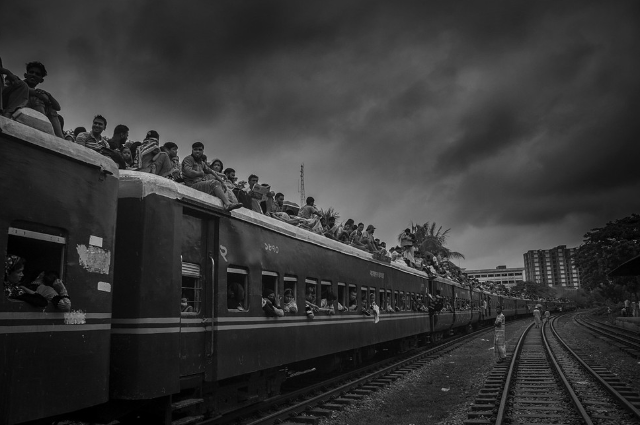
Image by Hasan Mahamud from Pixabay
A Question We Keep Asking
When we see pictures or videos of clean roads, smooth traffic, and systems that just work in other countries, many of us end up asking the same question: why not here in India?
At first, it feels complicated. We blame governance, policies, our huge population, or poor infrastructure. But if we are honest with ourselves, part of the answer is not outside us at all. It sits in a daily contradiction we all live with.
We know the problems very well. We discuss them, analyse them, and back them up with facts and numbers. Still, we continue to live as if these things are just normal. That gap between what we know and what we actually do is where the real problem begins.
When Awareness Turns Into Acceptance
India today is not unaware. People know about inequality, corruption, weak public systems, and lack of access to basic services. These issues are discussed openly in conversations, media, and online spaces.
But awareness alone does not change anything.
When awareness is not followed by action, it slowly turns into acceptance. We begin to say, “This is how things are,” or “nothing will change.” These words seem small, but they shape how we respond to reality.
Instead of questioning problems, we adjust to them.
A society does not stop growing overnight because of this. It simply slows down. Progress gets delayed, quietly and gradually.
When Awareness Becomes Personal
This is not just something I have read or heard. I have seen it up close.
Last year, my mother had to be admitted to a government hospital. What happened there still bothers me. She was lying on her bed in a crowded female ward when a cat suddenly attacked her. Yes, a cat inside the hospital ward. No one could really explain how it got there or why it was allowed.
The hospital staff first told us to take her outside for the rabies vaccine and even gave her a discharge. Then they changed their mind, accepted responsibility, and gave her the first dose themselves. The discharge paper listed dates for the next doses, but one of them was a Sunday with no explanation at all. We did not know what to follow. It left us quite confused and worried, especially since we were already stressed about her condition. Honestly, standing there in that crowded ward, you start wondering how basic things can go so wrong in a place meant to help people.
Something similar happened to me when I needed a rabies vaccine after a small scratch. Two different government hospitals gave completely different instructions about the number of doses and the schedule. There was no clear guidance, only confusion and adjustment.
These are not rare stories. They are the kind of thing many families go through. And the worrying part is not just that these problems exist, but that we slowly learn to live with them without questioning them enough.
The Reality of Unequal Systems
Public systems like healthcare are essential, especially for those who cannot afford private alternatives. Government hospitals carry a huge responsibility, and many of them work under pressure with limited resources.
At the same time, gaps remain. Overcrowding in busy wards, long delays at registration, consultation, diagnostics, and pharmacy, and a lack of coordination are still common in many government hospitals. A recent Public Accounts Committee (PAC) report, based on CAG audit findings, has highlighted high patient load, overcrowding, and service delays in Delhi government hospitals.
We know this. We talk about it. But most of the time, we move on.
There is concern, but it does not last. There is awareness, but it does not turn into sustained demand for change.
Normalising the Abnormal
This pattern can be seen in other areas, too.
These days, we hear people casually talk about black market LPG.
The fact that we even have this common term says something serious. It means an illegal system is running right next to the official one, despite efforts to regulate supply and distribution.
People depend on it. They pay more for essential services. And yet, it is treated as something routine. You hear people say it casually, like it’s just part of life these days.
If we think about it seriously, it raises uncomfortable questions. What happens if such systems grow? What happens to people who are already struggling?
These are not unrealistic concerns. They are natural outcomes of what already exists. Still, they are rarely treated with urgency.
The Psychology of Getting Used to Problems
When we keep seeing the same problems day after day, and nothing really changes, we slowly stop reacting the way we should. At first, we feel angry or frustrated. Then we start adjusting. After some time, it all becomes quiet. Things that should feel wrong start feeling normal. It creeps up slowly, almost without notice. One day, you realise you have stopped getting worked up about stuff that used to really upset you. And that quiet acceptance makes it much harder to push for any real change.
The Role of Distraction
At the same time, our attention is constantly pulled in different directions.
Social media is full of comparisons, debates, and opinions. People discuss development, infrastructure, and the future of the country. But the same platforms are also filled with content that adds no real value.
Hours are spent on screens, and as digital consumption rises, attention is constantly pulled away from issues that actually matter.
People react instantly, but forget just as quickly.
Earlier, television was criticised and termed as the ‘Idiot Box’ for reducing attention and thinking. Today, that distraction exists on a much larger scale.
It is not that people don’t care at all. Their minds just get pulled in too many directions too fast. You scroll for hours, react to something, and then move on. Before you know it, the real issue is forgotten.
Small Violations, Bigger Meaning
This mindset shows up even in everyday behaviour.
Sometimes on the road, I notice vehicles with official-looking signs on them, but they still break traffic rules openly, even though road safety remains a major public concern.
People notice it, but they move on. Sometimes these incidents appear in the news, but even then, the reaction does not last. Over time, we begin to see how unevenly rules are followed and enforced. This again reflects the same contradiction. Accepting this reality quietly will not lead us to the future we claim to want.
It may seem like a small thing, but it reflects something deeper. When rules are treated as optional by some, they slowly begin to feel optional for everyone.
How the Future Will See Us
Our understanding of importance often changes with time.
When we read about the past, we easily recognise what mattered. But when we live in the present, repeated exposure makes serious issues feel ordinary.
Years later, people may look back at this time and ask how certain problems continued for so long without strong resistance. The difference between how we see things now and how they will be seen later depends on what we choose to ignore today.
The Illusion of Wanting Growth
Almost everyone agrees that we want progress. We want better systems, better living conditions, and a stronger future. But real growth is not just about wanting. It requires discipline, focus, and the willingness to face uncomfortable truths.
This is where the contradiction appears again. We say we want change, but we rarely stay with a problem long enough to change it. We talk about improvement, but we continue habits that delay it. At some point, we have to ask ourselves a tough question: Do we actually want real change, or do we just like talking about it?
The Path Forward Is Not Easy
There is no simple solution.
When problems become deep and widespread, fixing them takes time and effort. The barriers to growth are not caused by one single factor. They are connected to behaviour, systems, and mindset.
But difficulty does not mean impossibility. The first step is clarity. We need to focus on what actually matters instead of getting lost in distractions.
The second step is direction. Progress requires consistency, not occasional concern.
The third step is personal responsibility. Change at a larger level begins with individual choices. Most importantly, refuse to accept problems as permanent. Speak up, take action, and demand better. Change starts when we decide to no longer be silent bystanders.
Conclusion: The Cost of Silent Acceptance
A society does not fail in one moment. It delays itself slowly. The contradiction we live with is clear. We recognise problems, yet we allow them to continue. We want progress, yet we tolerate the conditions that hold us back.
Real change begins only when we choose to confront this contradiction and take action, no matter how small.
The question is not only "why not India?" The real question is how long we will keep knowing the answer and still decide to do nothing about it.