
It begins like any ordinary moment, as one starts scrolling through a social media feed after a long day. Within seconds, the screen fills with videos: an AI-generated clip of “evolved birds” behaving like humans, a dramatic but illogical story narrated with emotional intensity, and thousands, sometimes millions, of views, likes, and shares attached to it. The content may seem illogical, yet it spreads rapidly. Meanwhile, a well-researched article, a meaningful discussion, or an educational video struggles to reach even a fraction of that audience.
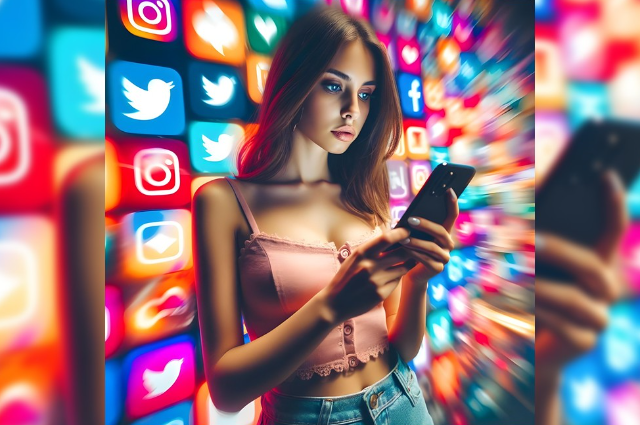
Image by myshoun from Pixabay
This contrast is no longer surprising; it is becoming the norm.
In today’s digital ecosystem, visibility often outweighs value. The race is no longer about how much one knows or what one can do. It is about how many people one can reach. Search engine optimisation, trending formats, algorithm-friendly content, and viral potential have begun to overshadow genuine skills, knowledge, and critical thinking.
This shift raises a fundamental and uncomfortable question: What happens when a generation begins to value visibility more than capability?
Social media, once a tool for connection and information, is now shaping how individuals think, learn, and prepare for the future. It influences not just what we consume, but what we ignore. It determines what becomes important and what fades into obscurity. As this dependence deepens, the consequences extend far beyond entertainment; they begin to affect awareness, decision-making, employability, and societal resilience.
This article examines a growing yet often overlooked reality: how the obsession with reach, the narrowing of information through algorithms, and the dependency on digital platforms are quietly redefining priorities, limiting awareness, and potentially weakening the preparedness of an entire generation.
The Obsession with Reach Over Real Skills
In earlier times, skill and knowledge were considered primary indicators of competence. Today, however, a different metric has taken centre stage, which is termed ‘reach’. The number of followers, likes, shares, and views has become a perceived measure of success. Content is often created not to inform or educate, but to attract attention.
This shift has subtly altered priorities. Individuals increasingly focus on what works for the algorithm rather than what contributes to meaningful growth. Search engine optimisation techniques, trending keywords, and engagement strategies are often given more importance than actual expertise in a subject. As a result, content that is optimised for visibility frequently outperforms content that is rich in knowledge but lacks algorithmic appeal.
The rise of AI-generated content further amplifies this trend. Automated tools can now produce videos, stories, and narratives at scale, often without logical coherence or factual accuracy. Yet, because they are designed to capture attention quickly, they perform well on platforms. This creates an environment where content quantity increases while quality becomes inconsistent.
Over time, this dynamic begins to influence individual behaviour. People may start prioritising quick gains, viral moments, short-term visibility, and instant recognition over long-term skill development. The effort required to build expertise in a field appears less rewarding compared to the immediate gratification of online engagement.
This does not imply that social media success lacks value. Rather, it highlights a growing imbalance. When attention becomes the primary currency, excellence risks becoming secondary. The danger lies not in the presence of digital platforms, but in the gradual redefinition of what is considered meaningful achievement.
In such a system, the focus shifts from learning deeply to appearing relevant. And this shift, though subtle, carries long-term consequences.
Trapped in the Algorithm: The Echo Chamber Effect
One of the most significant yet under-discussed consequences of social media usage is the creation of echo chambers. These are environments where individuals are repeatedly exposed to similar types of content, reinforcing existing interests while limiting exposure to diverse perspectives.
The mechanism behind this is simple. Social media platforms are designed to maximise user engagement. To achieve this, algorithms analyse user behaviour, such as what one watches, likes, shares, or comments on, and then curate content accordingly. If a person spends time watching videos related to a specific genre, such as technology, entertainment, finance, or even a particular type of storytelling, the platform responds by showing more of the same.
At first glance, this seems efficient. It provides users with content aligned with their interests. However, over time, it creates a narrowing effect. Important information outside this chosen or reinforced domain may never reach the user. News of critical events, policy changes, economic developments, or even opportunities may appear late, in distorted forms, or not at all.
This selective exposure leads to a fragmented understanding of reality. Individuals may feel informed, yet their knowledge remains confined within a limited scope. They become highly aware of certain topics while remaining unaware of others that may be equally or more important.
Furthermore, information that does reach the user is not always neutral. It may be influenced by trends, biases, or engagement strategies. This increases the risk of encountering manipulated or incomplete narratives. Without exposure to diverse sources, it becomes difficult to verify or challenge such information.
An additional challenge lies in the practical impossibility of covering all genres of knowledge through a single platform. No algorithm can present every relevant piece of information to every user. Prioritisation is inevitable, and this prioritisation is often driven by engagement metrics rather than societal importance.
The result is a subtle form of isolation which is not physical, but informational. Individuals may remain connected to a vast digital network, yet disconnected from broader realities. Over time, this can lead to reduced awareness, limited perspective, and an inability to respond effectively to situations outside one’s immediate area of interest.
What remains unseen, in such cases, becomes more critical than what is seen.
Social Media as Life Infrastructure
Social media has evolved beyond its original purpose. It is no longer just a platform for communication or entertainment; it has become an integral part of daily life. For many, it serves as a primary source of news, a medium for learning, a marketplace for jobs, and even a source of income.
This integration has created a new form of dependency.
Individuals rely on social media to stay updated with current events, often replacing traditional news sources. Job opportunities are frequently discovered through online platforms, and many people depend on digital content creation as a livelihood. Educational content, tutorials, and skill-based videos are also consumed extensively through these channels.
While these developments have increased accessibility and opportunities, they have also introduced new vulnerabilities. The systems that support these activities are not controlled by users. They are governed by platform policies, algorithms, and corporate decisions.
This raises an important question: What happens if these systems change?
Platform algorithms are constantly evolving. Content that performs well today may not perform the same way tomorrow. Monetisation policies can shift, reducing or eliminating income streams for creators. Entire accounts can be suspended or banned, sometimes without a clear explanation. In extreme cases, platforms themselves may face restrictions or disruptions.
For individuals who have built their primary source of income or information around such platforms, these changes can have immediate and significant consequences. The lack of control over these systems makes long-term stability uncertain.
This does not diminish the opportunities provided by social media. Instead, it highlights the importance of balance. When a system that is inherently dynamic and externally controlled becomes the foundation of one’s livelihood or knowledge, the risks must be acknowledged.
Dependency without diversification can lead to fragility.
Fake Jobs, Misinformation, and Growing Vulnerability
The increasing reliance on social media for information and opportunities has also created an environment where misinformation and fraudulent activities can thrive. Among the most concerning manifestations of this is the rise of fake job postings and employment scams.
Social media platforms, with their vast reach and rapid dissemination capabilities, provide an ideal medium for such activities. Fraudulent job offers, misleading advertisements, and deceptive recruitment messages can spread quickly, often appearing legitimate to unsuspecting users.
Individuals who rely heavily on these platforms for job searches may find it difficult to distinguish between genuine opportunities and scams. This challenge is further compounded by the lack of verification mechanisms and the speed at which content is consumed and shared.
The problem is not limited to job scams. Misinformation in various forms, such as health-related, financial, political, or social, can influence decisions and behaviours. When users operate within echo chambers, as discussed earlier, their ability to critically evaluate such information may be reduced.
A lack of exposure to diverse sources and limited real-world knowledge can increase susceptibility to manipulation. This creates a situation where individuals are not only misinformed but also unaware of the extent of their vulnerability.
In this context, digital ignorance becomes a significant concern. It is not merely the absence of knowledge, but the presence of misleading or incomplete information that shapes perception. As reliance on social media increases, the ability to verify, question, and critically analyse information becomes essential.
Without these skills, the risks associated with misinformation and fraud are likely to grow.
In an era where headlines frequently report data breaches, large-scale hacking incidents, and the rapid spread of fake news, the reliability of social media platforms becomes a critical concern. Despite these risks, a significant portion of the population continues to depend heavily on these platforms for information, employment opportunities, and even financial decisions. This creates a paradox, that is, systems inherently vulnerable and often unverified are being treated as primary sources of truth. The absence of robust verification mechanisms and the speed at which information spreads make it difficult to distinguish between authenticity and manipulation. As a result, dependence on such platforms without critical evaluation increases the risk of misinformation, financial loss, and misguided decision-making.
Global Contrast: A Question of Priorities
While social media usage is a global phenomenon, the way societies respond to it varies. Many countries are actively investing in future-oriented skills, including technology, research, innovation, and vocational training. Educational systems are being adapted to prepare individuals for evolving economic and technological landscapes.
In contrast, there are growing concerns that excessive focus on social media consumption may divert attention from these priorities. When significant time and energy are directed toward entertainment-driven content or short-term digital engagement, the development of long-term skills may be affected.
This is not a matter of comparison for the sake of criticism, but an observation of differing priorities. The global landscape is becoming increasingly competitive. Skills such as critical thinking, adaptability, and technical expertise are gaining importance.
In such an environment, the balance between digital engagement and skill development becomes crucial. Social media can be a valuable tool for learning and growth, but its effectiveness depends on how it is used.
The challenge lies in ensuring that digital platforms complement, rather than replace, meaningful learning and development.
The Coming Crisis Scenario
To understand the potential implications of current trends, it is useful to consider a hypothetical yet realistic scenario.
Imagine a situation where economic conditions become challenging. Job opportunities decrease, competition increases, and financial stability becomes uncertain. At the same time, social media platforms change, such as monetisation policy shifts, algorithms reducing visibility, or certain types of content losing relevance.
In such a scenario, individuals who have relied primarily on these platforms for income or information may face sudden disruption. Without sufficient real-world skills or alternative sources of knowledge, adapting to these changes may become difficult.
The transition from a digital-dependent environment to a more traditional or skill-based system can be challenging, especially if preparation has been limited. The gap between perceived capability and actual skill may become evident.
This scenario is not inevitable, but it is possible. It underscores the importance of preparedness and diversification. Relying on a single system, particularly one that is constantly evolving, can create vulnerabilities.
Resilience, in this context, depends on the ability to adapt, learn, and apply skills beyond the digital space.
Rebuilding Balance in a Digital Age
Addressing these challenges requires a balanced and multi-level approach.
At an individual level, there is a need to prioritise skill development alongside digital engagement. This includes building expertise in chosen fields, developing critical thinking abilities, and diversifying sources of information. Social media can be used as a tool for learning, but it should not be the sole source of knowledge.
At the educational level, institutions can play a role in integrating digital literacy with practical skills. Teaching students how to evaluate information, identify misinformation, and use digital platforms effectively can enhance their preparedness.
At a societal level, awareness campaigns and policy measures can help address issues such as fake job postings and misinformation. Encouraging responsible use of digital platforms and promoting skill-based growth can contribute to a more balanced ecosystem.
The goal is not to reduce the use of social media, but to use it more effectively. By aligning digital engagement with real-world development, it is possible to harness the benefits of technology while minimising its risks.
Conclusion
Social media has transformed the way individuals connect, learn, and engage with the world. It has created opportunities that were unimaginable a few decades ago. However, like any powerful tool, its impact depends on how it is used.
The growing emphasis on reach, the narrowing of information through algorithms, and the increasing dependency on digital platforms raise important questions about the future. These trends, if left unexamined, have the potential to influence not just individual lives but broader societal dynamics.
The challenge lies in maintaining balance. Visibility should not replace capability. Engagement should not overshadow understanding. Convenience should not compromise awareness.
As individuals and as a society, it is essential to reflect on current practices and consider their long-term implications. The decisions made today regarding how time is spent, what is prioritised, and how information is consumed will shape the future.
At a time when digital platforms themselves are not entirely immune to manipulation, hacking, and misinformation, blind dependence on them raises deeper concerns about reliability and long-term security.
If the focus remains solely on scrolling, reacting, and engaging without direction, there is a risk of missing opportunities for growth and preparedness.
In a rapidly changing world, the ability to adapt, learn, and think critically remains invaluable. Social media can support this journey, but it cannot replace it.
The question, therefore, is not whether we use social media, but how we choose to use it. And in that choice lies the difference between passive consumption and purposeful progress.