
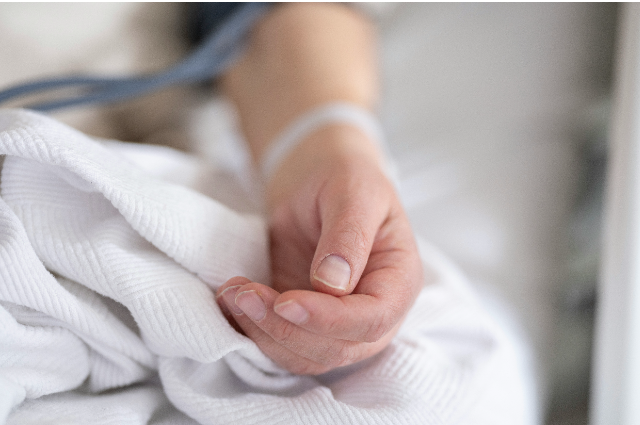
Imagine waking up after decades, only to not feel your own limbs and torso. Quadriplegia traps one in their own body with no doors to break down, just walls high enough to make you belittle what is left of you.
Harish Rana was a student of Panjab University when his life changed in 2013. He fell from the fourth floor of a paying guest accommodation and suffered extreme injuries. The accident resulted in a diffuse axonal injury. He suffered from quadriplegia and 100 per cent disability. He was put under Clinically Assisted Nutrition and Hydration (CANH) treatment. This became his primary form of consumption of food and hydration through a Percutaneous Endoscopic Gastrostomy Tube (PEG). Rana exhibited sleep-wake cycles but no sign of interaction.
In other words, his life was shut down indefinitely. His heart was beating, but he was not "living". "Living" is a set of subsequent experiences, and for 13 further years, he had no experience. He was confined to a bed but shackled to helplessness.
Euthanasia was not legalised in India until 2018. Cases reached the Supreme Court, and the ‘natural’ way of life and death was still superior to giving someone the peace they deserved after a horrid fate that struck them.
Aruna Shanbaug v. Union of India (2011) was such an instance. Shanbaug, a nurse at Mumbai’s KEM Hospital, remained in a vegetative state for decades after a sexual assault. She passed away in 2015 after 42 years of horrifying existence. Her death caused a significant surge on the internet. Many felt that she "should have been allowed to go much earlier". Most Twitter users also agree that the absence of the "right to die" in India's legal system compounded her misery. Though the court refused euthanasia in her case, it recognised passive euthanasia under strict safeguards.
The law evolved further in Common Cause v. Union of India (2018), when a Constitution Bench ruled that the right to die with dignity is part of Article 21 and allowed living wills. The court finally legalised passive euthanasia through living wills, where people allowed it before something bad got to them.
Rana was barely an adult. Why would he have made a living will when he had barely lived? He did not have a living will and could not consent to being taken off life support as he was in a coma.
Rana's parents first approached the Delhi High Court in 2024 seeking passive euthanasia for their son, but their plea was rejected. The reason being — Rana had not been placed on life-support machines at the time, and therefore he was, as the court noted, "able to sustain himself without any external aid". The Supreme Court was not of much help either at first.
In 2025, when Rana's condition worsened and he was put on artificial support, the Supreme Court decided to reconsider. According to the law governing living wills in India, two medical boards must certify that a patient meets the criteria for their life support to be withdrawn; and so they did.
Both boards said that Rana had a negligible chance of recovering and living a normal life. He required external support for feeding, bladder and bowel movements. He had permanent brain damage and had suffered huge bed sores. Even if he miraculously awakened, his eyes' vision would not fix the vision he had in his mind 13 years ago for his future self.
On 11 March, the Supreme Court noted that Rana was not responding to treatment and asked the medical boards to "exercise [their] clinical judgement" in the matter. He was then moved from his house to the palliative care unit at AIIMS, where he died.
The judgment was hopeful, yet hopeless for the family. They were tired of watching their son suffer, while putting an end to his suffering meant never seeing his face again. Brave Hearts fought for their son's right to die. The family referred to it as "dignity in death" instead of "passive euthanasia". The Supreme Court, in its judgment, too, mentioned the replacement of "passive euthanasia" with the term "withdrawing or withholding of medical treatment".
Indeed, people survive deep comas and traumas. But life is not a fairytale. They do not wake up like Snow White joyously with no scars or distress. We have coma survival rate statistics, did we ever think of maintaining survival happiness rates? Statistics show numbers, not emotions. For some people, life is a whirlwind; for those in a deep coma, it is still like an airtight box preventing any flow.
India's Right to Die existed for eight years before anyone actually used it. Life is precious enough to try to save; euthanasia should never become common, but it is definitely not as precious as the pieces of a severely broken person’s soul needing solace, not help. We have to understand that using the Right to Die was not unplugging someone's life but detaching them from the barely intact wire that would have short-circuited. Perhaps, if renaissance is real, in another life those people will become what they could not in this one — happier.
References:
- https://www.bbc.com
- https://www.bbc.com
- https://www.thehindu.com
- https://www.brut.media
- https://timesofindia.indiatimes.com