
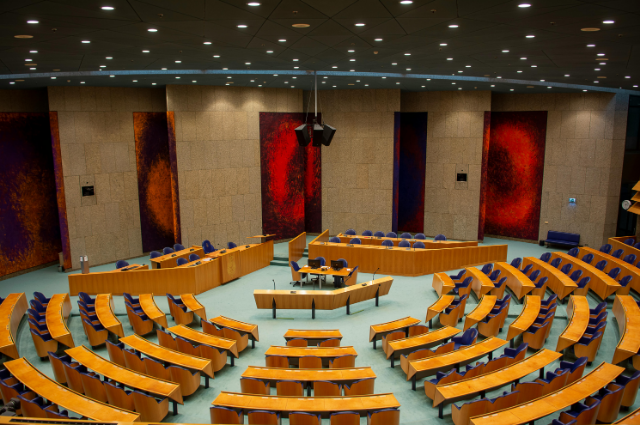
Bharatiya Janata Party came into power on 26th May, 2014. In December 2014, the representation of women in the Lok Sabha was 12.0%. Interestingly, when the data was recalculated in 2016, it had dropped to 11.8%. The highest percentage for representation of women in the Lok Sabha was 15.2% in 2023. Is that what we are calling equality nowadays – a slight increase in the already unequal margins? Then again, interestingly, in December 2025, it again reduced to 13.8%.
With the national literacy rates rising to 80.9% for persons aged seven and above, progress has been made. For every 100 literate men, there are still only approximately 87 literate women. Diving deeper into the data, one can only wonder, “PROGRESS HAS BEEN MADE TO WHAT EXTENT?”
There never even existed a “Men’s Right to Vote” in 1937, whereas the “Women’s Right to Vote” was restricted to literacy, income and taxpaying. Finally, in 1950, the restrictions were lifted. That is not women's upliftment; the need to authorise female citizens’ rights is a concept beyond fractured. According to the latest data, there is roughly 1 woman for every 7 MPs. The Parliament is male-dominated; it must rather be intellect-dominated, clearly, as a rape victim’s mother has to contest in the West Bengal Elections to procure justice. Ratna Debnath, a candidate for Prime Minister Narendra Modi’s party, is campaigning on women’s safety in an Indian state election. When the men in power do not use it as it ought to be, women have to take it into their own hands. The world is realising how powerful they are, with or without a position.
In 2023, post the passage of the women’s reservation bill by the Lok Sabha, Prime Minister Narendra Modi said that he was “delighted” about it. He thanked all the MPs who voted in support of the legislation. Calling the ‘Nari Shakti Vandan Adhiniyam’ a “historic legislation”, PM Modi said, “It will boost women empowerment”. Will the government boost women's empowerment with a series of delays?
In the same year, speaking to the media, Congress leader Shashi Tharoor said, “It is good that the bill got passed, but we have concerns; it is a bit of a ‘jhumla’ because of reference to delimitation and census…neither of them has been scheduled, which makes it very unclear when the bill will actually be implemented.” He knew it, we knew it, now we see uncertainty take charge of reality.
The Constitution (131st Amendment) Bill, 2026, failed to secure the two-thirds majority required for a constitutional amendment. 298 members voted in its favour, and 230 against, the Bill needed 352 votes — two-thirds of the 528 present and voting — to pass. Despite more MPs in favour of it, it could not meet the required quota. The government subsequently shelved the companion Delimitation Bill and the Union Territories Laws (Amendment) Bill, saying they could not be viewed in isolation.
It was not about women’s reservation rights anymore; it was a political sham. Almost everyone agreed that reserving 33% seats for women in the Parliament was a good thing. But how can something be good for the citizens in the eyes of politicians when it does not, in any way, benefit them? The Bharatiya Janata Party’s move of bringing delimitation laws into the picture demanded a crucial change, one that needed more discussion than simply an attempt to pass it along with a genuine cause.
BJP planned to carry out women’s reservation by implementing delimitation. Redrawing constituencies, that too based on the 2011 census, when the new census is in process, seemed suspicious. The fact that if the bill hadn’t been rejected, seat distribution could have been inaccurate and unfair deepens the suspicion.
Also, increasing Lok Sabha seats would weaken the Rajya Sabha, Central government would ultimately get more control over the country. Not to forget the fact that despite having a lower number of seats as compared to the Lok Sabha, the Rajya Sabha has a greater representation of women.
Increasing the number of Lok Sabha seats behind the veil of protecting the current MPs’ positions would have caused internal conflict and chaos. North India is more populated than the Southern part. BJP receives more support from the North, what an engineered coincidence! A seemingly simple reform that not only would break the country into two pieces owing to regional tensions, but also satisfy the prevailing government.
Despite all the talk, there was not even a mention of a quota for the OBC (Other Backwards Class) women. The country is already as far as it could be from women’s proper representation, and now concerns are being raised regarding the socially unequal treatment. As much as the Reservations Act deserves to be passed without unnecessary laws being forcefully moulded into it, the government keeps making it a spectacle of more injustice to protect its own interests.
Congress leaders are slamming the BJP and its allies for denying accountability by accusing the opposition of impeding the enforcement of the Bill. BJP seems to have a victim complex, entangling the public in its diversionary tactics.
References:
- https://data.ipu.org
- https://timesofindia.indiatimes.com
- https://data.ipu.org
- https://www.nytimes.com
- https://www.thehindu.com
- https://timesofindia.indiatimes.com