
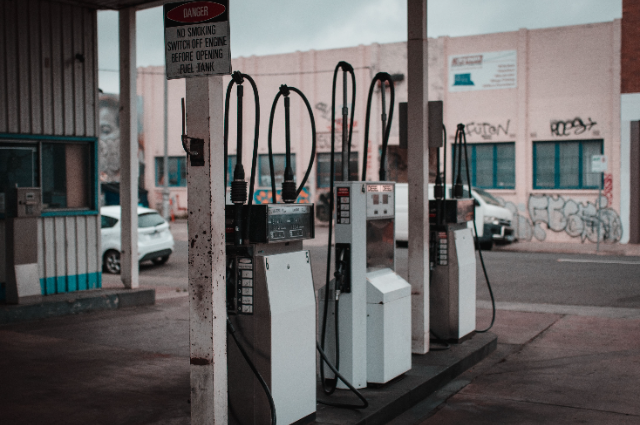
Nitin Gadkari, the Minister of Road Transport and Highways of India, signed rules recognising 100% ethanol fuel on June 12, 2026. It enables vehicles designed for high-ethanol blends to operate legally in India. Maruti Suzuki, Toyota, Hyundai and Hero MotoCorp have already announced the launch of flex-fuel models, with early rollouts targeting both cars and two-wheelers.
Since then, the Government of India has been finalising E100 fuel pricing with a proposed 15-20% discount to petrol. Based on Delhi’s current petrol price of ₹102.12 per litre, E100 could be priced in the range of ₹82-87 per litre. To the untrained eye, it seems like a great deal compared to petrol prices. But ethanol at such discounts would not be cost-efficient; it is a pricing trap. To understand this, let’s break down the components of E100:
E100 is not 100% pure ethanol; the name is slightly deceptive. It is 93–95% ethanol mixed with 5–7% petrol and other solvents.
Ethanol is procured from sugarcane and grain, providing additional income opportunities for farmers. Being produced domestically in India, it helps reduce dependence on imported crude oil amidst war tensions. It produces lower tailpipe emissions of CO₂, CO, NOx and unburned hydrocarbons compared to petrol. With an octane rating of 100–110 RON, E100 supports better engine tuning and can improve performance.
While India’s distilleries currently have spare production capacity, making increased ethanol use feasible, its many advantages remain highly dependent on its pricing. It can reduce per-kilometre fuel costs by 25–35% if competitively priced.
The concern that the government may be turning it into a pricing trap arises from the fact that ethanol has less energy per litre than petrol. The mileage loss is roughly 27–30% fewer kilometres per litre when we compare it with petrol. In simple words, if your current petrol car delivers 20 km/litre, the same car on E100 would deliver roughly 14–15 km/litre.
The proposed discount by the Government is significantly lower than the incentive available in Brazil, the world’s most mature flex-fuel vehicle market and the only country where E100 is used widely at scale.
In Brazil, hydrous ethanol currently sells at an average price of about BRL 4.27 (around ₹81) per litre compared with petrol at BRL 6.62 (around ₹126) per litre. This translates into an ethanol-to-petrol price ratio of roughly 64.5 per cent, giving motorists a much stronger economic incentive to choose ethanol. Brazilian consumers typically follow the “70% rule” — ethanol is considered financially appealing only when its price is 70 per cent or less of the petrol price.
Brazil’s pricing strategy has a lot to teach Indian policymakers. In early 2026, average petrol prices in many parts of the country were around R$6.30 per litre, while ethanol was selling for about R$4.10 per litre. That puts ethanol at roughly 65% of petrol’s price, making it the cheaper option despite lower fuel efficiency.
However, when ethanol prices rise to around R$4.70 per litre in Brazil while petrol remains at R$6.30 per litre, the ratio jumps to nearly 75%. At that point, many Brazilian motorists switch back to petrol because the lower fuel price is cost-effective but not cost-effective.
At current Brazilian prices, ethanol meets that threshold, making drivers bend towards it despite the lower mileage. As opposed to that, India’s proposed pricing would result in an ethanol-to-petrol price ratio of around 80-85 per cent, potentially making it economically less attractive for consumers. That is where the price trap enters like a silent imposter, making E100 cheaper than petrol enough to trick ignorant minds but not cheap enough to match the efficiency of the same quantity of petrol.
For Indian consumers, the lesson to be learned by Brazil’s economic decisions is significant. If petrol costs ₹102.12 per litre, ethanol would likely need to be priced at around ₹70 per litre or less for most flex-fuel vehicles to offer meaningful savings on a cost-per-kilometre basis. The same quantity of both fuels does not offer the same benefits; they differ by a large margin that can be subdued by effective price c.
Another lesson acquired from Brazil’s experience exhibits features of consumer psychology: it is built on the law of demand. The lower the price, the deeper the pit consumers will fall into.
Even if the government adapts the 70% Rule, lowered prices are not enough. The availability of enough fuel-flex vehicles and ethanol dispensing stations is equally essential.
The government is pushing people towards a fuel-flex car market that has not experienced a nationwide metamorphosis yet. India currently has only one commercially available flex-fuel car: the Maruti Suzuki WagonR Flex Fuel. It launched at Rs 7.24 Lakh, Rs 86,000 more expensive than the regular variant. It indeed is quite ironic how India has started to create a perception of cheaper fuel when the first step towards the transition — buying a flex-fuel vehicle — already comes at a higher price. The pricing trap, perhaps, begins way before consumers reach the limited number of existing ethanol fuel pumps.
References:
- https://businessconnectindia.in
- https://www.financialexpress.com
- https://www.msn.com
- https://www-businesstoday-in.cdn.ampproject.org
- https://www-businesstoday-in.cdn.ampproject.org
- https://www.cardekho.com