
The BJP protest march in Mumbai’s arterial Worli area was a spectacle of more than a single protest. The first one was ostensibly about the Women’s Reservation Bill. Thousands of women from across Maharashtra participated in the march in the scorching afternoon heat. The latter was a one-woman protest, standing up on behalf of numerous Mumbaikars stuck in traffic.
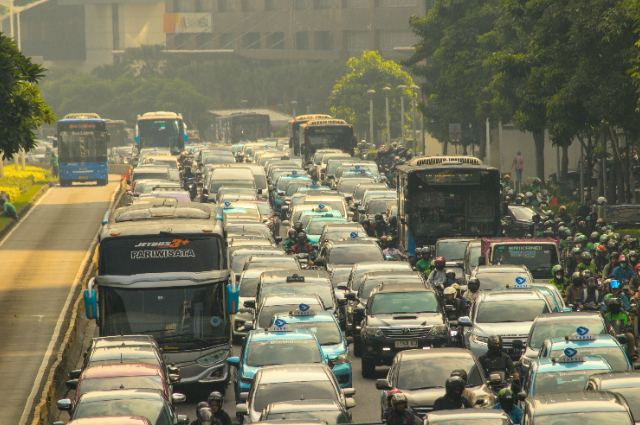
“Jan Aakrosh” rally, a march from Jamboori Maidan to NSCI Dome, aimed to protest against, among other issues, delays in implementing women’s reservation. The march was held during peak evening hours, which led to severe traffic congestion in the area. The cause was right to be pursued publicly, but the means were not supposed to be the busy roads in daylight. It disoriented the schedules of the citizens honking out of discontent.
Maharashtra minister Girish Mahajan was present and was interacting with the media along the route — his engagement with reporters contributed to a complete road blockade, worsening the situation.
Teena Choudhary, 50, a former television actress and a resident of Prabhadevi, is married to Bollywood director Robbie Grewal. She had left her daughter for a music class at 4 p.m. and was to pick her up at 4.45 p.m. “When I took a left turn, we got stuck in a jam. I was in my car for 25 minutes. When the traffic did not move, I got out to find out the problem,” she said.
She got out of her Mercedes-Benz to witness two buses that were parked and blocking the way. She went to every policeman for half an hour, but nobody reacted or responded. The plea of a mother who could not reach her child went unheard, along with several other pleas that reached the mind but not the tongue.
It was time for her to do something, something to attract the attention of the busy protestors, ignoring the hectic schedules of the people stuck in the traffic caused by them. Hence, she threw the plastic bottle on the ground, not at any person.
Finally, Girish Mahajan listened after a prolonged wait. “By then, the time was 6.15. I had no idea when I would be able to reach my child,” she said. On his instructions, the two buses were moved, and she was able to join the main road. The question arises, did they listen due to her high profile? Had it not been a renowned figure with a Mercedes-Benz but a commoner on a scooter, would the situation have been handled differently?
Two days later, a complaint was submitted at the Worli police station against Teena Choudhary. A law student, Zen Sadavarte, daughter of advocate Gunratna Sadavarte, filed the complaint claiming that during the protest regarding the Women's Reservation Bill and delimitation, an 'entitled woman' in a Mercedes-Benz car used abusive words like 'shut up, get out' and 'don't talk to me' against police officers who were performing their duties. She sought an FIR against the ‘entitled’ woman under various sections of the Bharatiya Nyay Samhita (BNS) for insulting police officials and public servants.
Her aggressive approach was criticised by the Minister later as well. He had called her aggression and usage of words inappropriate. While also apologising for the issue, he normalised the disruption of traffic. “Road will obviously get blocked,” Mr Mahajan had said, adding, “In every protest, people get inconvenienced. Highways are blocked. Traffic got blocked, but that does not mean you should speak in such unparliamentary language.”
The ultimate result? Mumbai Police clarified that no FIR was registered against her. It is difficult not to wonder why. In a city where ordinary citizens face severe legal consequences for arguing with police officials or politicians, registering an FIR was not considered in this case. The evident contrast does not aim to put different instances on a beam balance to measure which weighs more according to the constitution, but it certainly does raise a question: "Is the law really enforced uniformly upon all?"
When Teena Choudhary released a statement on social media, she mentioned, "A lot of you (public) said you want me to be your voice in such a situation. Why? Why should I be your voice? You have your own voice." But a common voice does not hold the power required to challenge authorities, especially not the way she did; it eventually backfires.
Raising one's voice does not necessarily accomplish objectives when the person speaking is not significant enough to be heard according to the societal hierarchy of this country. In India, superiority is ironically the mindset of those who are meant to be of 'service' to the citizens. They can rally all they want, hold people ignorantly hostage in their cars while they march around. A middle-class mother supposed to pick up her kid will surely not be heard when it took a woman's Mercedes-Benz and past celebrity status to finally be perceived, even if her distressed heart made her verbally express her dissatisfaction with the situation in a disorderly manner.
References:
- https://www.thehindu.com
- https://www.thehindu.com
- https://indianexpress.com
- https://timesofindia.indiatimes.com
- https://www.moneycontrol.com