
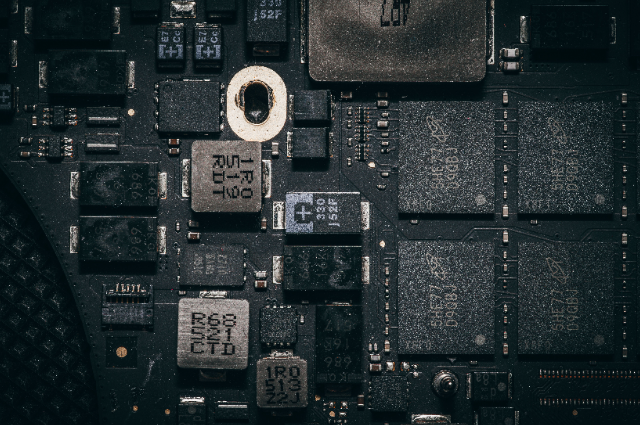
For the longest time, smartphone companies have competed to provide more technologically advanced phones at the lowest possible prices. But suddenly, in 2026, a ₹10,000 smartphone is becoming harder to manufacture without compromising on price, features, or profit. The most evident example of this situation is the Chinese tech giant Xiaomi.
For the longest time, Xiaomi has used comparative and provocative ambush marketing combined with value-driven positioning to challenge Apple.
In March 2025, Xiaomi mocked Apple in a parody that found its ultimate use on a day like April Fools' Day to poke fun at the whole concept of the iPhone 16 Pro Max. The Chinese tech giant advertised on the front page of the newspaper The Economic Times, wishing iPhone 16 users a "Happy April Fools' Day," especially those who thought the iPhone camera overpowered the newly released Xiaomi 15 Ultra.
The brand showcased its wit through the line: "Every day is April Fools' Day if you fell for it." So the message was clear: the cameras blow, and they are not afraid to say so. Xiaomi was not at all shy about taking jabs at Apple/iPhone's marketing, especially regarding the camera.
Before this event, when Xiaomi launched its 15 series in India, the company took the fun to another level by saying that the camera of the iPhone 16 Pro Max was "cute" and that users should "see through the right lens," a direct reference to the advanced camera features of the company developed with Leica.
Xiaomi has been known for its cheap smartphones that do not disappoint, but what happens when Xiaomi cannot live up to its brand positioning anymore?
As the memory supply shortage intensifies in 2026, the sales share of low-end smartphones is declining greatly, and the rate of decline is far exceeding the rate of contraction of the overall market.
The reason is an unexpected competitor: the Artificial Intelligence industry. As the demand for memory used in AI servers is surging, smartphone manufacturers are finding themselves spiralling towards the bottom of the priority list.
Xiaomi, built on affordability, is raising prices on 11 smartphones and tablets, with increases of up to ₹12400 in India, Japan and China. The Xiaomi price increase hits the 17T Pro and both POCO X8 Pro models hardest, after memory prices finally crossed what the company is capable of absorbing.
Xiaomi clarified after the recent hike: The recent cost increases have reached a level that is difficult for us to absorb through our own efforts alone, and we have been forced to revise prices on some existing products.
This situation is a result of memory manufacturers focusing on producing high-value-added products due to the surge in demand for High Bandwidth Memory (HBM) for AI servers. HBM is a type of ultra-fast computer memory used in high-performance processors. This is causing the supply of general-purpose memory for low-end phones to be relegated to a relatively lower priority.
The impact varies by brand. Emerging market brands that are heavily reliant on low-end lineups (such as Transsion and Xiaomi), are taking the biggest hit, whereas Samsung and Apple, with their premium portfolios, will experience rather less impact and are expected to receive indirect benefits.
For example, Samsung kept volumes steady in the first quarter and is expected by Counterpoint to register only a 4% decline in shipments over the full year, outperforming the wider market thanks to stable supply and a consistent product line-up.
In addition to the above, Samsung has boosted prices on its mid-range and budget offerings, which has depressed sales. Budget-conscious buyers are just holding onto their current devices longer, taking advantage of a recent shift toward longer update support. Samsung and Google now support phones for seven years. That’s on par with Apple’s support window. The company's stock recently hit an all-time high, following reports that it's leveraging the chip shortage to aggressively raise prices on its next-generation HBM4 chips by up to 30%.
But Transsion, which is heavily exposed to the market for smartphones priced below $150, is forecast to suffer a 32% drop in shipments this year. Rivals Xiaomi and Honour, meanwhile, are projected to post full-year declines of 28% and 16% respectively, Counterpoint said. In India, the sub-$100 smartphone market collapsed 59% year-on-year in Q1 2026. Surging memory prices triggered what analysts call a “forced premiumization” of the market.
Regions where low-end devices dominate are absorbing the deadly change. The Middle East and Africa are forecast to drop 23%. Central and Eastern Europe faces a 19% decline. Asia Pacific (excluding Japan and China) is down around 14%.
The memory shortage is expected to gradually ease starting from the end of 2027. However, before the recovery, the mid-to-low price range ($100-$249) may gradually fall. Consequently, the sales share of the high-end and premium segments is expected to expand. The chip shortage has made brands realise how suddenly the market can flip, affecting them adversely before they can even measure the magnitude of change.
References:
- https://memeburn.com
- https://www.reuters.com
- https://memeburn.com
- https://www.excellentpublicity.com
- https://tbreak.com