
On April 22, 2025, terrorists inflicted terror upon tourists in Pahalgam, Jammu and Kashmir. Pakistan-backed attackers stormed into a village with deafening gunfire to commit a horrifying act. They asked people about their religion and killed them. The assailants specifically segregated and killed male tourists from the Hindu community and reportedly told their surviving wives to “go and tell Modi”. This resulted in 26 deaths — 25 Indians and 1 Nepali.
They killed their husbands, attempting to wipe away the sindoor and its essence. They devastated their minds and forced them into misery, but they forgot one thing: the sindoor was not just a symbol of marital status but also of unending devotion. They were not just terrorists; they were agents of communal violence. When they could not break India from afar, they tried to plant the seeds of animosity within.
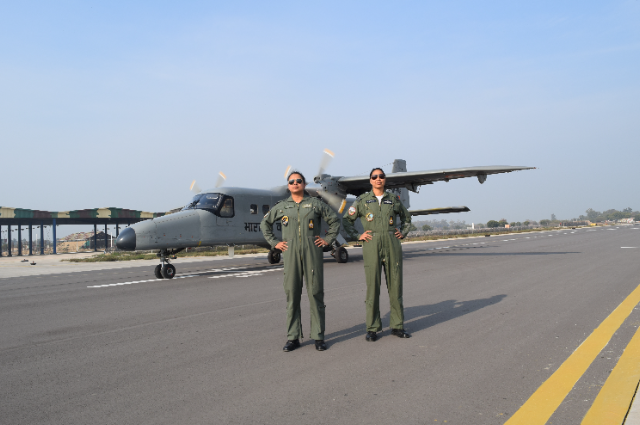
In response, India launched Operation SINDOOR to destroy the terror bases behind the attack. Colonel Sophia Qureshi, a highly decorated officer in the Indian Army’s Corps of Signals, and Wing Commander Vyomika Singh, a distinguished helicopter pilot in the Indian Air Force and a first-generation military officer, co-led the media briefing on Operation Sindoor following India’s retaliatory strikes.
The world has become so comfortable with patriarchy that it celebrates it. The two women addressed the media on May 7, 2025, but to date, their authoritative presence symbolises the growing role of women in India’s defence forces. They are not as secluded as they used to be because of their gender, but are celebrated for how far they have come. They are more than just leaders shaping strategic operations; they are a source of inspiration for Indian women.
Why do they have to be inspired because of their gender and not because of their role? The two women officers were clearly not cast as autonomous agents but as women briefing the nation about avenging those 26 victims, leaving their wives labelled as widows. It was not a reformatory change but a reflective one, centring them as an allegory of emotional eruption.
Colonel Sophia Qureshi made history as the first woman officer to lead an Indian Army contingent at a multinational military exercise, “Exercise Force 18,” held in Pune and involving 18 ASEAN Plus nations. She was also the only female contingent commander at the event. Her international experience includes service as a military observer in the United Nations Peacekeeping Mission in Congo in 2006. Since 2010, she has continued to contribute to peacekeeping operations. Domestically, she has been involved in counter-insurgency campaigns and flood relief operations, earning several commendations for her service.
Wing Commander Vyomika Singh, as a schoolgirl, dreamed of becoming a pilot in the 6th grade. But when she saw an employment news advertisement that said only unmarried male candidates could become pilots, she was disheartened. Yet, she persevered. In her final year of engineering, she discovered that women could join the IAF through the Short Service Commission via UPSC.
Her past reflects bits and pieces of the turmoil and discrimination faced by women in the Indian military. Yet, a briefing aimed at building an emotional connection with the daughters of India, representing retaliation for widows, deepened the existence of sexism. More importantly, when did such old information about them suddenly surface and gain applause? Most definitely when they briefed the press.
On March 24, 2026, it was found that the Annual Confidential Reports (ACRs) of Short Service Commission Women Officers (SSCWOs) were graded casually for years, without properly adjudging their suitability for career progression, affecting their overall comparative merit with their male counterparts.
“Since they (SSCWOs) had no scope for career progression, the assessing officers graded their ACRs casually and gave them lower scores. This assumption resulted in a casual approach towards assessment, with higher grades being informally reserved for male SSCOs who were eligible for permanent commission (PC) and for whom such grades would materially affect their prospects,” Chief Justice Surya Kant observed.
The Supreme Court said women officers were routinely assigned “average or middling scores”. “This phenomenon (low grading) came back to haunt the SSCWOs as they were subsequently and quite abruptly placed in competition for PC with their male counterparts, who did not undergo such hindrances in grading over the course of their decade-long service. It is, therefore, not surprising to us that the differential treatment meted out to officers with a future in the Army and those deemed to be without one has resulted in an unequal playing field,” Chief Justice Kant observed.
The Chief Justice agreed with the SSCWOs that they were neither incentivised nor recommended for various career-enhancing courses during their service. The result was a diminished service profile. The court found they were victims of “the silently acknowledged gender hierarchy” within the Armed Forces.
Yet here we are, praising the two honourable women, who did not even physically participate in Operation Sindoor, for enumerating its specifications in front of the media. They do deserve praise, but not for something orchestrated only to amplify the emotional relatedness felt by many women in India.
References:
- https://www.pib.gov.in
- https://timesofindia.indiatimes.com
- https://timesofindia-indiatimes-com.cdn.ampproject.org
- https://www-thehindu-com.cdn.ampproject.org