
Nowadays, when most people are busy installing Air Conditioners to combat the scorching heat, the story of the Eastgate Centre has sparked curiosity in the minds of those people.
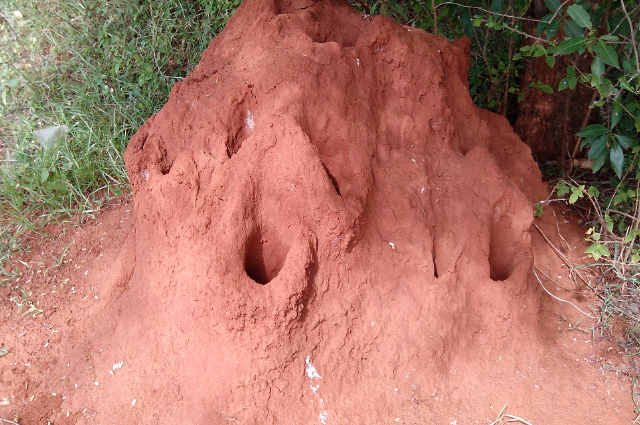
A termite mound is a huge, strong tower or hill made by termites. They use soil, mud, saliva, and their body waste to build it, and these structures act as a safe home & air vents for millions of insects living underground.
This Eastgate Centre in Harare, Zimbabwe, was designed by the Zimbabwean architect Mick Pearce in the year of 1990s and built by the engineers from the British firm Ove Arup & Partners, is a shopping and office complex that runs without any conventional air conditioning, which uses fuel and lots of energy. They got the idea of its cooling design from termite mounds, which naturally stay at a stable internal temperature through vents and chimneys that move air using the convection method. The building copies this with a network of chimneys and fans that pull in cool night air, then store it in the concrete structure and slowly release it throughout the day while pushing warm, stale air out through the roof. This passive system cuts ventilation energy use by around 90% compared to a typical building of the same size. This incredible building has made the Eastgate Centre one of the most popular real-world examples of biomimicry, which simply shows that ideas & designs inspired by nature can work better than traditional methods.
The materials that were used in the building construction have very high thermal capacity, which enables them to store & release the heat gained from the surrounding area. This 35$ million building saved around 10% of its initial costs by not using any traditional Air Conditioning system. It also helped keep the rents cheaper. The team members reduced the use of steel for the construction of the skyways, thus minimising the costs, and simultaneously it helped with easy maintenance.
In the Eastgate Centre, warm air is drawn through the brick chimneys on the roof and pulls cool night air at the bottom; the cool air is thus captured and then released in the building throughout the day.
The main advantages are reduced costs, energy savings, and passive cooling. This method can be used in any commercial and residential building. When a problem is very serious and urgent, thinking with logic and with a calm mind gives the best solution; in the case of Harare, Zimbabwe, the climate is such that it requires the buildings to stay cool all year round. So, naturally, the cost of purchase, the installation process and charges, and maintenance of the traditional air conditioning systems for a building there require huge long-term funds. It truly was a difficult situation, and the main challenge was to create a “self-reg” ventilation system that would keep the building temperature soothing and cool for the people and the workers, and when highly cooled, the Eastgate consumes around 35% less energy to maintain a similar temperature just like a conventionally cooled house. This whole system approximately saved them $3.5 million. This is the first-ever building in the world that uses a natural cooling method so nicely, and that too in an organised way.
Thus, they were inspired by the termites; there is no limit to the mind, and lessons can be learnt from even a small creature like termites, or even just from anything in the world!
Just by using the simplest materials, without any human help, a creature can do this. A creature did not use its brain for it, yet it still made an amazing and powerful temperature-controlled house for itself, just like a perfect architect.
Humans have now started to learn from nature, its creatures and insects. Though not as intelligent as humans, and tiny in size too, it teaches people how to think practically and decently; there is always a solution for every problem, without any side effects and with eco-friendly ingredients.
Nature always has a solution of its own. Of course, technology has improved, and Air Conditioning has become too popular among the people of the world, but it comes with a price too. Though Air Conditioners give temporary relief, AC is never an eco-friendly option. It has also been seen that using AC has become a regular practice in some places.
ACs contribute to global warming because of the increasing electricity demand, and many times, fossil fuels are used for this purpose. What Air Conditioners do is release heat outside, and that makes the surrounding environment hotter; they also release greenhouse gases. Old or damaged parts may even leak harmful chemicals, so the truth is, excessive usage of air conditioners is a serious problem for the environment and nature, instead of solving it.
References: