
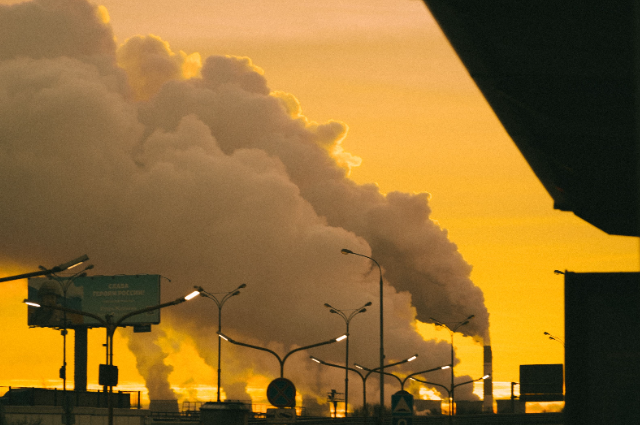
India ranked 176th out of 177 countries in the 2026 Environmental Performance Index (EPI), which was released by Yale & Columbia Universities, and it scored 22 out of 100, which makes it the second-lowest-ranked country in the world, with onsecond-lowest-rankedw India. On the other hand, Estonia secured the first position with a score of 74.79 out of 100, which directly shows Estonia’s responsible and strong performance in saving nature, environmental protection & sustainability. The report is published once every two years and assesses a country’s performance on 40 indicators under environmental health, climate and ecosystem vitality.
Still, India repeatedly rejects the fact that its rank has gone down so badly with severe consequences and claims that its methodology is faulty. The government also says that all these rankings are unscientific because they are solely dependent on assumptions and not on reality checks. According to them, the comparison of India with other countries is not appropriate, which means that the rich and industrial countries have been emitting large amounts of greenhouse gases for a long time, and India says that these have contributed much more to the global warming and climate change than the emissions of developing countries, and also India face different economic & environm, ental challengefacesile trying to grow. Though it is true, EPI measures current state performance, not the historical responsibility. Though India’s low score is mainly due to poor air quality, the excessive exposure to harmful air pollutants (like carbon monoxide & sulphur dioxide,e etc) – these are not just number on reports but real issues which are experienced by people on a regular basis. Specially not to forget theregularlyg in Especiallylluted rivers, extreme traffic jams on roads, poor traffic management system, plus floods in mega cities even with just a little rain, poor quality of waste management all are visible to the people. Too much dependence on coal and no appropriate protection system for the marine ecosystem are also serious issues. Indoor air pollution, fine dust particles, increase in the number of motor vehicles, many of which use air conditioning, which in turn contributes to higher emissions.
EPI’s 3 main stages:
- Environmental: Air quality, drinking water, heavy metal exposure & sanitation.
- Ecosystem Vitality: Forest cover, biodiversity, fisheries, habitat loss & also sustainable agriculture.
- Climate change mitigation: Greenhouse gases, projected emissions & decarbonisation trajectories.
Another concerning issue isthe 171st rank in Ecosystem Vitality; the main reason is forest degradation, loss of marine habitats and ultimately pressure on biodiversity.
Rapid urbanisation without any proper planning, execution without any long-term goal, most importantly large-scale
Infrastructure & continuous construction projects everywhere without any purpose, and nobody questions i,t shows the mentality or thinking pattern of people. They do not understand that all of these increase massive stress on the natural ecosystem.
All these can be solved, not difficult but with taking proper steps and the citizens have a responsibility too.
However, India performed bit better in climate policy, and it ranked 130th. Well, despite overall low ranking, India has a 10-year improvement score of +7.47, which is definitely better than some of the higher-ranked countries. Though the growth of pollution is slowing gradually, the pollution levels are still high. Yet the Indian government has repeatedly criticized the Environmental Performance Index. Itcriticised criticism in the 2022 EPI, when ranking 180th out of 180 countries.
If the current situation continues, the report warns that India will be among the four countries that will produce 50% of the world’s total greenhouse emissions by 2050; others include China, United States of America &along with people, being serious about nature and the environment was perhaps never a priority. On one side, people say save trees, protect trees! On the other hand, for various purposes, mostly for human convenience and people’s interest, thousands of trees are cut without thinking, without using minimum common sense. All know trees, especially hundreds-of-years-old trees, are valuable to nature anhundreds-of-years-oldduce g,lobal warming, reduce pollution but nobody actually practically apply those knowl, edge to save trees and forests.
People need fresh drinking water, but when it comes to saving that water, the river and not wasting water, nobody bothers. Currently, though large investments are made in wind and solar energy, coal still produces more than 70% of electricity. After considering all of the facts, improvement in the rank is still concerning.
People buy Air Conditioners to combat the heat, but again they are not aware of its side effects and long-term consequences. People are only finding some shortcut ways or alternatives, forgetting that there is no alternative to a peaceful, protected nature and environment. People still don’t understand that they can’t survive without nature; everything is connected to each other, and of course nature is the most powerful; can disagree!
References: