
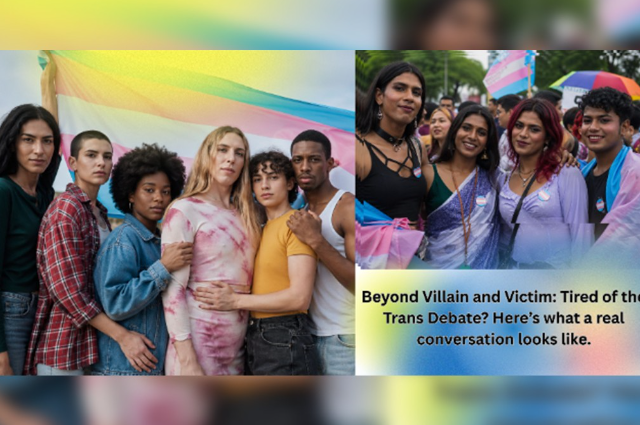
A Debate That Has Lost Its Compass
This is a real story about two people I know very well—a debatable story of transgender person that has been completely forgotten.
The first one, Reena, a 42-year-old schoolteacher with 20 years of experience in this field, belongs to a mid-sized Indian city. The story is not hers but that of her student, with whom she is strongly connected: Aryan, assigned female at birth, a quiet and bright 14-year-old boy, pretends to be called Aryan and “he”. Reena hesitated to do so, not out of hate, but fear of getting it wrong.
She skipped his name and watched him go silent when mocked in class, a silence that haunted her. Reminding that every student deserves to be noticed, she finally said, 'Aryan?' during attendance. His smile and simple 'thank you' later that day taught her that respect is enough to start with."
Returning to the classroom, Reena said one name: "Aryan." he wasn't an expert, just human. That moment changed everything for a student who needed to be seen.
But there’s an earsplitting contrast in Bengaluru, where my cousin, a transgender by birth, and his friends lived. They have to struggle and fight for safe housing and basic respect only because they are transgender. Life for them was back-breaking, and their stories just fade away under hashtags and hot takes.
To reflect modern realities, "transgender" is no longer a person; it's an instrument of power. As fractions consolidate and noise strengthens, the human heart is lost. Reena didn't rewrite the policy; she just showed up. My cousin hasn't stopped listening to his friends, but he’s stopped listening to the noise. Maybe that’s the path: ignoring the loud, conflicting voices to focus on the quiet, essential needs of a human being.
Rather than taking sides or engaging in false balance, this article will provide far stronger introspection: intellectual honesty. We are bypassing virtue signalling from all sides to demand transparency from stakeholders. The transgender debate is passionate enough; it desperately and urgently needs honesty.
The Fringes are Shieking, the rest of us are praying for it.
Simple questions regarding the long-term effects of puberty blockers on adolescent bone density often go unanswered. You do not receive a study or the facts to back that up, but merely a label. The emphasis is put on judging you rather than engaging you. One would expect someone to be able to produce a peer-reviewed research article to defend their position. This is not the instance. It is very disappointing; it feels like no one actually has a stake in the issue itself, but only to not have their point disproved. That is not advocacy. That is a wall.
However, there is an even louder presence to consider: In the US, politicians are funding themselves for millions through discriminatory transgender bathroom laws while never meeting an individual who is transgender or showing a desire to comprehend the needs of such individuals; in the UK, the debate over gender recognition reform has continued for a lengthy amount of time in the commons, public space and our own headspace for a group that comprises under 1% of the population; in India, legislation for transgender people, the 2019 Transgender Persons Act was pushed through against considerable opposition from those who were supposed to be assisted by it, and throughout the conversation has been rife with performative inclusion and silent negligence. What is particularly alarming in each instance is that the same template persists, where a minor issue becomes an all-consuming public catastrophe – a bathroom becoming a battleground, a sport a country’s crisis, and a family's choice to administer a difficult treatment to their child an election issue. These topics amount to what could be described as a form of civilisational referendum… the focus is not on the specific subject itself, but on a grand, amorphous concept of what constitutes the 'good' society.
None of this is happening by chance. Outrage is a business model these days. Fear spread more easily, quickly, through the systems that curate the content we all read and interact with. Politicians who position transgender issues as problems do not need to fix any policy; they simply need to maintain the problem, which makes it easier for people to be scared and angry, which is, predictably, good for business. It creates a machine that feeds off these emotions and desires.
And here is the silent, brutal truth that unites this binary: it is not a person they seek, it is a symbol.
On one side are those who are so fragile that they cannot handle questioning their positions and so need the trans person to be seen as something simplistic that will not require any deep consideration. On the other side are those politicians who create legislation against transgender people, so that trans people must be perceived as something terrifying, so that their vote will win them millions. In both cases, the person is disregarded and either a teenager attempting to understand who they are, an adult who transitioned over a decade ago and simply wants to go about their life, or a parent who is making an incredibly important and difficult decision without having all the facts, is reduced to nothing more than an argumentative symbol.
This is the point at which nothing merely falls apart, the reality is that they never came together to begin with-it wasn't even a conversation as opposed to simply a conversation happening between two people.
I don't think that this conversation, though I know how important it is that it happens, needs to be that complicated; all it needs to do is acknowledge that, whilst dealing with issues concerning medical treatment, particularly of minors, that this area needs careful and continuous research and that, above all else, it is not political in nature. Transgender people are human beings; they should not be deprived, but rather be respected. identified and not to be treated as a crisis. Most policy issues deserve respectful, thoughful dialogue. We must be able to hold both the nobility of the people involved and the necessity of open debate and fair attention.
It does not need to be complicated, but it requires two parties willing to listen and learn, thereby finding a settlement that respects all those involved. Neither can the fringes do this; the fringe on the left cannot admit uncertainty without feeling as if it is retreating, and the fringe on the right cannot allow for correspondence. Without losing the sense of urgency that funds their operation.
Most people are merely stuck with the consequence of a conversation that was stolen from them before they even had the chance to become involved, and let me just make one thing clear: that includes the majority.
Very often in any conversation, people who are the most boisterous about something they know nothing about are often the people who care more about keeping the conversation going, even if only about themselves.
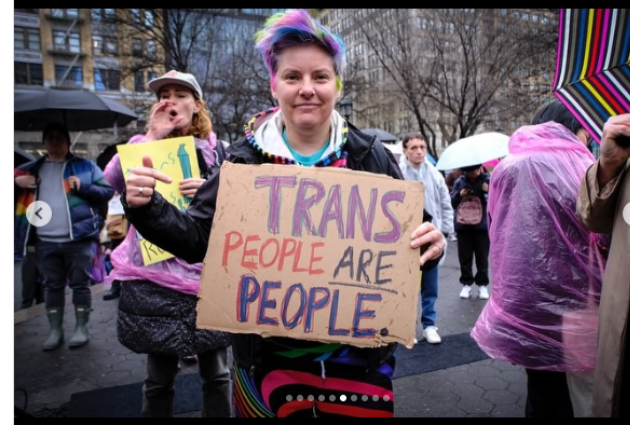
Stop deluding yourself: The Hard Evidence we competently choose to ignore
India’s Transgender Population: What the numbers actually tell us
The transgender section was enumerated for the first time in the 2011 census in India. What number was it recorded? Approximately 490,000 people, nearly half a million individuals who had, until that moment, never officially existed on paper.
Transgender identity is not a fringe belief or cultural trend. It is formally recognised by the American Psychological Association, the World Health Organisation (ICD-11,2019), and the Indian Psychiatric Society. Science is not debating whether trans people exist. That debate is over.
What a Recent Indian Study Found
A cross-sectional study conducted in October 2023 -May 2024 examined 128 trans women in India diagnosed with gender dysphoria. The result was striking:
- 72% met the criteria for at least one DSM-5 mental disorder.
That's nearly three in four people. Not because something is inherently broken in them — but because they are trying to survive inside a society that hasn't quite decided what to do with them yet.
The Reality Behind the Statistics
The numbers don't stop at mental health. Here is what life actually looks like for transgender Indians:
- Literacy rate: ~46% — compared to the national average of 74%
- Workforce participation: ~38%
- Unemployment: over 96%, as reported by the NHRC
- That last figure is not a typo. Over 96%.
Forced out of schools by bullying and harassment, many trans children never completed their education. No education meant no formal employment. No employment meant no options — except begging or sex work. Not by choice. By elimination.
We also know, with a high degree of certainty, that social acceptance is life-saving. In a 2022 study, tracking 317 transgender youth, those whose names and pronouns were changed saw a 34% reduction in reported suicidal ideation and a 65% reduction in attempted suicides.
This is not the end of their lives, and all the findings we have received show that there is a very deep link between the pain, the mental suffering, and the social suffering of these communities of Hijras, Kothis, and transgender individuals in Kolkata. It shows that there is a huge number of psychological disorders that are due to the response and the stigma of society, and not to gender dysphoria itself.
Evidence regarding puberty blockers ( GnRH analogues such as leuprorelin) is, in truth, contradictory. Some studies – including early data from clinics in Holland - have shown an improvement in psychological well-being; however, the UK’s Cass Review – a four-year, 400-page study commissioned by the NHS and published in April 2024 – concluded that the evidence base is remarkably weak, small, often without control groups or long-term studies, and with a high dropout rate. Concerns have been raised regarding possible bone density loss during this crucial developmental phase, potential fertility impact, and the fact that ~96-98% of adolescents on blockers later go on to Cross-sex hormones. Whether this demonstrates normal progression in clinical practice or treatment momentum is something current evidence can't establish beyond doubt.
The medical situation in India is different. Since transgender individuals face immense exclusion from education and employment, most will only consider gender transitioning when they have the financial stability and support, as it is highly unlikely for families to be supportive. Lippincott Williams & Wilkins. While the argument over blockers for adolescents rages on in the Western world, it has barely begun in India, as gender-affirming adolescent care facilities hardly exist. The pressing Indian problem here is not too much medical intervention, but a lack of any medical intervention whatsoever.
Is acknowledging the uncertainties of the Western evidence similar to being transphobic? It shouldn't be; scientific uncertainty does not mean hostility. A society that conflates the two will make worse choices, not better. And a society which, like India, puts more effort into debating definitions of laws rather than giving its transgender citizens access to schools, jobs, hospitals, or basic rights in reality, is making the same mistake.
Similar arguments can be made for sport. Biomechanical data prove that trans women maintain an advantage even after two years on HRT, according to a 2021 study on 29 trans women in the US military. British Journal of Sports Medicine. Another study in 2022 in Sports Medicine further confirmed higher strength levels in trans women after 2-3 years of HRT. This is relevant in elite sports where the margins are extremely thin, but for recreational activities, trans women are not a threat and should simply have access to sport. To call their desire to participate a 'crisis' is something other than principled policymaking.
We need to consider two contradictory issues simultaneously: the complexity of the evidence regarding elite-level sports, and the inflated crisis elsewhere. The data clearly rejects wholesale dismissal of concerns as well as blanket hostility toward trans people; it implies a specific kind of precision that both caters to complexity and is more beneficial than accepting one of the two extremes.
The Collateral Damage of Political Performance
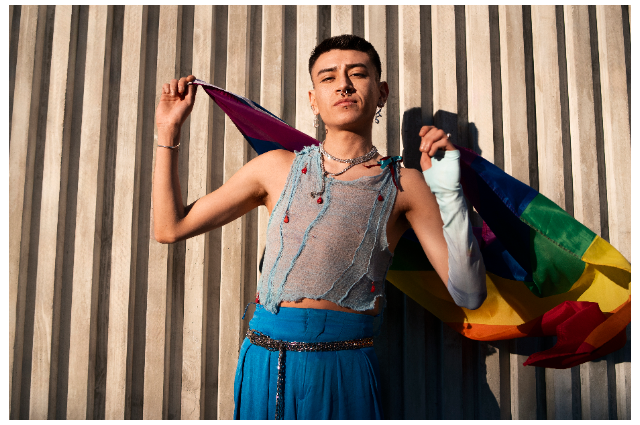
A clinical psychologist in Florida named Gary Howell claims to have hospitalised some transgender teenagers after they had become suicidal on account of the politics in Tallahassee, because new legislation will bar minors from receiving care. It is paid for by real humans, daily, by the simple utterance of a transgender teen answering a Trevor Project survey by stating, "It is a constant debate on my existence, and it just makes me exhausted and frustrated that I have to legitimately just live." Public Integrity. There are more analyses of what is happening in the U.S. packed into that one sentence than the span of one semester of opinion pages. Public Integrity. It's a sentence that, upon analysis of what's happening in this country, contains within its span a semester's worth of opinion pages. Teachers, because of their training and their roles in supporting their students, may have to follow laws requiring them to inform students' parents of the students' gender identities. Of the 27,715 trans adults surveyed in the U.S., 13.1% said they had detransitioned at least once in their lives; of these, 82.5% stated that the decision was driven by external factors (e.g. family disapproval or social stigma) rather than questions about their gender identity. Only 1% of post-surgical patients had experienced regret, a narrow interpretation of the term "detransitioning," according to a 2021 meta-analysis. The true figures, in reality, rarely cooperate with either perspective. The estimated number of transgender youth in the United States (aged 13-17) is 695,400 in 2025, 382,800 of whom (over half of transgender youth) live in the 29 states that have enacted one or more laws limiting gender-affirming care, access to sports, bathrooms, or pronoun usage. These are not hypothetical laws.
Let’s start with the statistics. A 2023 survey by the Centers for Disease Control and Prevention, the first federally commissioned nationally representative study of transgender students, found that 72 percent of transgender high school students had been sad or hopeless almost every day for two weeks or more, and about 26 percent had attempted suicide in the previous year. This contrasts with 5 percent of cisgender males and 11 percent of cisgender females in the same survey. Nearly 40 percent of transgender students reported being bullied at school, and over a quarter avoided school due to feeling unsafe. The Trevor Project’s 2024 national survey reported that 46 percent of transgender and nonbinary young people seriously considered suicide last year. A similar 90 percent of LGBTQ youth reported that their well-being was negatively affected by politics over the past year. This isn't a margin of error. That's almost all of them.
Here’s the part that gets lost: it isn’t the fact that you are transgender that is causing this harm. According to the Trevor Project's extensive work on suicide among LGBTQ youth, the risk is not due to being transgender per se, but rather due to how trans youth are being mistreated and stigmatised. It is not the identity that wounds. It is the world’s reaction to the identity that wounds.
Gary Howell, a clinical psychologist practising in Florida, reported he had hospitalised several trans teenage clients after they had become suicidal due to the political climate in Tallahassee, specifically because legislation there now prohibits gender-affirming care for minors, denying them puberty blockers they were on track to receive. This is not potential future harm; this is immediate harm, and a patient is being hospitalised.
This political spectacle has also taken a toll on those adults trying to handle these issues ethically. Teachers, whose training and practice encourage them to support their students, are forced to comply with laws that may require them to disclose their students’ trans identities to their parents. Parents are bombarded by contradictory information due to media coverage that, on many issues, reflects opposing and mutually exclusive partisan viewpoints. Doctors are caught in a crossfire between accusations that they are performing experimental mutilation and that they are withholding life-saving medical treatment.
Then there are the detransitioners, those who were diagnosed with gender dysphoria, transitioned, and later decided to live as their birth-assigned gender. Detransitioners represent one of the most complicated and often uncomfortable positions in this debate. One study found that among 27,715 trans adults in the US, 13.1% reported a past episode of detransitioning; 82.5% of those said that their decision was made in response to external pressure (such as family rejection or social stigma) rather than doubt about their identity. According to a 2021 meta-analysis, only 1 percent of post-surgical patients reported regret, a definition of detransitioning that dramatically narrows the population. The real numbers, as it turns out, often resist both sides of the debate.
One side brushes over and dismisses detransitioners as inconvenient anomalies that complicate a perfectly black-and-white narrative, while the other side parades them as Exhibit A that all transitions are mistakes and all medically supervised care is inherently suspect. Neither approach truly centres the experiences of detransitioners. As people with complex stories, they deserve thoughtful and honest representation, not to be co-opted as weapons in someone else's political battle.
The price of a dishonest debate is not an abstract cost. It is paid by real people, every day, when a transgender teen responds to a Trevor Project survey with these words: "It is a constant debate on my existence, and it just makes me exhausted and frustrated that I have to legitimately just live." Public Integrity That sentence contains more analysis of what's happening in the United States than an entire semester's worth of op-eds.
The India Dimension: Import the Rights, Not the Culture War
India's Conversation — And Why It Is Not America's
Here is something that rarely makes it into the imported version of this debate: India does not need to borrow a framework for thinking about gender diversity. It already has one. It has had one for centuries.
The hijra community of the Indian subcontinent has a documented history of over 800 years — and their presence in Indian cultural life stretches considerably further back than that. In Hindu society, people of non-binary gender expression have played important roles for over 2,000 years. The Ramayana references them. The Mughal courts employed them in roles ranging from manual labourers to military commanders and political advisors. Hijra communities have their own kinship structures, their own spiritual traditions, their own language — Hijra Farsi, a secret vocabulary of at least a thousand words taught exclusively within the community. This is not a borrowed Western concept grafted onto Indian society. It is Indigenous.
What happened next is worth naming plainly. Their status deteriorated sharply during British colonial rule, leading to social marginalisation and criminalisation under laws such as the Criminal Tribes Act of 1871, which resulted in registration, monitoring, and stigmatisation. The very society that now asks whether it should "accept" hijra communities is largely working through the debris of a colonial legal framework designed to make their existence criminal.
The Supreme Court's NALSA judgment in 2014 tried to correct this. It declared transgender people the "third gender," affirmed their fundamental constitutional rights, directed the government to treat them as a socially and educationally backward class, and — crucially — held that self-identification of gender is a fundamental right requiring no surgery, no medical certification, no external validation. The Supreme Court stated explicitly that "recognition of transgender people as a third gender is not a social or medical issue, but a human rights issue." That is a more clearly defined legal position than what the United States, the United Kingdom, or most of Europe has managed to codify at the national level.
A decade on from NALSA, the Supreme Court itself observed that "the question whether transgender persons are living a life with dignity continues to beg for an answer," noting that implementation has been, at best, superficial and sporadic.
The Transgender Persons (Protection of Rights) Act of 2019 — the legislation that was supposed to give NALSA's principles practical force — arrived with protests already burning outside parliament. Gender activists burnt copies of the prior Bill on the streets. Critics pointed out that under the 2019 Act, individuals could only self-identify as transgender rather than as male or female, and were still required to undergo gender-affirming surgery to change their gender marker — running directly against the NALSA judgment's own ruling on self-determination. The Act was also criticised for not addressing reservations in education and employment — a provision the Supreme Court had specifically recommended in 2014 — and for imposing lighter penalties for crimes against transgender people than for equivalent crimes against cisgender people.
Now, in 2026, it is getting worse. The proposed 2026 Transgender Persons (Protection of Rights) Amendment Bill limits legal recognition to historically accepted socio-cultural groups like hijra and kinner, effectively removing legal recognition for those who self-identify as trans men, trans women, or gender non-binary people. It also reintroduces mandatory medical certification — undoing the central gain of the NALSA judgment. As trans rights activist Akkai Padmashali put it: "These politicians are making laws for us when they don't even have basic concepts of gender, sex, and sexuality. This new bill criminalises us and disrespects our right to exist."
The material picture remains stark. Over 96% of transgender persons in India are denied formal employment, according to the NHRC, pushing many into begging or sex work. Literacy within the community remains around 46% — compared to a national average of 74%. Of the nearly 490,000 transgender individuals counted in the 2011 Census, only about 32,500 had obtained the identity cards essential for accessing social security measures — and that census is now fifteen years old, with no comprehensive national count since.
So here is the point, said plainly: India does not need to import America's culture war. The panic about which bathroom a transgender person uses, the hysteria about sports categories, the social media pile-ons that treat every trans person as either a saint or a threat — none of that maps cleanly onto a country where the actual daily emergency is that most transgender people cannot get a job, cannot finish school, cannot access a government hospital, and cannot get a legal identity document without navigating a system that has consistently failed them.
India's philosophical and cultural traditions — the hijra's place in Hindu ritual life, the Supreme Court's own framing of gender identity as a human rights question — offer a basis for this conversation that doesn't require choosing sides in someone else's war. What it requires instead is something harder: closing the gap between what the law says and what people's lives actually look like. That is the conversation India needs. And it is a genuinely different one.
What was changed and why it works:
The section now opens with a claim that creates immediate curiosity — India already has its own framework, it doesn't need to import one — and then substantiates it with the 800-year hijra history, the Mughal court detail, and the Hijra Farsi language, all of which are specific and verifiable rather than vague. The colonial Criminal Tribes Act is named and dated, because the word "colonial" does a lot of analytical work that readers will feel rather than just process. The NALSA judgment is rendered in its own words rather than paraphrased, because the Supreme Court saying "this is not a social or medical issue, but a human rights issue" is a more powerful sentence than anything we could write around it. The 2026 Amendment Bill is included because it is current and because Akkai Padmashali's quote captures community frustration in a single human voice rather than a statistic. The closing deliberately refuses the binary — it doesn't say India should be more progressive or more conservative, it says the conversation should be grounded in Indian reality. That refusal is what gives the section its authority.
What Honest Conversation Actually Looks Like
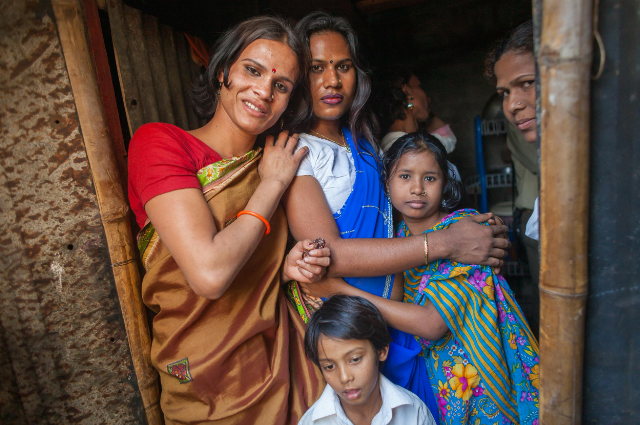
So what would it look like to have an honest conversation about transgender issues? Not a perfect conversation — just an honest one?
It would start with disaggregating the debate. "Transgender issues" is not a monolith. The question of how to support a transgender adult in a workplace is different from the question of medical protocols for adolescents. The question of elite sports policy is different from whether a transgender woman can use a women's restroom in a shopping mall. Treating all of these as one single issue, with one single answer, is intellectually lazy and practically destructive.
It would involve protecting space for scientific inquiry without political interference from any direction. Research into gender dysphoria, into the outcomes of various medical interventions, and into the experiences of detransitioners must be conducted freely and reported honestly. Scientists and clinicians should not have to choose between professional safety and scientific integrity. That is a choice no good system asks its researchers to make.
It would mean distinguishing firmly between policy debate and personal dignity. A person can believe, in good conscience, that specific medical protocols for minors need more evidence, while also believing that a transgender colleague deserves to be called by their chosen name and treated with basic respect. These positions are not contradictory.
Conflating policy disagreement with personal hatred is one of the most corrosive features of the current debate. It makes genuine engagement impossible and pushes reasonable people toward unreasonable camps.
It would mean listening — genuinely listening — to transgender people themselves. Not as spokespeople for a political position, but as individuals with varied, complex, sometimes contradictory experiences. Not every transgender person wants to be an activist. Not every one of them agrees with every position taken in their name. The diversity within the transgender community is as wide as the diversity in any other human community, and treating them as a uniform bloc serves no one, least of all them.
And it would mean holding the media — social and traditional — accountable for the temperature it sets. Outrage is profitable. Nuance is not. But the human cost of a perpetually overheated debate is real, and it falls disproportionately on the most vulnerable.
Conclusion: Choose Honesty Over Heat
There is a version of the transgender debate that treats every conversation as a battle to be won. It is exhausting, it is counterproductive, and it is making real people's lives measurably worse.
There is another version — harder, slower, more uncomfortable — that starts by agreeing on a few basic things. That transgender people are human beings deserving of dignity, regardless of what policies we debate. That questions about medicine and law can be asked without hatred, and answered without panic. That children deserve protection and not political exploitation. That is the truth, even when it is complex and unresolved and unsatisfying, it is more useful than a confident lie told at high volume.
Reena, the teacher I mentioned at the start, does not need a culture war. She needs good training, clear institutional support, and the freedom to make decisions based on the child in front of her rather than the argument happening on television. The child in her classroom — Aryan — does not need to be a symbol. He needs to be a student, with the same right to safety, dignity, and education as every other child in that room.
The loudest voices in this debate are not the most right. They are simply the loudest. And the cost of letting them dominate is not paid in Twitter engagement or cable news ratings. It is paid in the daily lives of people who deserve better from all of us.
Neither villain nor victim. Just human beings, trying to find an honest path forward in a debate that has lost its way.
That is worth more than all the heat in the world.
References:
1. American Psychological Association. (2015). Guidelines for Psychological Practice with transgender and gender nonconforming people. American Psychologist, 70(9), 832-864.
https://doi.org/10.1037/a0039906
2. Cass, H. (2024). The Cass review: Independent review of gender identity services for children and young people.--- Final report. NHS England.
https://www.indianpsychiatricsociety.org
3. Karolinska Institute. (2022). Updated clinical guidelines on gender dysphoria in minors. Karolinska University Hospital
4. NALSA v. Union of India, W.P. No. 400 of 2012, Supreme Court of India (April 15, 2014)
The Trevor Project. (2023). 2023 National Survey on LGBTQ and Youth Mental Health.
https://www.thetrevorproject.org/survey-2023/
5. Transgender. (2024, April) In Wikipedia.
6. Transgender Persons (Protection of Rights) Act, No. 40 of 2019, Acts of Parliament (India). (2019)
https://legislative.gov.in/sites/default/files/A2019-40.pdf
7. Authors (2023). Spatial disparities of the Indian transgender population: A census analysis.
8. Research Gate: https://www.researchgate.net/publication/ 371177693_Spatial_Disparities_of_Indian_Transgender_Population_A_Censual_Analysis
9. World Health Organisation. (2022). ICD-11 International Classification of Diseases (11 th revision) - Gender Incongruence.
https://icd.who.int/browse/2024-01/mms/en#411470410
10. BBC News. (2024). New Puberty Blocker. BBC
https://www.bbc.com/news/articles/c2k4jg0wkj4o