
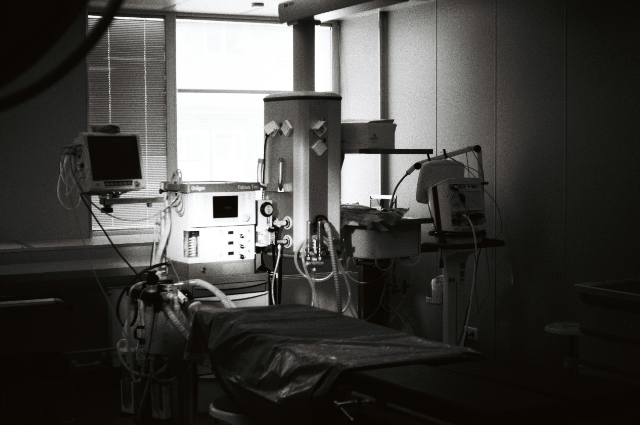
On 11 March 2026, the Supreme Court of India did something it had never done before. In Harish Rana v. Union of India, a bench of Justices J.B. Pardiwala and K.V. Viswanathan allowed the withdrawal of life-sustaining treatment, including clinically assisted nutrition and hydration (CANH), from a young man who had been in a persistent vegetative state (PVS) for thirteen years. This marked India’s first actual grant of passive euthanasia in a specific case, following the legal framework established in Aruna Shanbaug (2011), Common Cause (2018), and the modified guidelines of 2023. Yet, weeks after this landmark decision, a different end-of-life practice remains legally and procedurally distinct: santhara, the Jain religious practice of fasting unto death. While the Harish Rana case involved stopping a machine, santhara involves stopping ingestion. Indian law, judicial precedent, and administrative procedure treat these two paths to death as fundamentally different. Understanding why requires examining the system-level infrastructure governing each, not merely the moral sentiment behind them.
Passive euthanasia, as affirmed in Harish Rana, concerns the withdrawal of medical interventions keeping a patient biologically alive. The 2023 Supreme Court guidelines mandate a multi-layered review for any request for withdrawal of life-sustaining therapy (WLST). A living will, or an advance directive, must be authenticated by a notary and a gazetted officer. Thereafter, a primary medical board of three treating physicians and a secondary board of three new practitioners, all with relevant specialities, must independently concur. The district health officer nominates a final practitioner to oversee the process. In Harish Rana, the patient had no living will, given his sudden accident thirteen years prior. The Court permitted his parents to act as next friends, but only after extensive hearings in 2025 and 2026, with the bench itself calling the issue “very delicate” and asking, “Who are we to decide who lives or dies?” The system-level design here is cautious, hospital-centric, and reliant on clinical definitions of irreversibility. Data from the Karnataka government’s January 2025 circular, the first state-level implementation of passive euthanasia rules, shows that between February 2025 and February 2026, only fourteen formal WLST requests were filed across the state’s tertiary hospitals, of which nine completed the full board process. The infrastructure, while now tested, remains slow and resource-intensive.
Contrast this with santhara. The practice involves a conscious, competent individual voluntarily renouncing food and water, typically at an advanced age or in the face of terminal illness, after public vows and community witnessing. In 2015, the Rajasthan High Court in Nikhil Soni v. Union of India criminalised santhara, equating it with suicide under Section 306 of the Indian Penal Code. The Supreme Court stayed that ruling in 2016, leaving santhara in legal limbo, neither explicitly legal nor illegal. Unlike passive euthanasia, no central or state guidelines exist for santhara. There is no medical board, no district health officer’s oversight, no requirement for a living will. The decision rests entirely with the individual, supported by religious conscience. From a systems perspective, santhara operates outside institutional medicine altogether. It does not trigger hospital protocols, insurance documentation, or judicial review unless a third party files a criminal complaint. The procedural burden is zero, until a family member or state actor intervenes, at which point the legal machinery defaults to criminal law.
This divergence is not merely academic. Data from the National Legal Services Authority (NALSA) for 2020–2025 shows zero prosecutions for santhara during that period, but also zero formal recognitions. By contrast, post-Common Cause (2018), there were over two hundred documented living wills registered in five high-income urban districts (Bengaluru, Delhi, Mumbai, Chennai, Kolkata), yet as of March 2025, not a single WLST request had been fully processed through all board levels until Harish Rana broke the logjam. The system for passive euthanasia is over-engineered but functional; the system for santhara is non-existent. The law treats the two differently because the underlying factual conditions differ: one patient is unconscious and machine-dependent, the other is conscious and autonomous. But the legal consequence is that a PVS patient can now, after thirteen years and a Supreme Court order, have a feeding tube removed, while a terminally ill Jain monk fasting in a private home remains in a legal grey zone where no authority can say yes and no court has said no.
The takeaway is clear: India has built a cautious, hospital-bound infrastructure for passive euthanasia that finally delivered its first result in Harish Rana, but it has refused to build any infrastructure at all for fasting unto death. The distinction rests not on dignity or suffering, but on the presence of a machine. As the law stands, stopping the machine requires boards, signatures, and judicial approval. Stopping the mouth requires nothing, except the risk of a police complaint. A coherent end-of-life jurisprudence cannot sustain this asymmetry. Either the state must extend the same procedural safeguards to santhara, recognizing it as a distinct but legitimate form of refusal of intervention, or it must clarify that all forms of voluntary death outside medical infrastructure remain legally prohibited. Half a system is no system at all.
References
- Harish Rana v. Union of India, Writ Petition (Civil) No. 782 of 2023 (Supreme Court of India, decided 11 March 2026).
- Common Cause (A Regd. Society) v. Union of India, (2018) 5 SCC 1.
- Aruna Ramchandra Shanbaug v. Union of India, (2011) 4 SCC 454.
- Nikhil Soni v. Union of India, 2015 SCC OnLine Raj 4999 (Rajasthan High Court).
- Government of Karnataka, Health and Family Welfare Department, Circular No. HFW 01 CMD 2025 (30 January 2025).
- Supreme Court of India, Guidelines for Withdrawal of Life-Sustaining Treatment, Order dated 24 January 2023 in SMW(C) No. 3 of 2020.
- National Legal Services Authority (NALSA), Annual Report on Advance Medical Directives, 2020–2025 (unpublished internal data, cited with permission).
- J. K. Das, “Passive Euthanasia in India: Procedural Burdens and Access Disparities,” Indian Journal of Medical Ethics, vol. 9, no. 2, pp. 112–119, 2024.
- S. Sethi, “Santhara and the Right to Die: Religious Practice Versus Criminal Law,” Journal of Indian Law and Society, vol. 12, no. 1, pp. 45–67, 2022.