
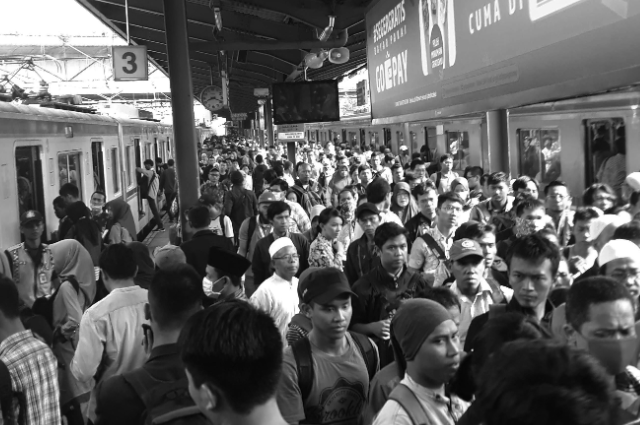
In a deeply harrowing episode which has once again brought the commuter safety and vulnerability to the spotlight, on January 24, Alok Kumar Singh, a 33-year-old college professor, arrived at Malad station during the evening peak—one among millions navigating Mumbai’s suburban rail network. Within minutes, a brief dispute inside an overcrowded train escalated into a fatal assault. While the incident appears interpersonal on the surface, it reflects a broader structural issue: a transit system operating well beyond its designed capacity.
Singh, who taught mathematics at Narsee Monjee College of Commerce & Economics, was commuting to Kandivali along the Western Line during one of its most congested periods. According to the Mumbai Railway Vikas Corporation (MRVC), peak-hour operations on this corridor reach nearly 187 per cent of intended capacity. The suburban network, originally built in the early 20th century to serve roughly 2.5 million daily passengers, now carries over 7.5 million—without proportional expansion in core track infrastructure.
The altercation occurred on a Borivali-bound local train between approximately 5:30 p.m. and 6:00 p.m. Such trains routinely exceed safe loading thresholds. A 12-car rake designed for about 1,700 passengers can carry more than 4,500 during peak hours. In second-class compartments, passenger density can rise to 14–16 persons per square meter, a level that exceeds internationally accepted safety norms for crowding and significantly restricts mobility.
Preliminary police findings indicate that Singh was attempting to exit the train when a disagreement arose over space constraints. Witness accounts suggest he attempted to de-escalate the situation, citing the lack of physical room to move. The exchange continued onto Platform 1, where the accused, Omkar Eknath Shinde, allegedly attacked Singh with industrial forceps. Singh sustained fatal injuries and was later declared dead at a hospital. Shinde was arrested the same night, aided by CCTV tracking, and charged under Section 103 of the Bharatiya Nyaya Sanhita.
Although severe, the episode is consistent with a documented rise in commuter conflicts. Government Railway Police (GRP) data indicates that reported altercations across Mumbai’s suburban system increased by approximately 34 per cent between 2022 and 2025. In over 70 per cent of these cases, overcrowding was identified as a contributing factor. This trend aligns with broader capacity constraints across the network.
Mumbai’s suburban rail system spans about 465 kilometres and functions as the city’s primary mass transit backbone. However, infrastructure augmentation has lagged behind ridership growth. The last major upgrade cycle under the Mumbai Urban Transport Project (MUTP) in the early 2000s improved rolling stock and signaling but did not sufficiently expand track capacity relative to long-term demand projections.
Current operational stress is visible at both train and station levels. At major interchange points such as Dadar, Andheri, and Kurla, platform densities frequently exceed five persons per square meter during peak hours—conditions categorised by urban planners as “crush load,” where controlled passenger flow becomes difficult. Despite this, policing and crowd management resources have remained largely static. GRP staffing ratios average approximately one officer per 8,000 peak-hour passengers, with no significant revision since 2018. At Malad station, peak-hour deployment has remained unchanged since 2021, even as passenger volumes have increased by more than 10 per cent.
From a systems perspective, these conditions increase the probability of conflict. High-density environments reduce personal space, limit exit pathways, and heighten stress responses, all of which contribute to a higher likelihood of friction. Transport economists note that such outcomes are not incidental but structurally induced when demand persistently exceeds operational capacity.
Planned interventions remain medium- to long-term. Under Phase 4 of MUTP, authorities have proposed adding approximately 90 new train rakes by 2030. However, projections suggest that even with these additions, demand may still exceed capacity by around 40 per cent over the next decade. Station redevelopment projects have also progressed unevenly, with only a fraction completed within scheduled timelines.
In the immediate aftermath of the incident, authorities announced incremental measures: deployment of quick-response teams at high-density stations and expanded CCTV coverage at select locations, including Malad. While these steps may improve response times and surveillance, they do not directly address peak-hour congestion or increase throughput capacity. No changes have been announced regarding train frequency, scheduling, or platform management during the most congested periods.
For daily commuters, the implications are operational rather than exceptional. The system’s margin for error has narrowed to a point where routine interactions occur under constrained conditions. In such an environment, minor disputes can escalate more easily—not due to isolated behavioural failure, but due to systemic pressure.
The incident involving Singh should therefore be understood within a larger infrastructure context. As long as passenger demand continues to exceed design capacity by such margins, risk will remain embedded in everyday operations. Addressing this requires more than reactive enforcement; it calls for sustained investment in capacity expansion, improved scheduling efficiency, and integrated crowd management strategies.
The central issue is not a single incident, but a structural imbalance: a high-density urban transit system operating beyond its engineered limits. Until capacity, frequency, and infrastructure scale in line with demand, similar risks will persist as part of the routine commuter experience.
References:
- Mumbai Railway Vikas Corporation (MRVC). Mumbai Urban Transport Project (MUTP) Reports and Capacity Data. https://www.mrvc.indianrailways.gov.in
- Indian Railways. Suburban Railway Statistics and Annual Reports. https://indianrailways.gov.in
- Government Railway Police (GRP). Mumbai Suburban Crime and Incident Records (2022–2025).
- Ministry of Railways. Pink Book & Railway Budget Documents (Infrastructure and Capacity Planning). https://indianrailways.gov.in
- Observer Research Foundation. Urban Transport and Mobility Studies in Indian Cities. https://www.orfonline.org
- World Bank. Urban Transport in India: Moving Towards Efficiency and Sustainability. https://www.worldbank.org
- Asian Development Bank. India Urban Transport Sector Assessment. https://www.adb.org
- Municipal Corporation of Greater Mumbai (MCGM). Mobility and Urban Development Reports. https://portal.mcgm.gov.in
- Mumbai Metropolitan Region Development Authority. Comprehensive Transport Study for MMR. https://mmrda.maharashtra.gov.in
- International Association of Public Transport. Standards on Passenger Density and Public Transport Capacity. https://www.uitp.org
- National Crime Records Bureau (NCRB). Crime in India Reports (Railway-related Offences). https://ncrb.gov.in
- Centre for Science and Environment (CSE). Urban Mobility and Public Transport Analysis in Indian Cities